

Vehicle Ozone Machine Manufacturer: Essential Guide to Choosing a Reliable Partner
2026-10-07
Every detail matters when you’re restoring a vehicle’s interior—especially the air you can’t see. A vehicle ozone machine does the heavy lifting, but only if it’s built by a manufacturer that understands real-world demands. That’s where a partner like LUFUTATECH changes the game. Before you commit to a supplier, you need to look past flashy specs and ask the right questions. This guide strips away the guesswork and shows you exactly what separates a dependable vehicle ozone machine manufacturer from the rest.
The Difference Between a Supplier and a True Manufacturing Partner
A supplier checks boxes. They receive a spec, quote a price, and ship parts. A true manufacturing partner asks why the spec exists, what the part will face in the field, and whether a different approach could save you money without sacrificing performance. That's the line most companies miss until a production crisis forces them to see it.
Suppliers tend to stay silent when something looks off. They build exactly what you asked for, even if the tolerance stack is borderline or the material choice is overkill. A manufacturing partner picks up the phone before the first batch runs. They flag the issue, suggest a tweak, or walk you through a redesign that shaves weeks off your timeline. You're not paying for obedience; you're paying for judgment.
Over time, the difference shows up in inventory levels, lead times, and how quickly problems get solved. A supplier ships your order and moves on. A manufacturing partner tracks your usage patterns, adjusts their capacity planning, and warns you when a raw material shortage is coming. They treat your product like it's part of their own line, because their reputation depends on it.
What to Ask Before You Commit to a Vehicle Ozone Machine Order
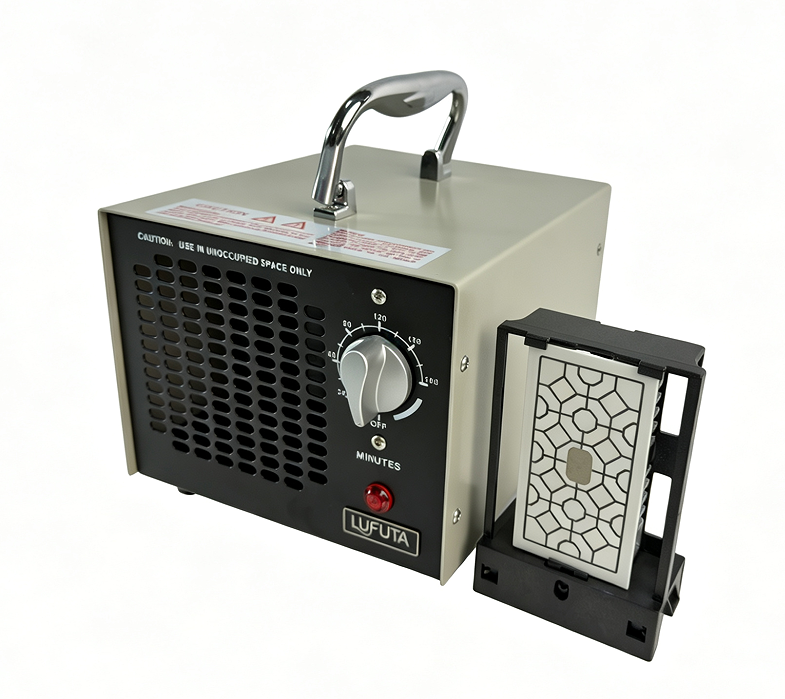
Before you place an order, pin down the actual ozone output in milligrams per hour and ask how that number translates to your vehicle's cabin size. A unit rated for a small car will struggle in a van or truck, and oversizing can leave harsh residues that require extra airing out. Request a clear chart or honest guidance rather than relying on a single "vehicle grade" label.
Next, dig into the control options. Does the machine let you set a specific run time, delay the start long enough for you to exit and close the doors, or offer a repeat cycle for stubborn odors? More importantly, find out what happens when the timer ends — some units simply stop producing ozone, but you may want a model that runs a brief fan-only phase to help dissipate the gas before you re-enter.
Finally, ask about ongoing costs and support. Ozone plates or bulbs wear out, and replacement prices vary widely. Confirm the warranty length, whether it covers the generator component, and how easy it is to get parts in your region. A cheap upfront price means little if you cannot source a replacement plate six months later or if the warranty requires shipping the unit overseas.
Materials and Components That Separate Reliable Units from the Rest
The difference between a power supply that lasts a decade and one that dies after eighteen months often comes down to the electrolyte inside its capacitors. Cheap units use liquid-filled aluminum electrolytics that dry out under heat, while dependable designs switch to polymer or hybrid types that tolerate higher ripple current without bulging. The same logic applies to resistors—thick-film varieties drift noticeably after thermal cycling, but metal-film or wirewound parts hold their tolerance, preventing feedback loops from losing calibration. These choices aren't documented in flashy spec sheets, yet they decide whether a unit survives constant load or quietly degrades until a protection circuit trips for no obvious reason.
Beyond raw materials, the screening process separates units that will run for years from those that merely pass a final functional test. Reliable manufacturers age each board under elevated temperature and cyclic load, then measure drift in reference voltages and leakage currents. Components that show marginal behavior—like a ceramic capacitor with microcracks from PCB flex—get rejected before they reach a customer. This kind of burn-in adds cost, but it catches the latent failures that otherwise appear within the first 200 hours of field use. In contrast, budget-oriented production often skips thermal shock testing entirely, relying on statistical luck rather than verified margin.
Another underappreciated factor is derating. A reliable unit might specify a 105°C rated capacitor operated at 65°C, or a 1W resistor run at 0.3W. The component itself isn't exotic—it's the conservatism in how it's used that matters. Silicon devices are chosen not just for their nominal voltage rating but for how they behave at 80% of that rating after 10,000 temperature cycles. Those engineering decisions don't appear in marketing language, but they manifest as units that tolerate dirty input waveforms, occasional overloads, and years of dust accumulation without drifting outside specification.
How After-Sales Support Reveals a Manufacturer’s Real Priorities
A company's warranty terms often tell you more than any glossy brochure. When a manufacturer quietly shortens the coverage period for certain components, or excludes wear-and-tear items that competitors routinely cover, it signals a bottom-line obsession over long-term ownership costs. Conversely, brands that keep labor charges included for the full term, even on older models, are essentially admitting they expect their products to last—and they're willing to bet their margin on it. The fine print is where priorities hide.
Response times and the shape of the support network reveal whether a manufacturer sees service as a profit center or a relationship builder. A company that routes every call through an offshore script-reading team, while making spare parts scarce or prohibitively priced, has decided that post-purchase friction is acceptable. On the other hand, local depots stocked with common failure items, combined with technicians who can actually diagnose over the phone, show a different calculus: the cost of keeping you running is seen as an investment, not a liability to be minimized.
Finally, watch how a manufacturer treats customers who bought used or third-party equipment. If the serial number unlocks the same documentation, firmware updates, and repair support as a first owner, that's a company confident in its product ecosystem. But if support evaporates the moment money changes hands outside the authorized dealer channel, or if critical repair information is locked behind dealer-only portals, the message is unambiguous: their loyalty lies with the channel, not with the machine's actual user. That distinction separates brands that want a relationship from those that just want a transaction.
Separating Honest Performance Specs from Marketing Hype
Real performance figures come from controlled, repeatable tests, not from a single afternoon in a lab with the AC cranked up. Marketing teams often pick the most flattering number out of a dozen runs, then present it as if that’s what you’ll see on a random Tuesday. If a spec isn’t tied to a published methodology, it’s safer to treat it as a rough directional hint rather than a promise.
One of the biggest gaps shows up in sustained workloads. A device might hit an impressive peak throughput for ninety seconds, then drop to half that once heat builds up and power limits engage. Honest spec sheets call out the difference between burst and sustained performance, and they mention ambient temperature or at least the test environment. Without those details, a peak number is just a highlight reel.
Latency, battery life, and wireless range are equally easy to inflate. A router can claim gigabit speeds in an open room but struggle through a drywall wall. A laptop might advertise eighteen hours of video playback while real mixed use lasts six. The practical move is to look for independent, repeatable tests or real-world user data, then weigh the vendor’s claim against what you can actually verify.
Early Warning Signs You’re Dealing with the Wrong Manufacturer
It often starts with a feeling you can't quite pin down — the sample looks almost right, the quote came in a day late, and the sales rep's answers are just vague enough to leave you second-guessing. But the real red flags aren't always dramatic. Maybe their tolerance claims don't hold up when you measure with your own calipers, or the surface finish on the third batch doesn't match the first two. A manufacturer drifting on consistency isn't having a bad week; they're showing you how they operate when no one is watching.
Another tell is the disappearing act. One week you're emailing about tooling adjustments and getting replies within hours. The next, your production timeline is slipping because no one can confirm whether the raw material arrived. You start to feel less like a client and more like a project manager for their internal chaos. When communication requires multiple follow-ups just to get a straight answer about lead times or defect rates, you're not dealing with a partner — you're doing their job for them.
Then there's the blame loop. Every issue somehow traces back to your drawings, your tolerances, or your 'unrealistic expectations.' A manufacturer that can't own a mistake without pointing fingers hasn't built a quality system — they've built a shield. Watch for phrases like 'this is standard in the industry' or 'no one else has complained.' That's not expertise; it's a way to avoid investigating root causes. Trust the pattern, not the promise: if they're comfortable with your confusion now, they'll be comfortable with your returns later.
FAQ
Don't just accept CE or RoHS marks at face value. Look for automotive-grade quality systems like IATF 16949, or at minimum a well-implemented ISO 9001:2015 with traceable batch records. For ozone output, ask for third-party validation of concentration stability over time, and check if they hold an EPA establishment number if targeting North America. The key is not the certificate itself but whether the manufacturer can explain how their testing aligns with real vehicle cabin conditions.
Request a live video walkthrough of their production line, focusing on whether they have dedicated SMT placement for control boards and continuous aging racks for ozone generators. Ask for monthly shipment volumes of vehicle-specific units and request anonymized delivery records from the past six months. A credible partner will also show that vehicle ozone machines run on a separate line from home or industrial units, which avoids cross-contamination of design tolerances.
Vehicle environments demand tolerance for constant vibration, voltage spikes from 12V or 24V systems, and temperature swings from -20C to 70C. A specialist designs power supplies with wide input ranges, reverse polarity protection, and overcurrent shutdown. The ozone cell itself must survive repeated mechanical shocks without cracking. They also offer mounting bracket customization and cable harness options that fit cramped engine bays or under-seat spaces, rather than shipping a generic box with an adapter.
A low upfront price often hides cheap ceramic plates or thin dielectric coatings that fail after a few hundred hours. Calculate the cost per operating hour by asking how long the ozone output stays above 70% of nominal and what replacement parts cost. Reliable manufacturers specify core component lifespans of at least 5000 hours and clearly state which parts are covered under warranty. Spending a few dollars more per unit can save you from replacing entire machines every year.
For commercial fleets or niche uses like ambulances and refrigerated vans, preset ozone levels are often useless. A strong partner can adjust timer cycles, pulse dosing patterns, and even integrate with the vehicle's CAN bus for automated treatment after passenger exit. If the supplier only offers a simple on/off switch and refuses to discuss firmware changes, they likely lack real R&D depth. Customization should not force a huge increase in minimum order quantity unless the modification is superficial.
Look beyond the standard warranty card. Ask if their engineers can guide your technicians via video call to diagnose faults without immediately shipping a replacement. Check whether warranty covers return shipping costs and whether individual components like ozone plates, fans, or power modules are available for purchase separately. A trustworthy manufacturer includes a maintenance manual and a spare parts list with every shipment, treating after-sales as a service rather than a profit center.
Absolutely. Ask how they measure ozone concentration: an electrochemical sensor is okay for quick checks, but iodometric titration is far more accurate for certification. Find out if their test chamber volume matches typical vehicle cabins or if they use an unrealistically small box. Request data from high-temperature and high-humidity tests, because ozone output drops in real-world conditions. Manufacturers that only test in dry room-temperature air are hiding important performance gaps.
Any vagueness about safe exposure limits or claims that ozone is totally harmless with no ventilation requirements is a major warning. Reject suppliers who cannot provide a single third-party test report for their core modules, or whose power adapters lack thermal cutoff protection. Also watch for ozone generators that require manual cooldown periods before restarting, indicating poor thermal design. Repeated unexplained changes in delivery schedules usually point to deeper supply chain instability.
Conclusion
Choosing a vehicle ozone machine manufacturer starts with recognizing the gap between a supplier who simply fulfills orders and a true partner who contributes to your long-term success. Before placing an order, ask how the company handles design changes, quality control during production, and what happens if a batch fails inspection. A reliable manufacturer will be transparent about the source of its ozone plates, transformers, and fan motors, because these components determine how long the unit lasts under daily use. Cheaper builds often use thin aluminum heat sinks or undersized ceramic plates that degrade quickly, leading to weak ozone output after only a few months. The right partner explains material choices and can show documentation for each batch, not just a glossy spec sheet.
After-sales support is where many manufacturers reveal their true priorities. Ask for the actual response time for warranty claims, availability of replacement parts, and whether technical staff can diagnose issues over video call. Honest performance specs should match real-world testing—if a unit claims 20,000 mg/h but uses a tiny air pump, that number is unrealistic. Watch for early warning signs such as vague answers about certification, reluctance to share factory photos, or pressure to pay a large deposit before you receive a sample. A trustworthy manufacturer will invite you to inspect the production line, provide third-party test reports, and keep communication direct without inflated promises. These checks help you avoid suppliers that vanish after the first shipment.
Contact Us
Contact Person: Paul Luo
Email: [email protected]
Tel/WhatsApp: 0086-19966314501
Website: https://www.lufutatech.com