

Vacuum Circuit Breaker Exporter Delivering Dependable Power Solutions Worldwide
2026-11-16
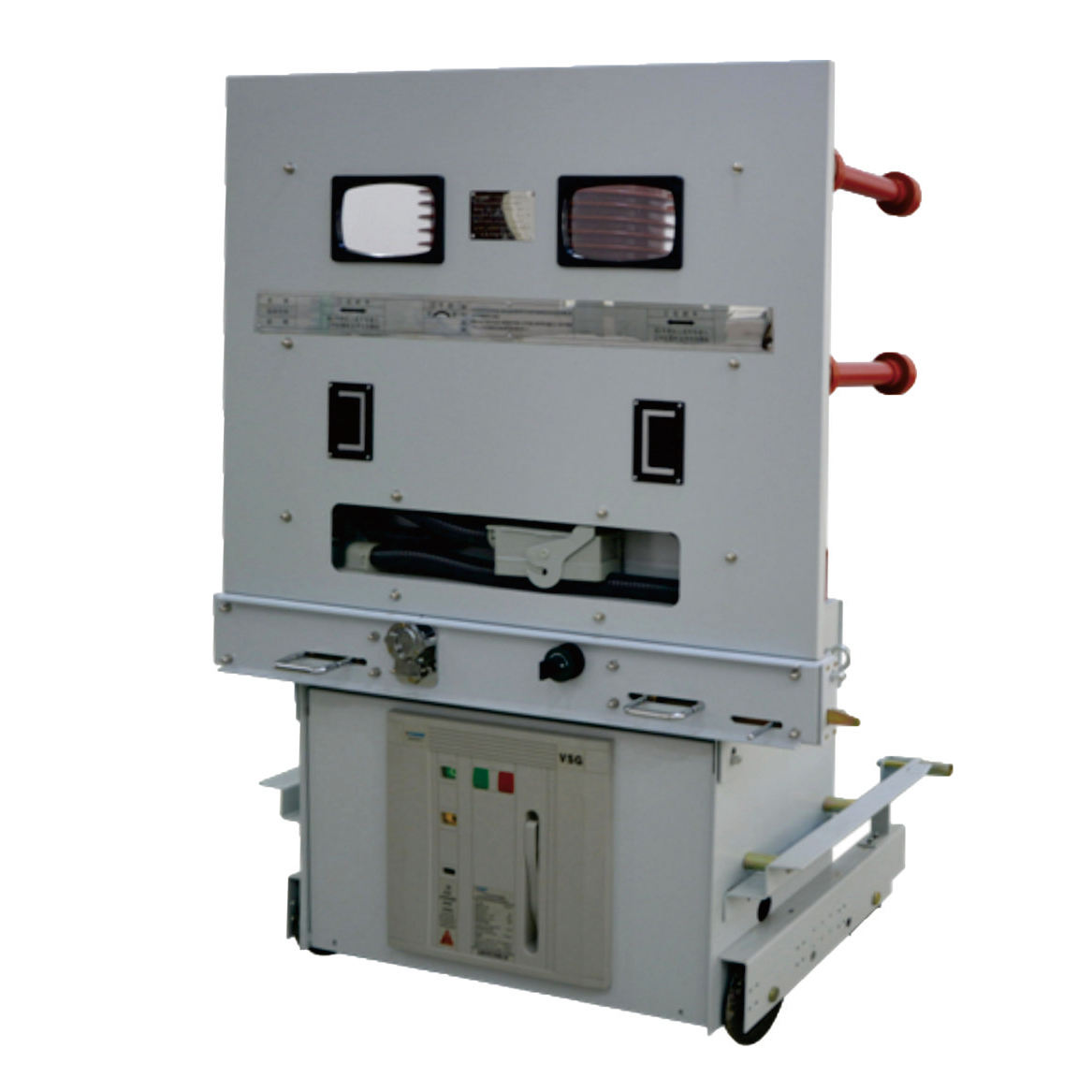
Power failures don't announce themselves—they strike when a single component decides to give way under stress. For grid operators and plant managers who refuse to leave that moment to chance, XIAOPAI has become the vacuum circuit breaker exporter delivering dependable power solutions worldwide. From harsh industrial environments to remote substations, XIAOPAI’s breakers are engineered to interrupt faults in milliseconds, keeping critical infrastructure alive. Here’s what makes their approach genuinely different.
The Test Bench Where Every Interrupter Earns Its Rating
Every interrupter that leaves the floor does so only after surviving a deliberately hostile sequence of load breaks, fault clears, and thermal cycles. The bench doesn't hand out ratings based on datasheet math or manufacturer optimism. It builds a switching profile from measured arc duration, contact wear, gas pressure, and let-through energy, then pushes the device until one parameter drifts outside its allowed band. That threshold becomes the rating—not a target, but a documented limit.
Operators here treat calibration as a living process rather than a yearly checkbox. Each morning starts with a known reference interrupter, a shot counter readout, and a baseline waveform captured at three current levels. If the reference's trace moves by more than a hair on the oscilloscope, the entire bench is locked until the drift is chased down. This keeps the numbers attached to real behavior instead of inherited from a spec sheet.
The result is a rating that holds up in the field. A device stamped for 12.5 kA has actually cleared 12.5 kA repeatedly, with contact erosion and gas decomposition recorded and compared against the bench's historical spread. That history matters: over time, the bench has learned which failure signatures are cosmetic, which signal early mechanical wear, and which demand immediate rejection. No model predicts those boundaries better than the accumulated test logs.
Crating for Salt Spray, Forklift Jolts, and Weeks at Sea
Salt spray and forklift jolts don't care about your packaging schedule. Weeks at sea expose every flaw, so the crate itself has to be the first line of defense. We treat wood as a structural material, not just a box—using kiln-dried lumber with tight grain and marine-grade fasteners that resist corrosion before the first wave hits. The joints are reinforced with galvanized steel brackets, and we seal every edge with a flexible, salt-resistant coating that moves with the wood instead of cracking when the container shifts.
The crating isn't built for a gentle warehouse ride; it's built for the moment a forklift operator misses the slot by two inches and the crate slams against the container wall. Corner blocks are double-laminated, and internal bracing is calculated for dynamic loads—not just dead weight. We've seen crates fail because someone assumed the machine would be centered on a pallet, so we add shear panels and cross-bracing that turn the crate into a unit that flexes and absorbs shock instead of transferring it to the machinery inside.
After three weeks at sea, most crates look like they've been through a war. Ours look dirty, but inside the equipment is untouched. That's the point. We don't over-pad with foam that holds moisture, and we don't wrap in plastic that traps condensation. Instead, vapor-phase corrosion inhibitors are placed inside the crate, and the ventilation gaps are angled to shed water while letting humidity equalize. The result is a crate that breathes, resists rust, and takes the beating so your machine doesn't have to.
When Your Grid Fault Current Doesn't Match the Catalog
Grid fault current values printed in catalogs are often treated as gospel, but real installations rarely cooperate. You might open a spec sheet, see a symmetrical interrupting rating of 65 kA, and assume your system will behave identically—until a fault event proves otherwise. The mismatch usually begins with assumptions about source impedance. Manufacturers calculate ratings using standardized test circuits, yet your actual service transformer, cable lengths, and rotating loads all reshape the available fault current. Even a seemingly minor change, like adding a parallel feeder or swapping a transformer with a slightly different impedance, can push the real number beyond the printed value.
Another culprit is the age of the data itself. Utility networks evolve, switchgear gets upgraded, and new generation sources come online. A catalog value published five years ago may reflect a grid that no longer exists. If you're relying on that number for arc flash studies or breaker sizing, you're designing for a fantasy. The practical fix isn't to distrust every datasheet—it's to perform a fresh short-circuit study using measured or modeled utility data at your point of common coupling. When the calculated fault current exceeds the equipment's published rating, series-rated combinations or current-limiting devices can sometimes bridge the gap, but only if you catch the discrepancy before commissioning.
Field measurements add another layer of surprise. Even after a careful study, the actual fault current can deviate due to seasonal load changes, tap changer positions, or the simple reality that transformers don't always match their nameplate exactly. One way to stay ahead is to treat the catalog value as a starting point, not a conclusion. Document your assumptions, re-run the numbers whenever the upstream utility notifies you of system changes, and leave a safety margin on interrupting ratings. The catalog isn't wrong—it's just describing a different circuit than the one outside your door.
Same-Week Spare Parts, Even for a Breaker Shipped a Decade Ago
A breaker that left our floor in 2014 still has a place in our parts room. We keep the drawings, the coil specs, and the trip unit firmware for models most manufacturers would have written off. When you call with a serial number, we pull the original build sheet before lunch and confirm stock the same afternoon.
The same-week promise isn't a marketing line. It comes from a physical shelf of contact kits, arc chutes, charging motors, and closing coils that we replenish based on real service history, not just current catalog demand. If a part isn't on the shelf, our machine shop cuts it from the original drawing and tests it to the breaker's original timing curve before it ships.
That means a facility still running a legacy lineup doesn't have to choose between waiting six weeks for a third-party reman or paying overnight freight on a whole new breaker. The part arrives, it fits, and the breaker goes back to work without a retrofit project.
The Export Document Set That Clears Customs Before Your Ship Docks
Every shipment has a quiet moment of truth that happens long before the vessel ties up. It's the stack of export paperwork that either slides through the border system without a ripple, or triggers a hold that costs you days of demurrage. The difference usually comes down to how well your documents mirror the actual cargo—right down to the harmonized codes, the invoice currency, and the buyer's full legal name on the bill of lading.
A pre-clearance document set isn't just about having all the boxes ticked. It's about sequencing: the commercial invoice needs to align with the packing list line by line, the certificate of origin should carry the exact wording the destination port expects, and the export declaration must match the carrier's manifest before the gate-in cut-off. When those pieces line up early, customs can process your entry while the ship is still at sea, so your containers don't sit in limbo after arrival.
Veteran shippers treat this as a living checklist that gets revised with every route change, new buyer, or updated trade agreement. They rarely rely on a generic template. Instead, they keep a rolling file of country-specific quirks—maybe the Saudi ports want the invoice stamped by a chamber of commerce, or Turkish customs asks for a detailed weight note. That level of attention is what turns a routine export document set into a clearance pass that works before the dock lines are even secured.
How Vacuum Breakers Handle Salt Fog and Humidity Without Derating
Vacuum breakers don't need to be derated in salt fog or high humidity because the interrupting chamber is hermetically sealed. The contacts sit inside a vacuum bottle made from ceramic or glass, with metal end caps brazed on. There's no air exchange with the outside, so moisture and conductive salt deposits simply can't reach the arc path or the internal insulation. The external surfaces might collect a salty film, but the creepage distances on the bushings and the housing are already sized for polluted environments. As long as the unit is installed with standard clearances and the occasional wipe-down, the dielectric performance stays intact.
What often gets overlooked is that the operating mechanism and the terminals are the real weak points in marine or coastal settings. Manufacturers handle this with sealed bearings, stainless steel linkages, and tin-plated or silver-plated copper connections that resist corrosion. Silicone rubber boots over the pushrods and breather drains that don't trap water also help. Because the vacuum interrupter itself doesn't care about humidity, the breaker's rating remains valid — the engineering effort goes into keeping the mechanical parts free-moving and the electrical joints low-resistance.
If you're comparing switchgear for a salt fog environment, ask for the pollution class rating and the specific corrosion test results, not just the vacuum bottle's IP rating. Vacuum technology inherently removes the internal condensation problem that plagues air-insulated breakers, so there's no need to apply humidity correction factors to the interrupting capacity. The breaker either opens and clears the fault inside the vacuum, or it doesn't — external moisture has no say in the matter.
FAQ
Our export range covers medium-voltage vacuum circuit breakers from 11kV to 40.5kV, available in fixed and withdrawable designs. Each unit is built around a sealed vacuum interrupter, which keeps arc quenching clean and quiet without the need for oil or SF6 gas.
We ship regularly to utilities, industrial plants, and EPC contractors across Southeast Asia, the Middle East, Africa, South America, and parts of Europe. Local stock points and partner networks help shorten lead times in these areas.
Every circuit breaker undergoes routine temperature rise tests, mechanical endurance checks, and high-voltage withstand tests before packing. We also offer tropicalized coatings and anti-condensation heaters for humid or coastal installations.
Yes, project-specific drawings, non-standard terminal arrangements, and special protection relay integrations are common requests. Our engineering team reviews each specification and shares a detailed deviation list before production begins.
The breakers are type-tested according to IEC 62271-100 and can be supplied with additional third-party inspection reports from labs like KEMA or CESI when the tender requires it. Routine test certificates ship with every order.
We pack breakers in seaworthy wooden crates with moisture indicators and provide all customs documentation, including certificates of origin and pre-shipment inspection reports. After delivery, remote troubleshooting and spare parts support remain available through our service desk.
Conclusion
Every vacuum circuit breaker that leaves our facility has already proven itself on a dedicated test bench, where each interrupter is pushed until it earns its published rating. But passing the test is only the first hurdle. We crate for the real journey—salt spray on deck, forklift jolts in the port, and weeks of rolling ocean—so the unit that arrives on site still performs exactly as it did on the bench. Once installed, our breakers hold their ratings even in coastal salt fog and high humidity, without derating, because the vacuum interrupters and insulation systems are sealed and verified for those conditions from the start.
When your grid fault current doesn't match any catalog number, we don't ask you to compromise. Our engineering team adjusts the breaker configuration—CT ratios, trip settings, and contact materials—so it fits your actual short-circuit profile, not the other way around. That same direct support extends long after commissioning. Need a spare part for a breaker we shipped ten years ago? It leaves our warehouse the same week. And because our export document set is prepared to clear customs before your ship docks, the only surprise you face is how uneventful the whole process feels.
Contact Us
Contact Person: Kellen Chen
Email: [email protected]
Tel/WhatsApp: 8613806536768
Website: https://www.cnxiaopai.com