

Top Small Magnet Options for Creative Projects
2026-08-30
Small magnets are the unsung heroes of creative work—holding DIY prototypes together, keeping handmade jewelry clasps secure, and turning refrigerator doors into ever-changing galleries. But not all tiny magnets are created equal, and choosing the right one can make or break a project. In this guide, we’ll explore top small magnet options that combine strength, size, and reliability for makers, crafters, and tinkerers. Whether you’re building magnetic closures or experimenting with interactive art, DAWA has precisely engineered solutions to spark your next idea.
Go Tiny or Go Home: Neodymium Discs
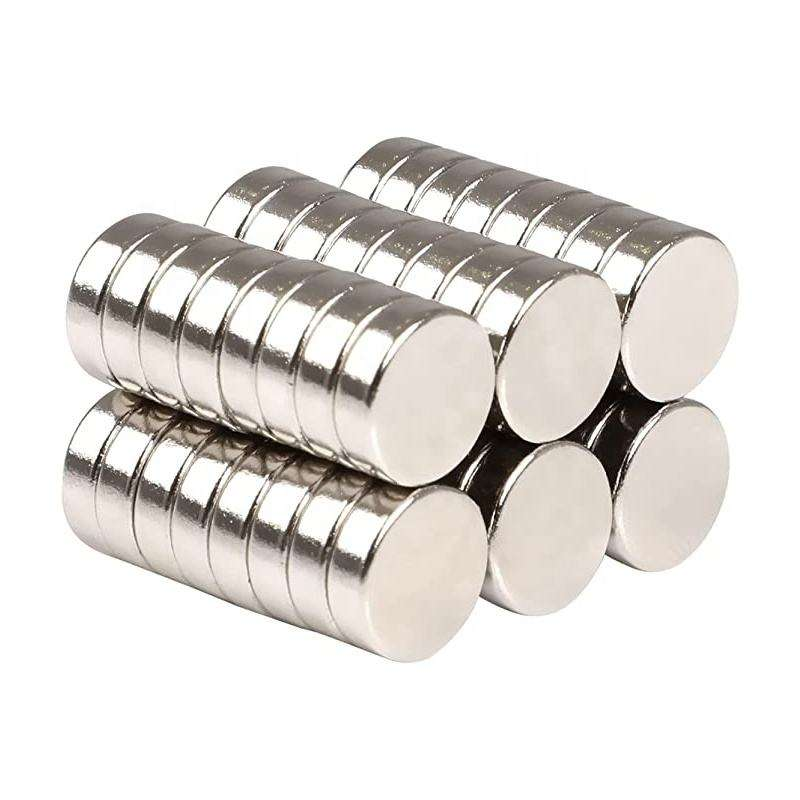
When you first hold a neodymium disc barely larger than a shirt button, it's easy to underestimate what's in your palm. These little magnets punch far above their weight class - a 10mm disc can pin a thick stack of papers to a steel beam without breaking a sweat. That's why craftspeople, model builders, and home tinkerers keep a few sizes on hand; they solve problems screws and glue simply can't.
Of course, going tiny means accepting a few quirks. The nickel coating resists corrosion but scratches easily, and the magnets themselves are brittle - let one slam into another and it might chip. For the best hold, pair two discs on opposite sides of a thin material rather than relying on a single magnet against a non-magnetic surface. Handle them with a bit of respect and they'll quietly hold your world together.
Cut Your Own: Flexible Magnetic Sheets
These sheets arrive as a blank canvas for your projects, offering a rare chance to shape magnets exactly to your needs. Instead of settling for standard sizes, you can trim them with ordinary scissors or a utility knife and create custom pieces for signs, crafts, or workshop organization. The material bends easily without losing its grip, so odd shapes and tight corners are never a problem.
What makes them stand out is the combination of a thin profile and a surprisingly strong hold. You can cut a long narrow strip to hold a row of tools, or snip small squares for photo displays on a fridge. Because the surface accepts paint, marker, or adhesive vinyl, each piece can be finished to blend in or stand out. It’s a practical way to avoid buying multiple pre-made magnets when one flexible sheet covers dozens of uses.
Working with them feels less like assembling a kit and more like solving a specific problem. Cut a patch to keep a cabinet door from rattling, make a custom gasket for a magnetic closure, or create labeling strips that can be moved around a warehouse board. The material is forgiving—if a cut is slightly off, the edge still functions well, and leftover pieces are easy to store flat until the next idea comes along.
Peel, Stick, Done: Adhesive-Backed Magnets
Forget drilling holes or hunting for a screwdriver. Adhesive-backed magnets turn any flat metal surface—a fridge, a filing cabinet, a workshop door—into instant storage. You literally peel off the liner, press the magnet in place, and let the adhesive do the rest. No mess, no damage, no second trip to the hardware store.
The real charm shows up in the small moments: a spice jar that stays put on the range hood, a whiteboard eraser that stops vanishing under the couch, a tool rack that clings to the side of a workbench. Because the magnets come with their own sticky backing, you’re not limited to surfaces that are already magnetic—any clean, smooth spot works as a base.
A quick wipe with rubbing alcohol before you stick them on makes a surprising difference. Give the adhesive a few hours to set before hanging heavier items, and you’ll have a hold that stays firm through daily bumps and grabs. When the time comes to rearrange, a gentle twist and a bit of patience usually releases the magnet without leaving a mark.
The Budget Workhorse: Ceramic Magnets
Ceramic magnets, also called ferrite magnets, are the go-to option when you need decent magnetic pull without spending much. They're made from iron oxide mixed with strontium or barium carbonate, which keeps raw material costs low and production straightforward. While they won't match the raw strength of neodymium, they resist corrosion naturally and hold up well against demagnetization, making them a sensible pick for everyday jobs where high performance isn't the top priority.
You'll find these magnets doing quiet work in refrigerator seals, loudspeakers, small DC motors, and craft closures. Their low price means you can use them in large quantities and still stay within budget. Ceramic magnets also handle moisture and moderate heat better than many stronger alternatives, so they often outlast expectations in outdoor or damp environments. For projects that call for reliability at scale rather than maximum pull force, they remain a practical benchmark.
Invisible Helpers: Rare Earth Micro Magnets
Tucked inside the vibration motor of your phone, the hinge sensor of a laptop, or the tiny speaker of a hearing aid, rare earth micro magnets do their work without ever being seen. Some are no larger than a grain of rice, yet they pack a magnetic pull that can hold dozens of times their own weight. This unusual strength comes from alloys like neodymium-iron-boron or samarium-cobalt, which can be machined, pressed, or plated into shapes barely visible to the naked eye.
Making magnets this small is not simply a matter of shrinking the same recipe. The finer the powder, the more vulnerable it becomes to oxidation, so manufacturers often layer protective coatings only a few microns thick. During sintering, controlling grain size and alignment becomes critical—one poorly oriented crystal can weaken the entire part. These production hurdles explain why micro magnets cost far more per gram than their larger counterparts, even though the raw materials are identical.
Beyond consumer electronics, these hidden components are finding their way into surgical robots, drug delivery capsules, and angle sensors inside aircraft actuators. A micro magnet glued to the tip of a catheter can let a surgeon track its position in real time without X-ray. In watchmaking, they replace fragile mechanical springs in ultra-thin movements. Each application relies on the same quiet trade-off: a part so small it disappears, yet strong enough to hold a system together.
For Paper and Beyond: Magnetic Tape Rolls
Long before solid-state drives and cloud storage, magnetic tape rolls were quietly recording everything from computer backups to multi-track audio sessions. While many people associate tape with paper documents or old cassette decks, these rolls served as the backbone of early data centers and broadcasting studios. Their ability to hold massive amounts of information on a thin strip of plastic made them indispensable for tasks that paper simply could not handle.
What set magnetic tape apart was its longevity and cost efficiency. Unlike paper, which degrades with moisture and light, properly stored tape could retain signals for decades. Archivists and engineers relied on this durability for seismic surveys, satellite telemetry, and even early video recording. A single reel could store the equivalent of thousands of punched cards, transforming how organizations managed long-term records without filling entire rooms with filing cabinets.
Even today, magnetic tape rolls haven't disappeared. Modern versions use advanced metal-particle coatings and servo tracking to achieve terabytes of capacity per cartridge. Cloud providers and research institutions still turn to tape for cold storage and disaster recovery because it consumes no power when idle and offers a lower cost per gigabyte than hard drives. In that sense, the technology that began as an alternative to paper has quietly outlived many of its digital challengers.
FAQ
Rare-earth neodymium magnets in disc or bar shapes tend to work best. Look for N35 or N42 grades if you need a strong hold without adding bulk. If you're working with paper, fabric, or lightweight wood, 3–6 mm discs are usually plenty.
Start with the weight of what you're attaching. A 5 mm disc magnet can handle a few sheets of paper or a thin fabric panel, but for something like a small wooden sign you'll want at least a 10 mm disc or a pair of them. Always test before gluing.
Yes, but choose nickel-free or coated magnets if they'll touch skin. Small cylinder magnets with a gold or silver finish work nicely for clasps. Keep the pull force modest—around 0.5 to 1 lb—so the clasp opens without a struggle.
Neodymium magnets are much stronger for their size, so they hide easily inside thin layers. Ceramic magnets are cheaper but bulkier and weaker, which can actually be good for fridge magnets or kids' projects where a powerful snap isn't needed.
Definitely keep them away from small children and pets, since swallowed magnets can cause serious internal damage. Store them in a labeled container away from electronics and credit cards, and don't let them slam together—they can shatter or pinch skin.
They're great for mini photo frames, modular wall art, hidden bag closures, paper dolls, DIY board game pieces, and even tiny magnetic bookmarks. Anything where you want a removable or adjustable connection benefits from a small magnet.
Craft stores often carry small packs of neodymium discs in the jewelry or model-making aisle. Online marketplaces also sell assorted sets with different sizes, which is handy if you want to experiment before committing to a larger pack.
Neodymium magnets hold their strength for decades under normal conditions, but high heat, strong impacts, or exposure to other strong magnetic fields can weaken them. Keep them at room temperature and avoid dropping them on hard surfaces.
Conclusion
Small magnets might look like minor hardware, but they open up a surprising range of creative possibilities. Neodymium discs are the powerhouses of the group—tiny enough to hide inside a project, yet strong enough to hold multiple sheets of paper or secure a closure without bulking things up. If you need something you can shape to fit a specific space, flexible magnetic sheets are a smart pick; just grab scissors and cut the size you need for stencils, photo displays, or custom fridge décor. For quick fixes and no-mess assembly, adhesive-backed magnets are hard to beat. Peel off the liner, press them onto a lightweight object, and you are done—no glue drying time required. And when your project involves paper goods, magnetic tape rolls offer a thin, ribbon-like profile that works well for cards, lightweight labels, or DIY organizational boards.
Of course, not every project demands max strength. Ceramic magnets remain a solid budget-friendly choice when you need many pieces without spending much, such as for classroom science kits, simple craft sets, or prototype layouts. Rare earth micro magnets cover the opposite end of the spectrum: they are incredibly small and unobtrusive, making them perfect as invisible helpers inside thin materials, jewelry clasps, or miniature models where a larger magnet would ruin the look. Mixing and matching these options often works best—use a strong neodymium disc where holding power matters, a flexible sheet when you want custom shapes, and a peel-and-stick piece for quick assembly. The key is to think about weight, surface, and visibility before choosing, then let the magnet fade into the background while your project holds together exactly the way you planned.
Contact Us
Contact Person: Kelvin Lo
Email: [email protected]
Tel/WhatsApp: 0769-88561131
Website: https://dawamagnetic.com/