

Top Copper Gaskets Factory from China for Reliable Industrial Sealing Solutions
2026-11-16
Industrial sealing failures don't usually make headlines, but they quietly eat into uptime, maintenance budgets, and safety margins. Copper gaskets sit at the center of that tension: simple in appearance, yet unforgiving when material grade, cutting precision, or surface finish is slightly off. That is where Kaxite has carved out a different reputation. Instead of treating copper gaskets as commodity parts, the factory approaches them as application-specific sealing components—matching temper, thickness, and geometry to pressure, temperature, and media conditions. This blog looks at what separates a dependable copper gasket supplier from an expensive gamble, and why Kaxite's manufacturing controls matter before a flange ever gets torqued down.
Copper Grade Choices That Directly Influence Seal Life
Most seal failures traced back to copper washers or gaskets come down to one overlooked variable: the grade of copper specified at the design stage. Pure oxygen-free grades tend to deform more predictably under load, which lets the seal bed into rough mating surfaces without cracking. Harder, more machinable grades hold their shape at higher pressures, but they demand a smoother flange finish; if that finish is not there, the copper refuses to conform and leaks start early.
Thermal conductivity shifts between grades matter as much as hardness. A high-conductivity grade moves heat away from the seal interface quickly, which can prevent localized oxidation and loss of springback in cyclic service. In contrast, grades with added tellurium or other free-machining elements often run hotter at the contact line, and that extra heat ages the copper faster than mechanical loading ever will.
The practical choice usually sits between clean deformation and long-term resilience. For static hydraulic fittings, a softer, purer grade often buys years of additional life simply because it fills surface imperfections. For high-temperature or high-vibration joints, a slightly harder grade with controlled impurity levels may be the only way to avoid extrusion and early blowout. Matching the grade to the actual surface finish and heat load is what separates a seal that lasts from one that fails without warning.
Custom Profiles Without Long Tooling Wait Times
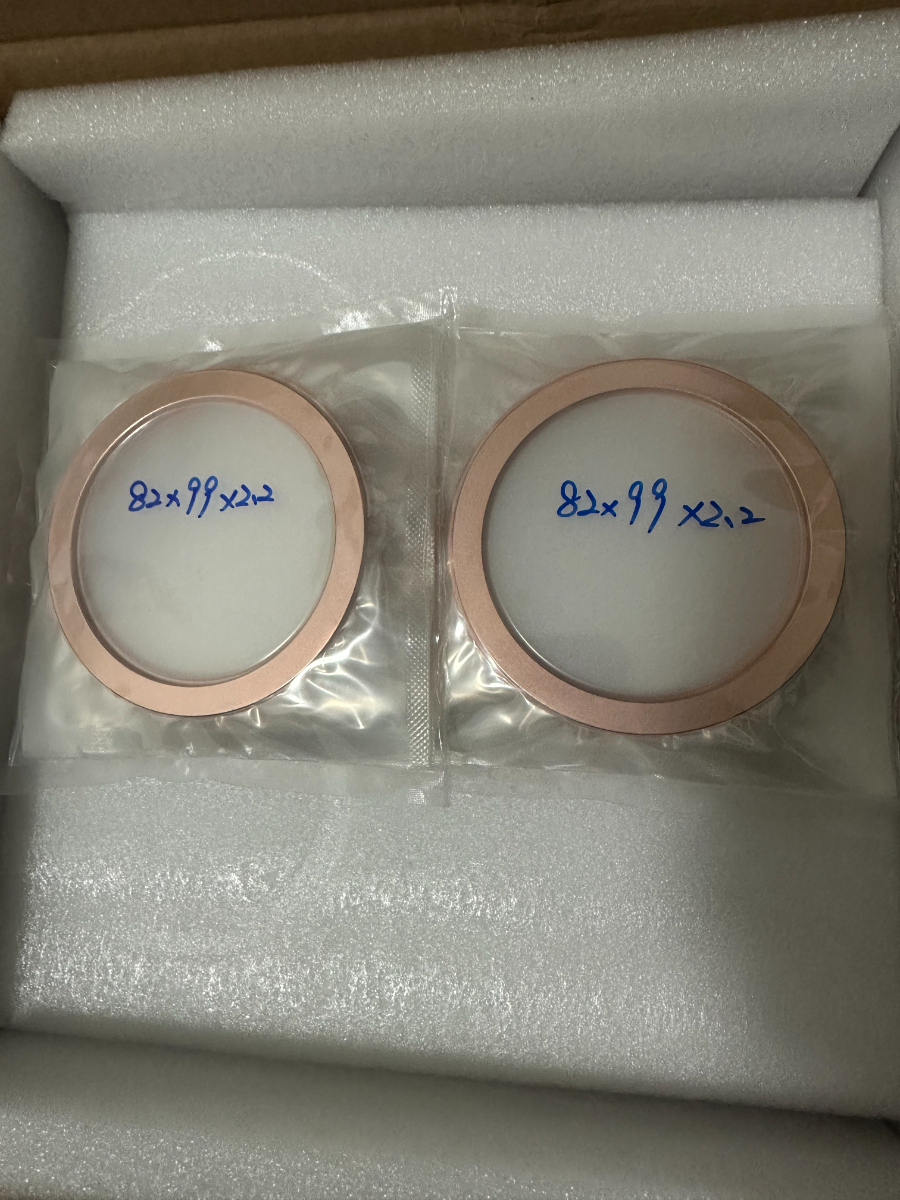
Custom profiles usually come with the assumption that a dedicated die or mold has to be designed, cut, hardened, and tested before a single length is produced. That process can eat up several weeks even on a clean run. The alternative is to pull from a large library of existing profiles and then modify the downstream steps—trimming, punching, bending, or surface finishing—to get the cross-section you actually need without starting from a blank tool. This shifts the wait from tooling queues to simple machine setup.
For shapes that cannot be approximated from stock profiles, short-run tooling can still be kept lean. Modular dies with replaceable inserts, rapid machining of temporary aluminum tooling, and quick-change extrusion lines make it possible to go from drawing to first sample in a few days instead of several months. The temporary tooling is not meant for massive production, but it handles pilot volumes, fit checks, and field trials comfortably.
The practical payoff is that design teams can run real parts through assembly, test clearances, and collapse the iteration loop before committing to full production tooling. Custom profiles become an engineering decision rather than a scheduling problem, and small-volume replacements no longer have to wait behind large production runs.
Flatness and Surface Finish Standards That Prevent Field Leaks
Most field leaks in bolted joints and hydraulic connections do not begin with a failed seal. They begin with a mating surface that looks fine to the eye but carries just enough waviness or roughness to create a leak path under load. Flatness limits the long-wave deviation across the face, while surface finish controls the finer pattern left by machining. If either one is left to a general shop tolerance instead of an explicit standard, the gasket or O-ring may seal on a test stand and then open up after heat, pressure cycles, or vibration rearrange the contact points.
For raised-face flanges, a practical flatness tolerance often falls between 0.001 and 0.002 inches per foot, with tighter local limits on high-pressure or high-temperature joints. Surface finish is commonly held to 125–250 microinches Ra for standard sheet gaskets, while spiral-wound and metal-seated joints may need 63 microinches Ra or finer. The target is not simply to make the face smoother. Some seals depend on a controlled roughness to grip and deform into the surface; over-polishing can reduce friction and allow the gasket to shift or extrude once the line is energized.
What passes in the shop can also change once the equipment reaches the field. Thermal growth, pipe strain, and repeated makeup torque can distort a borderline surface enough to break the seal. Inspection should therefore pair a straightedge or dial indicator for flatness with a profilometer or comparison coupon for finish, checking several positions across the face rather than one spot. The record matters as much as the measurement. When every joint face is verified against the same written criteria before installation, the number of nuisance leaks tied to surface condition drops sharply.
Production Runs Sized for Both Prototype and Maintenance Needs
Early builds rarely need ten thousand units, and late-stage service parts rarely justify a massive line setup. Matching run sizes to the actual moment in a product's life keeps inventory lean while still covering quick-turn prototypes or low-volume replacement orders. Small, focused batches let teams catch fitment or process issues before committing to higher quantities, without tying up cash in parts that might sit for months.
The flexibility comes from grouping work by shared setup rather than forcing every order into the same mold. A run planned around common tooling can shift from a handful of pilot pieces to a modest maintenance batch without rethinking the whole schedule. Operators stay sharper on short cycles, and changeover waste drops when the next job was already considered alongside the first.
For maintenance stock, predictable periodic runs often beat one big annual push. Demand signals from field returns or service logs give enough lead time to slot a replenishment batch between new product builds. That way a legacy component stays available without dragging down the throughput of higher-margin current production.
Handling and Packaging Steps That Keep Gaskets Ready to Install
Most gasket damage happens long before a flange is opened. A spiral wound or expanded PTFE gasket that gets creased, dropped, or stacked under heavy tooling may look acceptable but will not recover its original compression. Store flat with full support, not hung through the center or draped over a rack bar. The original shipping board or a rigid plastic backer works better than leaning pieces against a wall.
For materials that absorb moisture, such as aramid fiber and flexible graphite, sealed polyethylene bags with a small desiccant pack prevent swelling and surface oxidation. Elastomer sheet and rubber gaskets need a different approach. Keep them away from direct sunlight, fluorescent light, and motors that produce ozone, which can harden the surface. Use dividers between sizes and materials so edges do not cut into softer grades, and mark each bin or bag with part number, material, and incoming date.
Large diameter gaskets should be handled by enough lift points to avoid kinking the cross-section, then stored horizontally on a clean, dry shelf. If they must stand, keep them in a full-face cradle rather than on edge. Rotate older stock first, but before installation, check for nicks, flat spots, or hardened areas that could prevent the gasket from seating properly.
What Experienced Buyers Verify Before Reordering
Experienced buyers rarely assume that a repeat order will match the first one without checking a few details. They go back to the original spec sheet, sample approval, or contract and make sure the supplier has not made quiet changes to raw materials, component sourcing, tolerances, or finishing. Even minor shifts can alter how the product performs in real use, so they treat every reorder as a new confirmation rather than a formality.
They also pay close attention to batch consistency and quality records. Instead of relying only on a certificate, they may ask for recent production data, retained samples, or inspection notes from the previous shipment. Packaging gets reviewed as well, because many problems that look like product defects are actually caused by small changes in carton strength, inner packing, or pallet arrangement that appeared after the first order.
Finally, they verify delivery stability and communication before committing again. This means checking current lead times, stock availability, and whether the supplier has been transparent about delays or production bottlenecks. A buyer who has been through multiple cycles knows that a dependable reorder depends as much on how problems are handled as it does on the product itself.
FAQ
Copper holds its shape under temperatures that soften many non-metallic materials, and it does not creep the way some composites do. That stability means fewer retorque cycles and cleaner flanges when the joint is opened.
Each production lot is checked for hardness, thickness consistency, and surface finish. We also run leak tests on sample gaskets at pressures and temperatures that match the intended service—so the batch is not just dimensionally correct, but proven under load.
Many Chinese plants have integrated annealing, cutting, and finishing in one location, which cuts down on handling and lets you order custom sizes without long lead times. The key is finding a factory that treats copper as a sealing material, not just a metal stamping job.
Yes. They are used in heat exchangers, compressor heads, hydraulic manifolds, and vacuum chambers. Thin copper gaskets also perform well where electrical conductivity matters along with sealing.
Oxygen-free copper or 99.9% pure copper is common where ductility and corrosion resistance matter. For higher strength, some users choose phosphor bronze or brass, but we usually ask about the fluid, temperature, and pressure before suggesting a grade.
Yes, custom profiles are produced from CAD drawings or sample parts. This includes oval, octagonal, lens, and flat heat exchanger gaskets, with tolerances held close enough that field fitting is rarely an issue.
Check whether the factory controls raw material sourcing, has in-house annealing, and provides traceable mill certs. Fast turnaround matters less if the copper is brittle or off-spec; consistent hardness and clean edges are better signs of a capable supplier.
Harder copper resists extrusion at high pressure but may need more bolt load to conform to flange irregularities. Softer annealed copper seals rough surfaces more easily but can deform too much under extreme heat, so the hardness should match the joint design.
Conclusion
Choosing a copper gasket supplier often comes down to details that do not show up on a standard datasheet. The best factories in China working with copper sealing products tend to keep tight control over alloy selection and temper because a C11000 gasket in the half-hard condition behaves very differently under flange load than a fully annealed blank. Some facilities stock several copper grades and can switch between them without delaying a quote, which matters when an engineer needs a specific conductivity or corrosion profile. Instead of forcing buyers into long lead times for non-standard shapes, these shops use in-house laser or waterjet cutting and basic forming tools to turn custom drawings into finished parts within days. Flatness is checked at multiple points across the face, and surface finish is held to a narrow Ra range because a shallow scratch or a slight wave can create a leak path once the joint is torqued down.
What separates a dependable source from a one-time vendor is how it handles smaller production runs and final packaging. A factory that serves both prototype work and maintenance orders will often run from a single piece up to several thousand without forcing buyers into inflated minimums. Before shipment, good suppliers clean the gaskets to remove cutting residue, then wrap them in VCI paper, vacuum-seal or sleeve individual parts, and use rigid packaging to keep edges from bending. Experienced buyers tend to verify more than the quoted price: they ask for heat lot traceability, hardness readings, flatness data, and photos of the packing before reordering. These practical checks reveal whether a supplier can consistently deliver copper gaskets that are ready to install rather than just close enough on paper.
Contact Us
Contact Person: Kaxite
Email: [email protected]
Tel/WhatsApp: 0086-574-87527771
Website: https://www.seal-china.com