
Top 10 Aluminum Checkered Plate Companies Leading the Industry Today
2026-11-02
In the competitive world of industrial materials, aluminum checkered plates have become the quiet workhorses behind countless floors, ramps, and truck beds. Yet with so many suppliers claiming top performance, finding a manufacturer you can actually trust remains a challenge. This list cuts through the noise—spotlighting ten companies that are genuinely shaping the market. From proven giants to agile specialists like Sanhe Steel, each name here earned its place through real-world reliability, not marketing slogans. Here's who's leading the industry today, and why they matter for your next project.
What ‘Leading’ Actually Means Among Aluminum Checkered Plate Manufacturers
In aluminum checkered plate manufacturing, "leading" is often thrown around as a marketing label, but it actually shows up in how consistently the raised pattern is formed. A genuinely leading mill holds the diamond height and pitch within a narrow tolerance across the entire sheet, so the plate lays flat without oil canning and the pattern does not wear down unevenly. This kind of dimensional control matters most when the plate is used for ramps, stair treads, and vehicle flooring, where a few tenths of a millimeter change the slip resistance.
Beyond the visible surface, leading manufacturers separate themselves through material traceability and alloy discipline. They use verified 3003 or 5052 aluminum stock rather than recycled blends with unknown temper, and they attach heat numbers to every bundle so the buyer can trace the coil back to the cast lot. This reduces the risk of mixed hardness within one order and makes downstream bending or welding more predictable.
Finally, real leadership shows in how the plate is handled after rolling. Straight edges, clean degreasing, interleaving paper or protective film, and stable stacking without edge damage are not optional extras; they determine whether the product arrives ready to fabricate or needs rework. The most respected suppliers treat these details as part of the standard, not as a premium service.
The Alloy and Temper Decisions That Separate Durable Tread Plate from the Rest
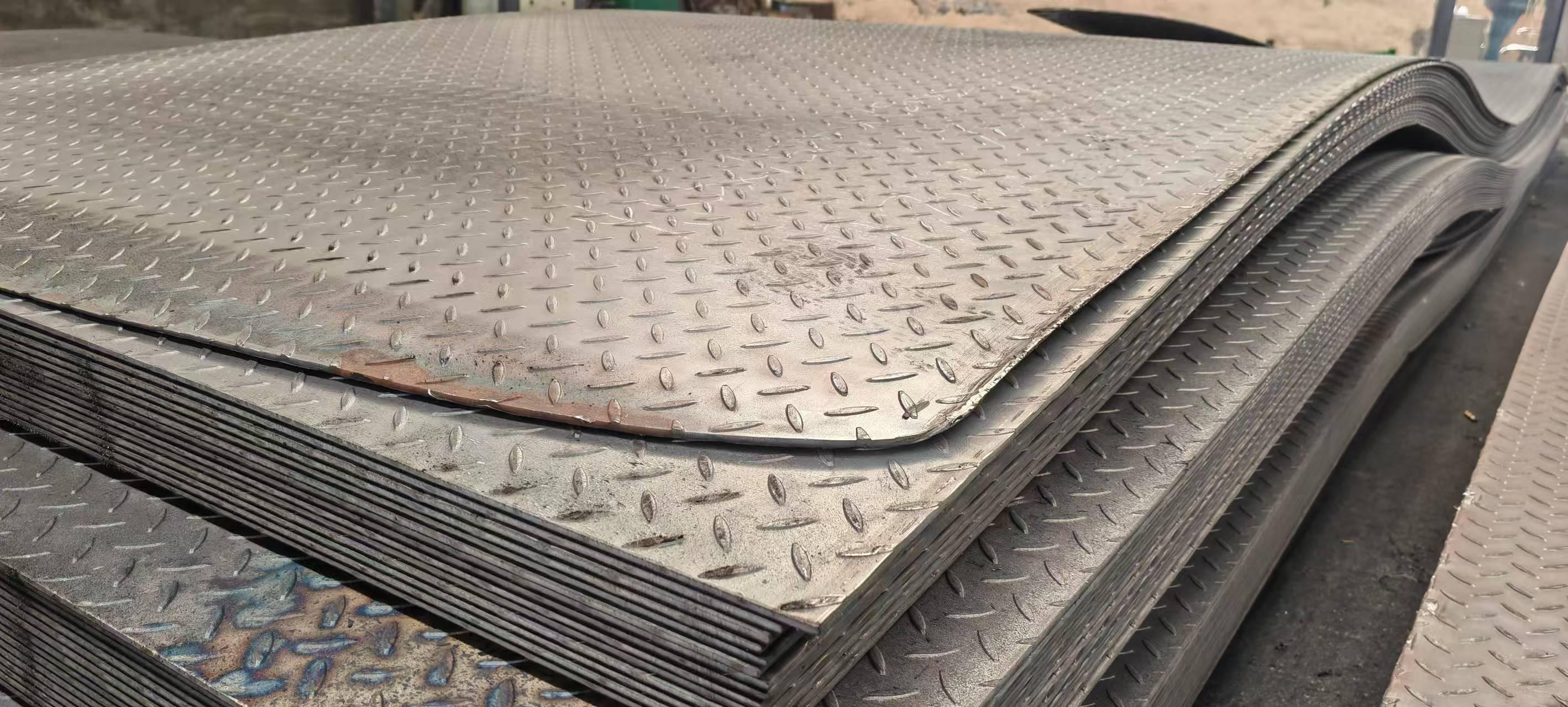
Most buyers assume tread plate is just a surface pattern over standard aluminum, but the real distinction lies in the alloy and temper pairing. A 3003-H22 plate might look identical to a 6061-T6 from arm's length, yet the way they respond to repeated foot traffic, impact, or thermal cycling is fundamentally different. The alloy determines base strength and corrosion resistance, while the temper controls how that strength is distributed—too soft and the raised lugs deform under load, too hard and the plate cracks at the bend radius instead of forming cleanly. Durable tread plate isn't a single magic recipe; it's a deliberate match between the intended abuse and the metallurgical condition.
Take the common mistake of using a fully hard H18 temper for high-wear flooring. It feels robust in hand, but that extra hardness comes at the cost of ductility. When someone drops a tool chest or a loaded pallet jack rolls over an edge, the plate can fracture at stress risers around the lug bases. Meanwhile, an H32 or H34 temper in the same alloy absorbs the same shock by yielding slightly and work-hardening locally, so the surface dents but doesn't break. The difference isn't visible on a spec sheet until you compare impact toughness and bend test results side by side—and that's where many suppliers fall short.
For environments where corrosion eats away at lesser materials, alloy choice overrides everything else. A 5083-H111 plate shrugs off salt spray and chemical exposure that would pit 6061 within months, but it demands a different temper to avoid stress corrosion cracking at fastener holes. The durable option isn't always the one with the highest tensile number; it's the one where the alloy's natural passivation layer stays intact because the temper didn't introduce residual tensile stress. Smart engineers ask for the full temper designation and the producer's certified mechanicals, not just a vague 'aluminum tread plate' line item. That single decision separates a floor that lasts decades from one that fails in its first winter.
A Walk Through the Mills Where Top Checkered Plate Suppliers Earn Their Reputation
Stepping onto the production floor, the first thing that hits you is the rhythmic vibration beneath your boots—massive rollers pressing hot steel into patterned sheets with a low, constant rumble. It’s not chaotic, though. Every station has its own cadence, from the coil feeders that unspool raw strip to the cooling beds where fresh plates settle with a faint hiss. Workers move between lines without wasted steps, checking thickness gauges and spray nozzles, and you quickly realize that consistency here isn’t a buzzword; it’s built into the floor layout, the tooling setup, and the way each shift handover includes a ten-minute walk through of yesterday’s reject samples.
The checkering itself comes from hardened engraving rolls—some mills still run the same pattern masters they tuned a decade ago, touching them up with hand files between campaigns. What separates the top suppliers is how obsessively they monitor the transfer. You’ll see a quality tech lift a still-warm plate off the line, angle it under a raking light, and run a fingertip along the diamond edges. If the lug height varies by more than a few thousandths, the roll gets adjusted before the next coil. That kind of tactile inspection is slow and unglamorous, but it’s why their plates don’t delaminate or wear smooth after six months on a loading dock.
Further down, the finishing area tells its own story. Plates pass through tension levelers and crop shears, then get stacked by automated cranes that never leave a corner dented. But even here, a final inspector with a chalk stick circles a faint surface scab or a shallow edge rollover and sends the sheet back for rework. No rush, no shortcuts. That’s the quiet difference: the best mills don’t rely on a single test at the end—they build small checks into every transition, so by the time a plate reaches the shipping bay, its reputation is already earned.
Why Global Logistics Matter as Much as Metallurgy for Industry Leaders
Metallurgy determines whether a component can withstand stress, heat, or corrosion. Logistics determines whether that component reaches the assembly line before a production halt eats into quarterly earnings. For industry leaders, the two are inseparable: a perfect alloy sitting in a delayed container is no different from scrap metal until it arrives where it's needed. Warehouse costs, working capital tied up in transit, and missed delivery windows quietly erode margins that metallurgical innovation was supposed to protect.
Global logistics has become a test of judgment under uncertainty. Shipping routes, port strikes, customs bottlenecks, and fuel price swings now shape operational planning as much as material specifications do. A leader who can map alternative supply corridors or adjust inventory placement ahead of a disruption gains the same kind of edge as one who develops a lighter, stronger alloy. The ability to deliver consistently—even when a canal is blocked or a border tightens—keeps factories running and customers loyal.
In many ways, logistics is the invisible metallurgy of modern industry. It tempers supply chains, forges reliable delivery networks, and removes the brittle points that break under pressure. Neglect it, and even the most advanced materials become liabilities. Master it, and a company builds a durable advantage that no competitor can easily replicate.
The Surface Upgrades Quietly Changing Anti-Slip Performance Standards
Walk into any recently renovated public building or freshly paved plaza, and the floor beneath your feet may look the same as it did a decade ago. But run your hand over the surface, or watch how water beads and drains after a rain shower, and subtle differences emerge. Manufacturers have been refining anti-slip treatments not through dramatic redesigns, but through quiet material upgrades—micro-texturing, modified polymer blends, and new aggregate mixes that increase friction without visually altering the stone, tile, or concrete. These changes slip past casual notice because they are engineered to preserve aesthetic continuity while lifting performance thresholds.
The shift is driven less by regulatory overhauls than by a slow accumulation of field data and insurer pressure. Traditional anti-slip ratings often relied on laboratory tests that failed to capture real-world wear, cleaning regimes, or wet-dry transitions. New formulations focus on durability of the slip-resistant layer itself, ensuring that the friction coefficient does not plummet after a few months of foot traffic or harsh cleaning chemicals. Some manufacturers now embed abrasion-resistant particles directly into the surface matrix rather than applying a coating, so the grip becomes part of the material's identity rather than a sacrificial layer.
For architects and facility managers, the upgrade means fewer trade-offs between safety and appearance. A high-traffic lobby can use polished porcelain with a barely perceptible etched topography that still meets elevated wet slip standards. Outdoor walkways gain coarse aggregates with rounded edges, reducing the risk of skin abrasion during falls while maintaining dependable traction. Because these improvements are invisible at a glance, they rarely make headlines—yet they quietly rewrite what counts as acceptable performance, pushing the entire industry toward surfaces that hold their grip longer and fail more gracefully.
How the Biggest Names Are Cutting Carbon Without Sacrificing Plate Quality
Major manufacturers have quietly shifted toward induction heating systems that draw power from on-site solar arrays, trimming Scope 2 emissions without altering cooktop performance. Instead of retrofitting entire production lines, they recalibrate thermal cycling curves and reuse waste heat from adjacent processes, keeping the surface finish and heat distribution indistinguishable from conventional models.
Some of the largest appliance brands now source low-carbon steel from electric arc furnaces running on renewable power, then offset the remaining footprint through direct investment in nearby reforestation rather than buying distant credits. Their quality labs report no measurable difference in warping resistance or edge retention, largely because the alloy composition stays identical and only the upstream energy mix changes.
Another less-publicized move involves redesigning packaging and logistics: thinner, recyclable corrugated inserts cut shipping weight by double digits, while load consolidation lets fewer trucks carry the same number of plates. Those savings are reinvested into process controls that reduce rejected batches, so the carbon per usable plate drops without any compromise in the product a customer actually unboxes.
FAQ
A company usually earns that position through a mix of production capacity, consistent alloy quality, global distribution, and the ability to handle custom thickness or pattern requirements. Long-term contracts with automotive, marine, and construction clients also push a supplier toward the front of the pack.
Aluminum gives you similar slip resistance at roughly one-third the weight, and it does not need paint or galvanizing to resist corrosion in damp or chemical-heavy environments. That lowers both handling costs and maintenance over the life of the floor or ramp.
3003 and 5052 dominate because 3003 forms easily for general flooring and tool boxes, while 5052 adds better saltwater corrosion resistance and higher strength for marine or heavy-duty platforms. Some producers also offer 6061 checkered plate for structural applications that need welding.
They rely on precision rolling mills with automated gap control and in-line laser measurement of embossment depth and flatness. Regular calibration, along with statistical process control, keeps the diamond or five-bar pattern uniform from sheet to sheet.
Southeast Asia, the Middle East, and parts of North America are seeing strong growth driven by warehouse construction, electric vehicle service bodies, and offshore platform maintenance. Food processing and pharmaceutical plants are also switching to aluminum plates because they are easy to clean and do not spark.
Look beyond the per-ton price and compare the actual alloy grade, plate thickness tolerance, pattern type, edge condition, and packaging. Also confirm whether the supplier provides mill test certificates and follows standards like ASTM B209 or EN 485 for dimensional and chemical consistency.
Yes, most top producers blend post-industrial and post-consumer scrap with primary metal to meet the same mechanical properties as virgin material. Recycled content often reduces the carbon footprint by 70–80 percent compared with primary aluminum, which matters to buyers with green building or ESG targets.
Conclusion
Determining which aluminum checkered plate companies truly lead the industry today goes far beyond annual tonnage or marketing reach. The most credible names earn that standing through exacting control over alloy chemistry and temper selection—choices that directly affect how a tread plate resists wear, handles repeated foot or vehicle traffic, and holds its pattern after years of service. Walk through their mills and you will see why reputation sticks: consistent hot rolling, precise embossing depth, and inspection routines that reject sheets other suppliers might wave through. Durability in this niche is not an accident; it is engineered at every pass through the roll stand, and the best manufacturers treat each coil as a promise about slip resistance and structural integrity.
Yet even superior metallurgy means little if the plate cannot reach a job site intact and on schedule, which is why global logistics now ranks alongside alloy know-how among industry leaders. The strongest players balance regional warehouses, multimodal freight, and careful packaging to avoid transit damage that would undermine the product's anti-slip surface. At the same time, surface upgrades—from refined diamond profiles to advanced anodized or etched finishes—are raising performance expectations in sectors like transportation and heavy equipment. Meanwhile, carbon reduction has moved from talking point to practice: the biggest names are increasing recycled content, investing in low-emission casting, and redesigning heat treatment to cut energy use without compromising plate quality. That combination of metallurgical rigor, supply chain reach, surface innovation, and environmental accountability is what separates the true top ten from the rest of the pack.
Contact Us
Contact Person: Zoey
Email: [email protected]
Tel/WhatsApp: +86 15865577002
Website: https://www.sanhesteels.com