

Shock Absorber Jounce Bumper Manufacturer: What Engineers Should Evaluate Before Partnering
2026-11-16
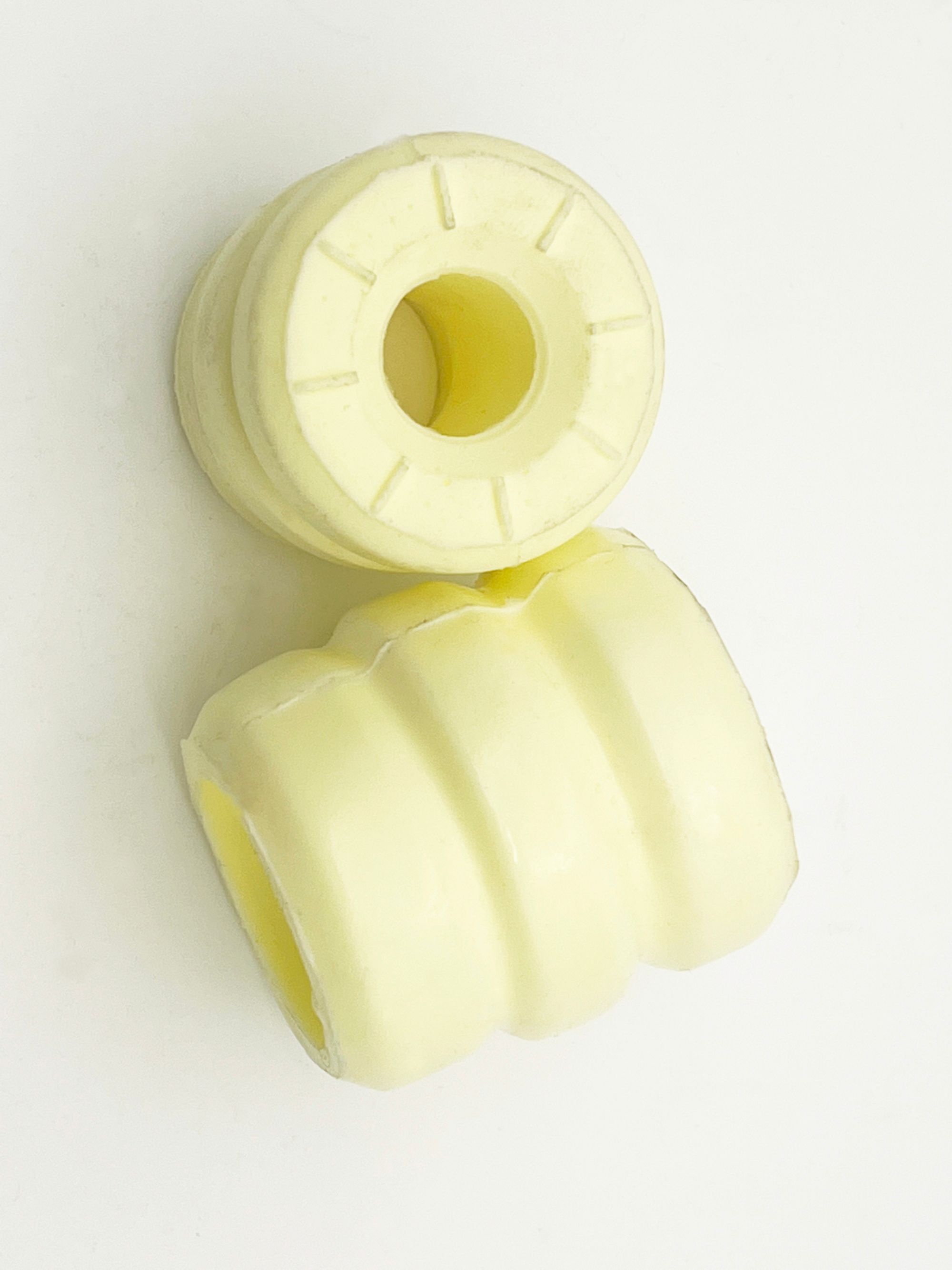
Every suspension engineer knows the jounce bumper is a small part with an outsized impact on ride quality and durability. Yet when it’s time to source these components, the real question isn’t just who can mold rubber—it’s who understands load curves, material fatigue, and the abuse of real-world potholes. That’s why partnering with a shock absorber jounce bumper manufacturer like XIAYI requires digging beyond the datasheet. In this post, we’ll walk through the critical factors engineers should evaluate before signing off, from compound selection to testing protocols.
Compound Consistency You Can Verify Before the First Shipment
Too many suppliers talk about consistency in broad strokes, leaving you to discover variances only after containers arrive. We take a different route: every batch of compound is tested against a fixed set of physical and chemical benchmarks before it ever leaves our facility. You don't wait for trial production to find out if the viscosity shifted or the cure rate drifted. The data is in your hands early, matched to your specification sheet, so the material you approve is the material you receive.
That verification isn't a one-off courtesy. We pull samples from multiple points during mixing, not just the final blend, and retain those samples for your review. If a lot number shows even a slight deviation outside agreed tolerances, it is quarantined and flagged before shipping. Nothing gets loaded without a signed-off batch record that includes mixing time, temperature curves, and dispersion checks.
You can also request pre-shipment samples for your own lab testing on any order size, not just large runs. That means your incoming QC becomes a confirmation rather than a discovery process. When your first shipment arrives, you already know how the compound behaves in your process, because the numbers you saw two weeks earlier match what's in the drums.
Why Prototype Turnaround Reveals More Than a Polished Catalog
A polished catalog tells you what a factory or studio already knows how to make. It is a curated highlight reel, edited to remove failures. Prototype turnaround, by contrast, exposes how a team behaves when the path is not clear. You see the real sequence: how quickly they ask questions, where they get stuck, what they choose to leave out.
That early scramble contains more signal than any final render. When a supplier turns a rough sketch into a working sample in a few days, you learn about their internal communication, tolerance for ambiguity, and willingness to push back. These traits never show up in a finished brochure because the brochure has already been through rounds of smoothing.
Speed without noise is rare. Fast turnaround only matters if the prototype still captures the core idea. A team that returns a sample quickly but misses the point has not revealed much. A team that returns a sample quickly and asks sharper questions than you asked yourself reveals everything you need to know before signing a larger contract.
Dimensional Tolerance and the Cost of Stack-Up Errors in Suspension
Every suspension component leaves the stamping or machining process with a small deviation from its nominal blueprint. A bushing sleeve might be a few microns under spec, a lower control arm bracket slightly rotated, a knuckle bore just off center. Individually these are trivial. But once assembled, the misalignments don't cancel out—they accumulate through the pivot points, forcing the tire to sit at an angle the design never intended. That silent stack-up is what turns a smooth-riding chassis into one that chews tires unevenly and wanders under braking.
The real expense rarely shows up as a failed dimension on a CMM report. It hides in the rework loops: shimming a subframe to compensate for a two-millimeter drift, ordering a custom-length ball joint because the production arm sits too far inboard, or scrapping an entire batch of uprights after a supplier's tolerance window shifted mid-run. Each corrective action adds labor, inventory, and downtime that never appears in the original piece-price quote. Over a model year, those fractional errors can quietly consume a six-figure budget that was meant for other engineering improvements.
Tightening every tolerance isn't the answer either—that just pushes the cost into tooling and inspection, often for gains the driver will never feel. The smarter approach is to map which stack-up paths actually affect wheel alignment, camber curve, and bump steer, then hold those dimensions to a functional window while leaving cosmetic or low-sensitivity features loose. It requires early collaboration between design and manufacturing, plus a willingness to accept that perfect geometry on paper can be less valuable than predictable geometry on the road.
Reading Failure Data from the Supplier's Existing Fleet Customers
Fleet trucks are already generating fault codes every day, but that data rarely sits in one place. A shop visit might produce a paper printout of trouble codes, while the telematics provider keeps a separate stream of ECU alerts. To read failure data properly, the supplier needs to tap into both sources: the diagnostic trouble codes (DTCs) captured during routine maintenance and the real-time fault notifications sent by the vehicle's connectivity module. The latter often includes freeze-frame data—engine speed, coolant temperature, vehicle speed, and odometer reading at the moment the fault triggered—which turns a simple code into a usable failure snapshot.
Working with fleet customers means negotiating access to their maintenance portals and telematics dashboards. Some fleets will export raw CSV files on request; others prefer to give the supplier a read-only login to their asset management system. The data itself is rarely clean. Fleet A might use SAE J1939 codes, while Fleet B relies on a proprietary fault numbering from the engine maker. Vehicle build dates, duty cycles, and even tire pressure settings differ, so the supplier has to normalize everything before analysis. This cleaning stage often reveals more about a fleet's operating conditions than the failure codes alone.
Once the failure records are normalized, patterns start to emerge. A particular turbocharger fault might appear almost exclusively on trucks that run long uphill grades in summer. A wiring harness issue could correlate with fleets that pressure-wash their chassis frequently. These insights let the supplier refine its warranty forecasts, target design fixes, and even advise customers on preventive maintenance schedules. The payoff isn't just fewer breakdowns—it's a feedback loop that turns every existing fleet vehicle into a rolling test bed.
Traceability from Raw Resin Lot to Finished Jounce Bumper
Every jounce bumper that leaves the production floor carries a thread of accountability that starts long before the first mold closes. When a raw resin lot arrives, it is assigned a unique identifier that follows it through drying, injection molding, and final assembly. Operators scan this code at each stage, and the system logs the exact time, machine, and process parameters tied to that specific lot. This means if a single pellet batch ever shows an anomaly, the team can immediately pinpoint which finished bumpers share that same origin, without halting the entire line.
The real value sits in the details of how this information is captured and stored. Instead of relying on handwritten logs or end-of-shift summaries, the process uses automated barcode readers and sensors that stamp each part with a discreet, permanent marking. That marking links back to a digital record containing the resin lot number, the date of molding, the cavity number on the multi-cavity tool, and even the operator shift. When a customer reports a field concern or a routine audit requests a sample history, tracing a bumper back to its resin lot takes minutes rather than days.
To keep the chain unbroken, the system also handles situations where a single production run draws from multiple resin lots or when regrind material is blended into the melt. Each contributing lot is recorded proportionally, and the finished bumper's traceability file shows exactly which lots fed into that shot. This level of granularity not only satisfies internal quality checks but also gives customers confidence that any part can be traced to its material origins with precision, even years after it was installed.
Post-Sale Support That Extends Beyond Replacing a Bad Batch
We don't consider a transaction finished the moment a package leaves our warehouse. That's why after you receive an order, you have direct access to a dedicated account manager who actually reads your emails instead of forwarding them into a void. If a batch shows even a hint of inconsistency, you won't be stuck with a generic return form and a two-week wait. We'll pull samples from the same production run, walk you through the issue, and either send replacements or credit your account—usually within the same business day.
More importantly, we keep a running file on every lot you've purchased, including raw material sources and processing conditions. So if something does go wrong, you don't have to re-explain your entire setup from scratch. We can trace the problem back to a specific step and help you adjust before the next order even ships. That's the kind of support that doesn't just fix a bad batch—it prevents the next one from happening.
And because our team actually uses the same materials in our own pilot runs, we'll often catch a potential issue before you do. If we notice a batch drifting outside the norm, we'll reach out proactively with a heads-up and options, rather than waiting for you to complain. That's not a standard service level agreement—it's just how we think support should work when your production line depends on it.
FAQ
Look for evidence of load-deflection curve tuning. A capable manufacturer will ask about your suspension's wheel travel, spring rate, and impact velocity—and then propose durometer and cell structure adjustments, not just quote a standard part number. Ask for raw test data from their own compression rig, not a brochure.
Microcellular polyurethane's compression set at elevated temperature is the usual weak point. If they can't show you retained height after 70°C and 50% compression for 22 hours, or if the value drifts above 15-20%, move on. That single number predicts whether the bumper will still absorb energy after two summers in an engine bay.
Because the cell structure is uneven. Cheap mixing or poor mold temperature control creates large, irregular voids that collapse under repeated impact. Request a cutaway sample from a production batch—not a hand-picked prototype—and inspect the cross-section for uniform fine cells, especially near the skin.
At minimum, a blocked force comparison against your current part on an Instron or similar machine at three temperatures: -30°C, 23°C, and 80°C. If the supplier resists low-temperature testing, that's a warning. Some formulations lose half their absorbed energy when cold, which shows up as harsh bottoming in winter.
They should be able to reverse-engineer the envelope from your suspension CAD, suggest a draft angle that avoids sink marks, and recommend whether an integrated steel cup or a separate washer makes more sense for your assembly process. If their only question is 'what dimensions do you need?' they're a machining shop, not an engineering partner.
If your production volume exceeds roughly 20,000 units per year, custom tooling usually pays back within 18 months through better ride tuning and fewer warranty claims. Below that, a flexible modular design with shim-adjustable height often gives similar performance without the upfront cost.
The chemical blowing agent used in microcellular polyurethane. It's often a water-based reaction, but some proprietary systems depend on imported catalysts. Ask for a dual-source plan for raw materials and a buffer stock of six weeks of finished bumpers at their warehouse—not just a promise in a contract.
Request a fatigue test per your real-world histogram: 100,000 cycles at 80% of full compression, with force and height measured every 10,000 cycles. The final dynamic stiffness should not drift more than 10% from the initial value. A supplier who can share that dataset voluntarily is already ahead of 80% of the market.
Conclusion
Engineers often discover that a supplier's claimed elastomer formulation means little without batch-to-batch proof. Requesting cure curves, durometer readings, and compression set data from actual production lots before the first shipment separates manufacturers who control mixing from those who simply buy pre-compounded rubber. Prototype lead time is equally revealing: a shop that can turn a revised jounce bumper geometry in days, not weeks, signals in-house tooling and a willingness to iterate rather than hide behind glossy marketing. Dimensional tolerance then becomes a compounding risk—if each bumper drifts by a few tenths of a millimeter, stack-up errors in the suspension can alter ride height, trim, and even spring engagement. Ask for capability studies on critical diameters and parting line flash, not just a single CMM report.
Beyond the spec sheet, failure data from the supplier's existing fleet customers offers unfiltered insight. Look for field return rates, tear-out photos, and how the manufacturer handled premature cracking or compression set in high-mileage vehicles. Traceability is the backbone of that accountability: the ability to map any finished jounce bumper back to a specific raw resin lot, mixing date, and mold cavity makes recalls surgical instead of sweeping. Finally, evaluate post-sale behavior. A partner worth keeping will offer application reviews, material substitution advice for harsh environments, and help with next-generation tuning—not merely replace a defective batch after you find it. These signals, taken together, reveal whether a manufacturer treats jounce bumpers as engineered components or commodity items.
Contact Us
Contact Person: Leela
Email: [email protected]
Tel/WhatsApp: 8613586885132
Website: https://www.xiayishockparts.com