

PVC Pipe Machine Factory Essentials Every Buyer Should Know Before Partnering
2026-11-16
Most buyers assume any PVC pipe machine will do the job—until production slows, tolerances drift, or support disappears after payment. Before you commit to a factory, it pays to look beyond glossy brochures and count the details that actually shape your bottom line. In this guide, we break down the essentials, from extrusion stability to after-sales response, drawing on practical insights from COMRISE and what separates reliable partners from costly experiments.
What the Factory Floor Reveals Before You Sign
A slow walk through the production area tells you more than a polished conference room. Look at how materials are staged, whether carts block the aisles, and whether operators have to hunt for tools. These details reveal whether the factory controls its process or just reacts to problems. If the floor is chaotic but the samples are perfect, assume the samples were hand-carried through the line.
Watch how people move. On a healthy floor, workers stay in a steady rhythm, quality checks happen at fixed points, and supervisors handle issues without shouting. When you see rushed rework piles near the end of the line, inconsistent labeling, or staff avoiding eye contact, those are signs that shipments are assembled under pressure. You are not looking for a showroom; you are looking for repeatability.
Ask to see the lines that are not running for your visit. Idle machines with fresh covers, sealed inspection areas, or half-packed cartons pushed to the side can point to hidden capacity problems or last-minute outsourcing. A factory that hides part of the floor is telling you its limits before a contract does.
Where the Steel and Circuits Come From
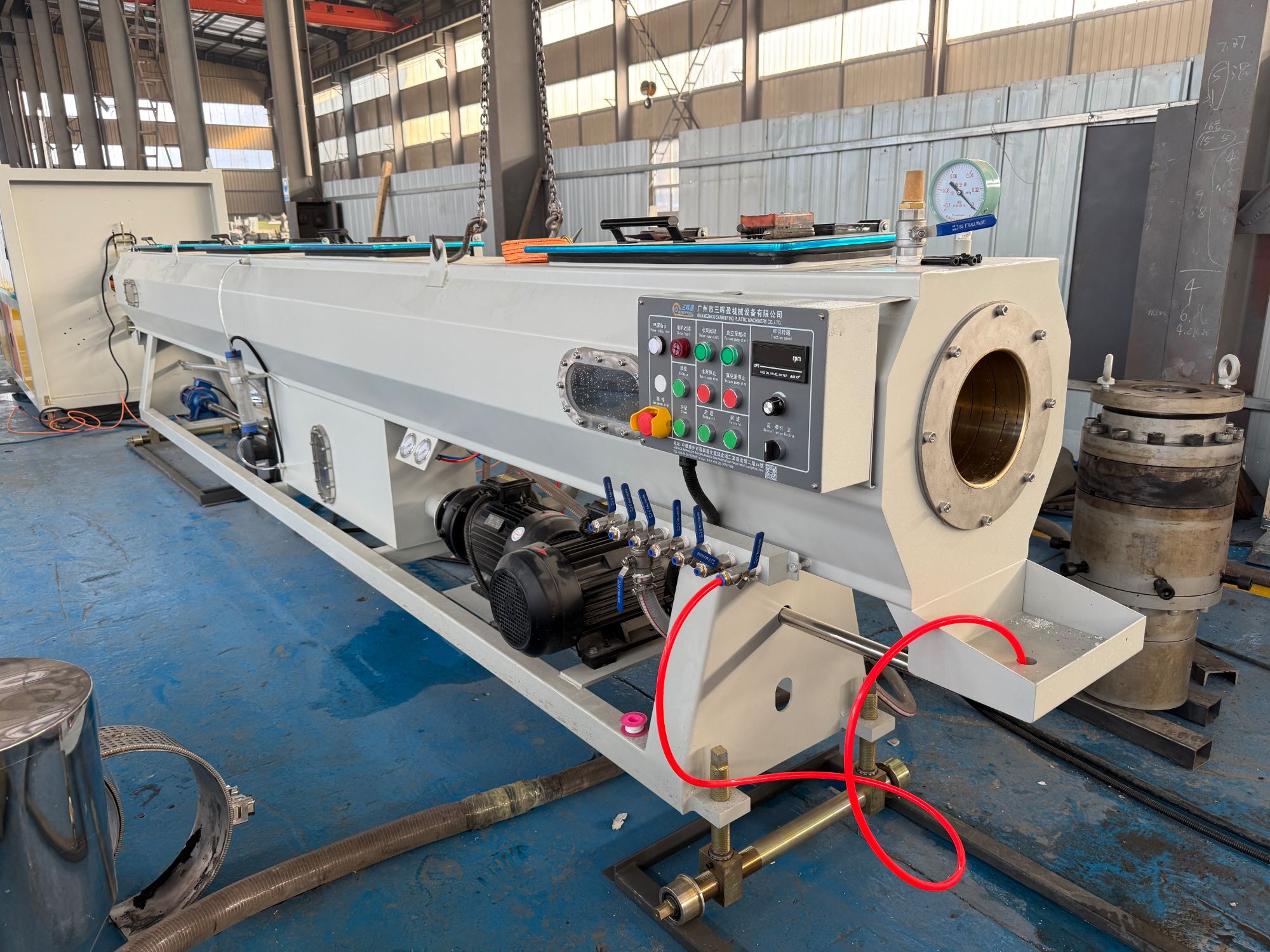
The steel beams and chassis panels start as baled scrap from decommissioned ships and flattened car bodies. An electric arc furnace in Indiana feeds them with three long carbon electrodes, and the heat climbs past three thousand degrees Fahrenheit before the melt is poured into a continuous caster. Within a few hours, that scrap becomes a slab, then a coil, then the punched and welded skeleton that holds the rest of the machine together.
The circuit boards have a quieter origin. Copper leaves a Chilean open pit as concentrated ore, gets refined into thin foil, and is laminated onto glass-reinforced epoxy. Tin and silver arrive from smelters in Indonesia and Peru to coat the exposed pads, while the silicon in the microcontrollers begins as quartzite crushed into metallurgical-grade lumps, then purified in a vacuum chamber until impurity levels drop to a few atoms per billion.
Those separate streams meet on a factory floor near the Pearl River Delta. Sheet metal still smells faintly of cutting fluid, and the first boards move through pick-and-place machines that mount resistors, capacitors, and processors faster than the eye can follow. Automated optical inspection checks every solder joint before a final screwdriver and a short power-on test send the finished product into a cardboard carton, ready for a container vessel that will leave port the same week.
Making Standard Machines Fit Non-Standard Pipes
The real headache starts when the pipe on the shop floor refuses to match the spec sheet. Maybe it has an oval cross-section from decades of stress, or a weld seam that sits proud of the surface, or a slight bend that nobody noticed until the cutting head stalled. Standard clamps and rollers assume a perfect cylinder, and that assumption is usually the first thing to break. The practical answer is rarely a custom-built machine. It is a series of small, deliberate modifications: swapping fixed jaws for self-centering ones with wider travel, adding floating support bearings that can follow a wandering centerline, or fitting a torch carriage that reads the actual surface profile instead of a theoretical radius.
One approach that works surprisingly well is to make the machine's frame less rigid in the right places. A heavy, boxed steel bed might look impressive, but it offers no forgiveness when a non-standard pipe comes through. By introducing a pair of adjustable guide rails with spring-loaded followers, the carriage can shift laterally a few millimeters without losing cutting accuracy. Another trick is to replace the standard drive rollers with polyurethane-coated wheels that have a deeper groove. This lets the machine grab pipes that are slightly egg-shaped or have uneven external coatings, without slipping or chewing up the surface. The goal is not to force the pipe into the machine's idea of round; it is to let the machine ride along with the pipe's own irregularities.
Finally, the control system deserves more attention than it usually gets. A standard pipe cutting routine assumes constant diameter and straight travel, so when the pipe tapers or drifts, the torch path goes wrong. Adding a simple laser profiler or a pair of contact sensors in front of the cutting zone gives the controller real-time feedback. It can then adjust the rotational speed, the torch height, or the carriage offset on the fly. This turns a standard machine into something that handles non-standard work without a full rebuild. In most shops, that adaptability is worth more than a brand-new machine that only performs well on paper.
How to Verify a Machine’s Real Output Before Delivery
Before signing the final acceptance papers, run the machine through a short but full production cycle using your own materials, not the vendor's demo samples. Watch how it handles edge cases: a slightly warped sheet, an underfilled hopper, a sudden stop and restart. The real output often shows itself in these interruptions, where settings that looked perfect during a polished walkthrough start to drift. Measure the first five parts and the last five parts from that run. If the dimensions spread more than your tolerance, or the surface finish changes midway, the machine hasn't earned its place on your floor yet.
Another practical check is to compare the reported cycle time against the stopwatch in your hand. Many machines log only the clean run between faults, quietly skipping the micro-stops and recovery attempts that eat into a shift. Stand beside it for an hour without the sales engineer directing the conversation. Note how often the operator has to intervene, clear a jam, or override a sensor. Those small pauses are rarely in the brochure, but they are exactly what determines whether the line hits its weekly target or falls behind by Wednesday.
Finally, ask for the raw machine data from the last three days of in-house testing, not a curated summary. A legitimate builder will hand over the unedited logs, including alarm history and parameter changes. Look for gaps where data collection stopped without explanation, or repeated adjustments to the same axis just before a quality checkpoint. These patterns reveal whether the machine was tuned to pass a one-time acceptance test or built to hold that performance through months of ordinary wear.
When the Factory’s Support Gets Tested
There comes a point when promises made during calm months stop meaning much. A delayed shipment, a sudden tooling failure, or a rush order that lands on a Friday night shows whether the factory’s support is real or just part of the sales pitch. Some teams go quiet the moment the schedule tightens. Others put an engineer on the line, call the client before the client has to ask, and keep updates honest even when the news is bad. That difference rarely appears in a contract.
Support also gets tested in smaller moments: a drawing that conflicts with the actual material, a tolerance that cannot be held without slowing output, a packaging label approved too late. The strongest factories treat these as normal friction rather than emergencies. They raise the issue early, offer two or three workable adjustments, and absorb the cost of a fix when the oversight is theirs. What customers remember later is not a perfect record but the fact that the factory did not disappear when the pressure arrived.
Hidden Costs That Surface After Installation
The initial quote often reads like a tidy sum, but the real ledger starts filling in weeks later. Reconfiguration fees, licensing renewals that kick in before the first full quarter closes, and the quiet cost of patch management all tend to appear once the implementation team has already left the building. Many operations teams discover that the software they bought to streamline workflows now demands a dedicated part-time administrator—someone who either gets pulled away from core duties or requires a new hire altogether.
Then there are the integration expenses that rarely make it into the original proposal. Connecting the new platform to existing CRM, billing, or inventory systems often means custom API work, middleware subscriptions, or additional third-party connectors. Each one carries its own maintenance cycle and upgrade schedule. Over a twelve-month span, these hidden line items can quietly double the perceived total cost of ownership.
What makes these surprises especially frustrating is that they surface at the exact moment switching costs feel highest. The data has already been migrated, staff have adjusted their daily routines, and walking back now seems more expensive than paying the unplanned fees. A sharper pre-purchase audit—one that asks vendors to itemize post-installation support tiers, integration dependencies, and internal labor hours—can turn many of these hidden costs into visible, negotiable line items before the contract is signed.
FAQ
Ask to see the machining floor, not the showroom. If they make their own screws and barrels, there will be deep-hole boring, whirling or milling stations, and a heat treatment area with visible tracking sheets. A real builder can show you a work order for the screw that goes into your specific extruder, including the alloy batch and hardness test result. Assembly-only shops usually hesitate at that point or give you a catalog photo. Also ask who cuts the gearbox teeth and grinds the screw flights. If the answer is always 'our partner,' treat the machine as a trading-company product regardless of the factory name on the wall.
Do not accept 'high-quality 38CrMoAlA' as a specification. You need the base steel grade, nitriding depth, surface hardness range, and whether the barrel is lined or through-hardened. Request the actual heat treatment chart for your order, not a generic certificate. For PVC, a nitrided depth around 0.5–0.7 mm with a hard chrome or bimetallic sleeve in high-wear sections is common, but the values should match your filler content. If you run calcium carbonate or recycled material, specify the wear package separately. Put a rejection clause on hardness deviation so a soft screw cannot be argued as 'normal variation' later.
The difference usually hides in things you cannot see at first glance: gearbox brand and service factor, motor efficiency class, PLC brand, the number of heating zones, whether the vacuum system is sized properly, and how much steel is in the base frame. One factory may use a domestic gearbox rated right at the torque limit; another may use an oversized unit that can survive a jam. One may quote a 55 kW motor at peak, another a 75 kW motor with real continuous load margin. Ask for the bill of materials with exact brand part numbers. If they will not list the gearbox model, assume it is the cheapest one that fits the barrel size.
A short dry run is not enough. Ask for a continuous production run of at least four hours using your intended compound or a close substitute, at the pipe diameter you plan to make most. During the run, monitor wall thickness at four points around the circumference every 20 minutes, record melt pressure stability, and check that the cutting unit handles full line speed without jams. If you use a co-extruder or marking line, test those together, not separately. The factory should provide the full record with timestamps. A line that can only run well for 20 minutes in front of visitors will show its real character by hour three.
Ask for a live video walk-through with the machine serial number visible, then ask them to pan to the control cabinet and name the PLC and inverter shown. If they refuse, treat that as a red flag. Also ask for a current production record from a customer running a similar diameter, not a five-year-old photo. A proper testing area should have load banks, water circulation, and a way to simulate production load, not just spin the screw at low speed. If the factory cannot show real-time data from a running machine, their 'tested before delivery' promise means very little.
Buyers argue about warranty months and forget response time, spare parts stock, and remote access. You need a written list of wear parts they keep in stock, the minimum number of service engineers who speak your language, and whether commissioning includes training for your maintenance staff or only the operators. Ask how quickly they can ship a replacement screw or gearbox, not just a heater band. Also clarify software access: if the PLC is password-locked, you may have to call them for every small parameter change. That becomes expensive fast. Put remote support hours and on-site travel costs in the contract, including what happens after the first year.
At minimum, the PLC, HMI, inverter or DC drive, temperature modules, contactors, and pressure transducers should be listed by brand and series. If the quote only says 'Siemens' or 'ABB' without the series, ask for the exact model. A low-end Siemens series may still work, but it changes the long-term reliability and spare part price. For PVC pipe lines, temperature control matters more than motor speed in many plants, so do not accept unbranded thermocouples or cheap SSR heating control. The electrical drawing should match the components inside the cabinet, and you should receive a copy at delivery, not six months later.
Look at how they design the downstream equipment, not just the extruder. Changeover pain usually comes from poorly built vacuum tanks, haul-offs, and cutters with limited center height adjustment or weak clamping. Ask for videos of a size change on a running line and see whether one operator can do it alone. The calibration sleeves and die heads should have quick-release setups or at least clearly marked alignment points. If the factory only shows one size running slowly, they may not understand multi-size production. Also ask what tooling is included in the base price; many quotes look cheap because the second and third size dies are extra and difficult to source later.
Conclusion
Walking a PVC pipe machine factory before signing anything often tells you more than a catalog ever will. Look past the polished demo area: check whether assembly lines are overloaded, whether components sit in labeled zones, and whether the people running the floor can explain why a barrel temperature drifts. Ask where the steel and circuits come from. A factory that openly names its gearbox, motor, and control suppliers is usually easier to trust than one that hides behind vague “European standard” claims. The same applies when your pipe sizes fall outside typical ranges. A good partner will show exact modifications to barrels, dies, and haul-offs instead of promising that a standard machine will simply “handle it.”
Output claims deserve more than a brochure figure. Before delivery, ask for a sustained run on your own material or a similar grade, and measure weight per meter, wall thickness, and scrap rate over several hours, not a five-minute demo. Also think past startup. After installation, support quality becomes obvious when an operator calls about a calibration sleeve issue at midnight. Hidden costs such as spare screws, special lubricants, installation brackets, or software licenses often appear only after the machine is bolted down. Clarify those items in writing before paying the deposit. A factory that tolerates such questions and gives direct answers is usually the one you want when something inevitably drifts out of spec.
Contact Us
Contact Person: LISA LEE
Email: [email protected]
Tel/WhatsApp: +86 13780696467
Website: https://www.qdpipemachine.com