

PTFE Valve Seat Wholesaler Questions to Ask Before Placing a Bulk Order
2026-11-23
Sourcing PTFE valve seats in bulk is rarely just about the lowest quote. Ask the wrong questions—or none at all—and small differences in resin purity, machining tolerance, or sintering can turn a promising order into field failures. Before you sign off on a large purchase, it pays to know exactly what separates a reliable wholesaler from a costly gamble. At TAIFNO, we have learned that buyers who dig into material traceability, dimensional consistency, and real production capacity tend to avoid the most common pitfalls. Here are the questions worth asking first.
Does the Wholesaler Know Which PTFE Grade Survives Your Exact Pressure and Chemical Mix
Any wholesaler can call a material PTFE and leave it at that. But the grade that survives a 2,000 psi seal with hot hydrochloric acid is rarely the same one that works in a low-pressure caustic line. Virgin PTFE has broad chemical resistance, yet it deforms under sustained load, while filled or modified grades trade some chemical inertness for better creep resistance. Without pressure, temperature, and full chemical makeup, the recommendation is mostly guesswork.
A reliable supplier will ask about concentration, trace contaminants, cycling, and whether the part sees continuous compression or occasional spikes. They should be able to explain, for example, why a glass-filled grade would fail in hydrofluoric acid or why a carbon-filled PTFE may create galvanic concerns against certain metals. If the answer is always the same stock grade regardless of your conditions, the wholesaler is moving boxes, not solving a material problem.
Can They Hold Consistent Flatness and Tolerance Across a Full Batch
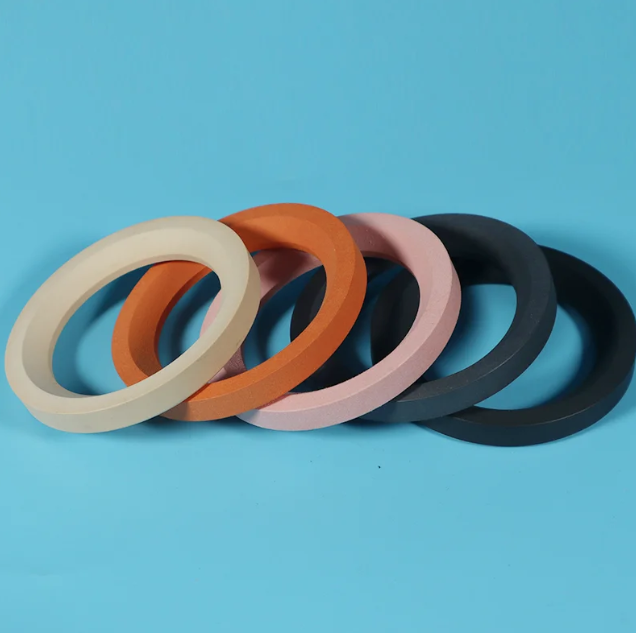
Batch consistency doesn’t happen by accident. It comes from how the material is fed, how the tooling wears, and whether the press parameters stay locked once the first good part comes off the line. Some shops can hit flatness and tolerance on a sample, but the real test is part fifty or five hundred, when heat has built up and the operator’s hands are tired. The ones that hold it usually monitor thickness at multiple points across the sheet, not just at the corners, and adjust in small increments rather than chasing a single bad reading.
Flatness tends to drift when there’s internal stress left in the blank before forming, or when the die clearance isn’t matched to the material’s springback. A fabricator that’s serious about batch tolerance will often run a first-article check, then a mid-run check, and compare the spread rather than the average. If the spread stays tight, the process is under control; if it widens, something has shifted — a worn punch, a temperature swing, or a coil that came in with different hardness. The good shops catch that drift before it becomes scrap.
You can usually tell by asking what they do at the end of a run, not the beginning. Do they check the last five parts as carefully as the first five? Do they keep a record of flatness readings over time, or just check a box on the traveler? Consistent flatness across a full batch is a habit, not a feature, and it shows up in the way a shop talks about process control without ever mentioning the word quality.
Will Every Finished Seat Trace Back to Its Raw PTFE Resin Lot
The short answer is that full traceability is achievable, but it demands a level of discipline most production lines are not built for. PTFE resin arrives in discrete lots, each with subtle variations in particle size, molecular weight, and thermal history. Once those lots enter the compounding and molding stages, the material gets blended, extruded, and sintered under shared tooling and shared ovens. Unless a facility uses lot-specific hoppers, dedicated mixers, and carefully scheduled changeovers, the identity of the resin becomes diluted almost immediately. A finished seat might contain material from two or three resin lots simply because the operator topped off a feed bin mid-run.
Tracing every finished seat back to a single raw PTFE lot is less about fancy software and more about physical segregation. You need a closed-loop material flow: one lot in, one job running, one cleaning cycle before the next lot enters the same equipment. That sounds simple on paper, but it collides with the reality of rush orders, partial bags, and the temptation to “just use the leftover from yesterday.” Companies that actually achieve lot-level traceability often run smaller batch sizes and accept lower equipment utilization as the cost of certainty. They also photograph or weigh every resin container before and after use, creating a paper trail that survives even when a barcode gets smeared with PTFE powder.
There is also a middle path that many seat manufacturers quietly adopt: trace the seat to a defined production window and a controlled blend record, rather than a single resin lot. If the question is whether every finished seat will trace back to its raw PTFE resin lot, the honest answer is that it can, but most will not unless a customer contract or a regulatory requirement forces the issue. The technology exists. The will to slow down and segregate is the missing ingredient.
How Are Dimensions Checked Before the Pallets Leave the Shop
Every pallet gets a quick but disciplined dimensional pass before it heads out. A steel framing table with fixed stops catches length and width at a glance, while deck height is checked against a shop-built gauge rather than a loose tape. If a board sits proud by even a small fraction, the pallet is pulled and corrected on the spot.
Squareness is measured corner to corner, and fork entry openings are verified with a simple go/no-go block that matches real forklift tines. For high-volume runs, a heavier sample is checked from the middle of the stack, not just the top few, so a slow drift in the saw or nailer gets caught before it becomes a full batch issue.
Anything that does not land inside tolerance is either reworked at the bench or cut down for a smaller size if the lumber allows. The last person on the line signs off only after the corners match, the openings clear, and the overall height sits within the range on the work order.
What Is the Honest Lead Time for Filled PTFE or Non-Standard Profiles
Standard rod or sheet often ships fast, but filled PTFE and profiles that fall outside catalog shapes move on a different timeline. If the cross-section is not already tooled, the clock starts with the die or mandrel. A simple shape may reuse an existing tool with minor adjustment, while a complex, asymmetric profile often requires a new die that can take a couple of weeks before any material is processed.
The compound itself is the next variable. Glass, carbon, bronze, or MoS2-filled grades are not always sitting on the shelf ready to extrude. Some filler blends take extra time just to mix and condition, and the sintering cycle is tied to wall thickness. A heavy cross-section may need a long, controlled cool-down to avoid internal stress or voids, which adds days that a standard thin-wall tube would not require.
In practice, an honest range is usually four to six weeks for many filled or non-standard profiles, and eight weeks or more is realistic when a new tool, an uncommon filler package, or a tight tolerance is involved. If a supplier quotes much faster, it is worth asking whether the tool already exists and whether the raw compound is in stock. Confirming those two points early usually leads to a more dependable date than accepting an optimistic promise that slips later.
Who Takes Ownership When a Seat Cracks After Repeated Thermal Cycling
Repeated thermal cycling in an aircraft cabin rarely produces a clean, single-cause failure. A crack that appears in a seat shell or armrest after hundreds of ground-to-cruise temperature swings leaves inspectors sorting through material choices, molding conditions, fastener loads, and how the seat was actually maintained over time. Ownership often gets negotiated rather than assigned on the spot.
The first useful step is to look at where the crack starts and how the surfaces around it behave. A hairline fracture radiating from a screw boss or a sharp corner may suggest stress concentration from assembly or part geometry, while damage near a previous repair or a heavily cleaned area shifts attention toward line maintenance and chemical exposure. Thermal fatigue itself is expected; the question is whether a particular design or process made it worse than it should have been.
Contracts usually set limits for cycles, hours, or calendar time, but repeated thermal loading often sits in an uncomfortable middle ground between normal wear and a latent defect. The operator carries the immediate duty to keep the seat airworthy, yet may have a claim back to the seat manufacturer or component supplier if testing missed a foreseeable failure mode. In practice, ownership is settled through evidence pulled from teardown, service records, and warranty language rather than a single inspection report.
FAQ
Get the resin maker, grade, and lot certificates. If the answer is just '100% virgin PTFE,' push for the datasheet because that phrase alone tells you very little about creep resistance or chemical compatibility.
Ask how they handle shrinkage and what they measure on the line. The best suppliers will talk about sealing face flatness, ID/OD tolerances, and inspection intervals, not just final sorting.
Request a first article before the full run. This catches whether the shop understands the subtleties of the seat profile: edge breaks, chamfers, and face finish matter as much as the bore size.
Ask how glass, carbon, graphite, or bronze fillers change hardness, wear, and chemical resistance in your service. A supplier that helps you weigh trade-offs is more useful than one that simply says all options are available.
Check for individual separation, rigid cartons, and clear labeling. PTFE is soft enough to distort if parts are stacked loose, so packaging details tell you how much the supplier understands the material.
You want a written process: containment, sorting, replacement, or credit. Look for a calm, specific corrective action path rather than a broad guarantee.
Ask for two or three references where seats operate under comparable pressure, temperature, or chemical exposure. A wholesaler with real experience will not hesitate.
Conclusion
Before you commit to a bulk PTFE valve seat order, the conversation with a wholesaler should feel less like a sales pitch and more like an engineering audit. Start by pressing them on material selection: a seat that works in one chemical stream may swell, creep, or crack in another, so ask whether they can actually match a specific PTFE grade—virgin, glass-filled, carbon-filled, or a modified compound—to your exact pressure and media mix. Then move to the less obvious risks. Consistency is where many suppliers fall short; a few seats that pass a spot check do not tell you much about the rest of the pallet. You want to know how flatness and dimensional tolerance are held across the entire batch, not just on a golden sample. Traceability matters just as much. If every finished seat cannot be linked back to its raw PTFE resin lot, a field failure becomes a guessing game instead of a containment decision.
The final set of questions should separate a genuine partner from a box mover. Ask what actually happens before the pallets leave the shop—are dimensions checked with calibrated gauges, optical measurement, or just a quick visual pass? For filled PTFE or non-standard profiles, honest lead times often stretch well beyond catalog promises; a supplier who admits that upfront is more useful than one who ships late and blames the resin market. Finally, pin down ownership after thermal cycling takes its toll. Seats can crack from repeated expansion and contraction, and you need to know who stands behind the material choice, machining process, and lot traceability when that failure shows up in service. These questions do not guarantee perfection, but they make the risks visible before money and time are on the line.
Contact Us
Contact Person: Tommy Xiao
Email: [email protected]
Tel/WhatsApp: 8615651509888
Website: https://www.ptfe-factory.com