

Private Label Veterinary GS-441524 Injection: What Every Veterinary Practice Should Know
2026-11-16
If your clinic still sources GS-441524 from the same generic suppliers as everyone else, you're leaving both margins and trust on the table. Lucpets is changing that equation with private label veterinary injections built for practices that refuse to blend in. Here's what you need to know before your next restock.
The Private-Label Shift in FIP Treatment
The landscape of feline infectious peritonitis treatment has shifted dramatically as private-label formulations enter the market. Historically, veterinarians and cat owners relied on branded antiviral compounds, but the rising cost and inconsistent supply have pushed many toward unbranded alternatives. These private-label options often originate from the same active ingredients, yet they arrive with less clinical documentation and more variability in quality control. For practitioners, this creates a delicate balance between offering affordable hope and maintaining therapeutic confidence.
A key driver behind this shift is the emotional and financial strain on pet owners facing a previously fatal diagnosis. When a beloved cat is diagnosed with FIP, the urgency to start treatment within days leaves little room for navigating complex supply chains. Private-label products promise faster access and lower price points, but they also demand a higher degree of vigilance from prescribing vets. Some clinics have responded by developing internal protocols for verifying batch purity and monitoring patient responses more closely than they would with established brands.
Looking ahead, the private-label movement could push the entire FIP treatment ecosystem toward greater transparency. As more owners share their outcomes and veterinarians compile real-world data, even unbranded formulations may gain a de facto evidence base. The challenge lies in distinguishing reliable private-label suppliers from those cutting corners. Ultimately, the shift is not just about cost—it is about redefining how a rare, high-stakes feline disease is managed when traditional pharmaceutical pathways fail to meet demand.
Decoding GS-441524 Concentration Claims
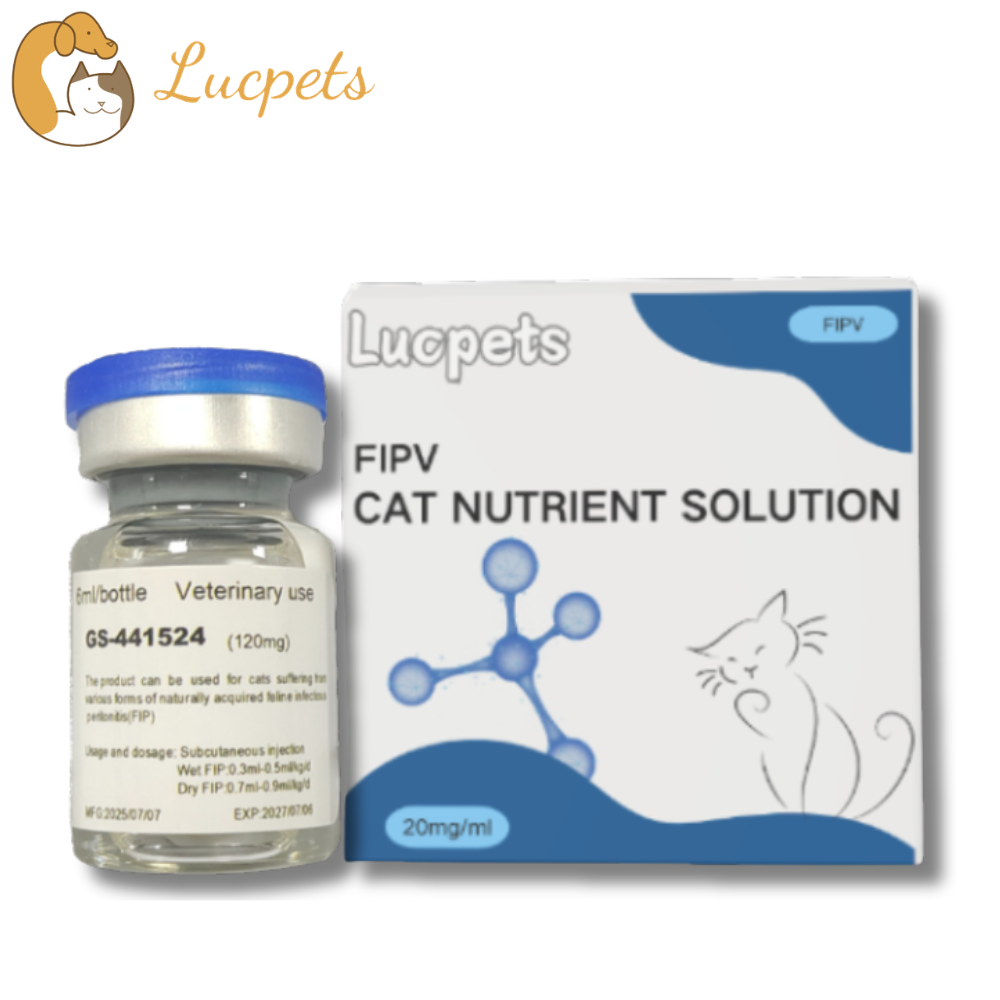
When a vial of GS-441524 lists a concentration like 20 mg/mL, that number often reflects the amount of active ingredient added at the start of manufacturing. It doesn't automatically account for losses during filtration, degradation from heat or light, or the actual solubility limits of the chosen solvent. Third-party lab reports frequently reveal measurable gaps between the labeled claim and the recovered amount, sometimes by 10-15% or more.
The solvent system matters just as much as the number itself. Some formulations use aggressive solvents to keep GS-441524 in solution, but those can increase injection pain or cause tissue irritation. A high concentration claim may look efficient, yet if the drug precipitates in the vial or after injection, the delivered dose becomes unpredictable. Reading a concentration claim without knowing the solvent stability and pH range gives an incomplete picture.
Consumers and veterinarians should treat concentration labels as a starting point, not a guarantee. Asking for batch-specific certificates of analysis, checking whether the testing method was HPLC or UV, and confirming the sample size tested can separate reliable products from marketing claims. The most honest concentration claim is one that matches what a fresh, properly stored vial actually delivers at the point of injection.
Vetting Suppliers Before the First Injection
Running a first injection without a proper supplier check is like handing your project's fate to a stranger. You want to see how they handle pressure, not just how well they quote. Ask for a documented audit of their tooling and process controls. Visit the floor if you can. Watch how they handle raw material storage, machine maintenance logs, and changeover procedures. A supplier who keeps those records clean is one who won't shrug when your part comes out warped or short-shot.
Beyond the physical plant, dig into their communication rhythm. Do they reply with actual answers, or just promises? Send a small test job first — something that mirrors your real geometry but doesn't cost you a month of lead time. See how they flag issues before they happen. A good injection molder will ask about your part's end use, tolerance stack, and whether that sharp corner actually needs to be sharp. If they don't ask, they don't care.
Finally, check their past without relying on polished references. Ask about a job that went wrong and how they pulled it back. Every shop has failures; the ones worth your trust can name one and explain the fix. That honesty, plus a clean floor and a real phone call, tells you more than any certificate on the wall.
Dosing Nuances That Make or Break Outcomes
The difference between a good outcome and a disaster often isn’t the drug choice—it’s the schedule. Loading doses, for instance, look straightforward on paper but trip up clinicians when volume of distribution shifts in sepsis or obesity. Giving the “standard” 1 g vancomycin load to a 120 kg patient yields subtherapeutic levels for the first two days, and by the time the trough comes back, the infection has already organized its defenses. Conversely, the same dose in a frail 45 kg patient with poor renal clearance can push the AUC into nephrotoxic territory without anyone noticing until the creatinine starts climbing.
Timing with meals turns out to be just as brutal. Levothyroxine given with coffee loses a chunk of absorption; prescribe it “every morning” without specifying an empty stomach and you’ve effectively underdosed the patient for years. Grapefruit juice and certain statins are old news, but fewer people catch that enteral feeds pause the absorption of phenytoin if the tube isn’t held long enough. This isn’t trivia—it’s the reason a seizure patient on “adequate” dosing still ends up in the emergency room.
Tapering and missed-dose rules separate the careful prescriber from the careless one. Abruptly stopping a beta-blocker in someone who’s been on it for a decade invites rebound tachycardia and ischemia, while a rigid 10% weekly taper for prednisone in a patient who’s only been on steroids for five days wastes time and exposes them to unnecessary side effects. The real skill lies in knowing when a missed dose can be simply skipped versus when it needs to be taken as soon as remembered—warfarin and insulin don’t forgive double dosing, but a forgotten SSRI can usually wait until tomorrow without derailing the whole plan.
Monitoring for Subtle Treatment Reactions
Many treatment reactions don't announce themselves with a bang. They creep in as faint shifts that are easy to brush off: a slight drop in energy, a touch more irritability than usual, a sleep schedule that quietly falls apart, or a new hesitation before answering a simple question. These changes often get blamed on a busy week or normal stress, but when they start soon after beginning a treatment, they deserve a closer look. Ignoring them can mean missing the earliest sign that something isn't quite right.
Monitoring for these subtle reactions is about more than asking \"any side effects?\" at a follow-up visit. It requires a baseline—how the person felt, slept, and functioned before the treatment—and then a gentle but systematic comparison. A simple daily log can capture things like appetite shifts, dream intensity, concentration lapses, or changes in sexual interest that people rarely mention unprompted. Over a week or two, tiny deviations start to form a pattern that no single question would ever reveal.
Catching these early signals matters because it allows adjustments before a minor annoyance becomes a major problem. A barely noticeable tremor or a dry mouth might be tolerable, but a gradual emotional flattening or a creeping sense of detachment is not something to wait out. When patients and clinicians treat monitoring as an ongoing conversation rather than a checkbox, small reactions can be addressed with confidence, often preserving the treatment's benefits while protecting the person's quality of life.
Guiding Owners Through Cost and Uncertainty
When owners face rising costs and unclear timelines, the usual spreadsheets and forecasts start to feel more like guesswork than guidance. A better starting point is to separate what you can control, such as fixed overheads, contract terms, and payment schedules, from what you cannot, like material price swings or regulatory delays. This split keeps owners from reacting to every new number and shifts the focus to the few cost drivers that actually move the needle.
Instead of chasing one accurate budget, build a range that reflects best-case, likely, and worst-case scenarios. Attach a small buffer to each line item that has shown past volatility, and revisit those buffers monthly rather than waiting for a surprise invoice. Owners who work this way typically spot cash flow gaps two or three months earlier, which gives them room to renegotiate terms, delay non-essential purchases, or arrange short-term financing without panic.
Uncertainty becomes less overwhelming when owners have a short list of trigger points. Decide in advance what you will do if a key material climbs ten percent, if a major client delays payment by thirty days, or if a subcontractor misses a deadline. Write down those responses, even as rough notes, and share them with your core team. That way, when pressure hits, the conversation shifts from scrambling for answers to following a path that was already agreed upon.
FAQ
GS-441524 is a nucleoside analogue that blocks viral RNA replication in coronaviruses. It became widely known after studies showed it could reverse FIP in cats when given daily. FIP was considered fatal for decades, so demand for this molecule exploded. Private label versions now offer clinics a way to stock it under their own brand instead of relying on unmarked vials from overseas suppliers.
Ask for a certificate of analysis from an independent lab, not just the manufacturer's own paperwork. Confirm the concentration matches the label, check for endotoxin and sterility test results, and ask about stability data at the storage temperature you'll actually use. If the supplier hesitates to provide batch-specific data, treat that as a red flag.
GS-441524 is not approved by the FDA for use in animals. That means any product you carry is being used off-label or via an unapproved channel. Some states may have specific rules about compounding or importing such drugs. You should review your liability coverage and document informed consent thoroughly with every client before starting treatment.
The injection bypasses first-pass metabolism and tends to produce more predictable blood levels, but it also causes more injection-site pain and requires daily visits or owner training. Monitoring should include regular bloodwork for liver and kidney values, plus checking for injection site reactions that can become severe. Oral forms are not always equivalent to injectable concentrations.
Be honest that the evidence comes from non-commercial studies and individual case reports. Common side effects include transient injection site discomfort, mild lethargy, and in some cats, a drop in white blood cells. The full course is typically 12 weeks, and stopping early often leads to relapse. Owners need to understand the financial and emotional commitment before the first dose.
Base initial dosing on the most recent published protocols, usually 4–6 mg/kg daily for the injection, and adjust according to clinical response and body weight changes. Never assume the concentration printed on a private label vial is accurate; verify with the supplied COA. Record the exact batch number and dose given in the patient file for traceability.
Most formulations are light-sensitive and should be kept in a refrigerator once reconstituted, but this varies by manufacturer. Check whether the product contains preservatives, because multi-dose vials have different contamination risks. Warm the vial to room temperature before drawing up to reduce injection pain, and never mix it with other drugs in the same syringe.
Request the manufacturing site's GMP status, the source of the active pharmaceutical ingredient, batch release criteria, and whether the supplier carries product liability insurance that names your practice. Also ask about recall procedures and minimum order volumes. If any of these answers feel vague, walk away.
Conclusion
The private-label market for GS-441524 has grown quickly as veterinary practices look for affordable ways to treat feline infectious peritonitis. But not all vials are equal. A label that says 15 mg/mL might not reflect what is actually in the solution, so practices need to ask for independent third-party testing instead of relying on a supplier's word. Vetting the manufacturer matters just as much as the price—check whether they follow GMP standards, provide batch-specific certificates of analysis, and have a track record with veterinary compounding. Without this, you are injecting an unknown into a cat that is already fighting a serious disease.
Dosing is where outcomes are won or lost. Even small variations in concentration, if undetected, can lead to underdosing and relapse or overdosing and toxicity. Many clinicians now prefer to base doses on the actual GS-441524 content rather than the total volume, which means recalculating each time a new batch arrives. Monitoring during treatment should go beyond routine bloodwork; watch for injection site reactions, transient lethargy, or changes in behavior that might signal a bad batch. Finally, guide owners through the financial reality. FIP treatment is expensive, and costs can shift with private-label pricing. Be honest about uncertainty, set expectations early, and document every conversation so owners feel supported rather than sold to.
Contact Us
Contact Person: Aaron
Email: [email protected]
Tel/WhatsApp: +86 18177165140
Website: https://www.lucpetsglobal.com