

Precision Rolling Mills Factory Insights: Mastering Metal Shaping with Advanced Techniques
2026-06-27
Precision rolling mills aren't just machines—they're the heart of modern manufacturing. Learn the advanced techniques that separate industry leaders from the rest, and find out how GRM is setting new standards in metal shaping.
The Art and Science of Precision Rolling
Precision rolling isn't just about feeding metal through a pair of hardened rolls. It's a delicate dance where human intuition meets rigorous engineering. Operators often speak of feeling the machine through their fingertips, detecting subtle vibrations that signal a misaligned roll or uneven material flow. This hands-on artistry, passed down through years of apprenticeship, allows them to make real-time adjustments that no sensor alone can match. Yet behind every intuitive touch lies a bedrock of metallurgy and mechanics—grain structures, work hardening, and the precise calculation of reduction ratios that turn raw stock into flawlessly dimensioned strip.
The science side is equally captivating. Modern mills rely on laser micrometers and closed-loop feedback systems that measure thickness variations within microns, adjusting roll gaps faster than the blink of an eye. Engineers spend countless hours modeling the elastic deformation of the rolls themselves, because even hardened steel bends under enough force, and ignoring that deflection leads to crowned profiles and rejected product. Thermal expansion, lubrication chemistry, and surface finish all become variables in a complex equation that never quite settles into a steady state.
What makes precision rolling so gripping is the constant negotiation between these two worlds. A veteran roller might reject a theoretically perfect setup because it doesn't 'sound right,' only to have the lab later confirm an incipient bearing failure that the models overlooked. The best practitioners learn to code-switch between gut instinct and data analysis, building a mental library of how abstract parameters manifest as physical sensations. In an age of increasing automation, that blend of art and science remains the soul of the craft.
Pushing Boundaries: Micron-Level Accuracy in Every Pass
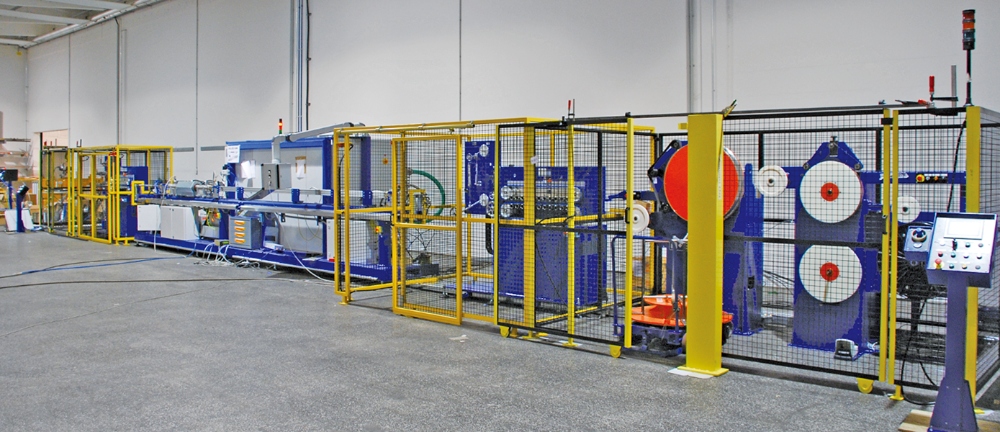
Achieving micron-level accuracy isn't just a specification on a datasheet—it's a mindset engineered into every stage of the process. From the initial setup, where thermal stability and vibration control are treated as non-negotiable prerequisites, to the real-time feedback loops that adjust tool paths mid-cycle, every detail is tuned to eliminate deviation before it starts. This granular control allows us to hold tolerances that most shops would consider aspirational, turning them into routine outcomes.
The secret lies in a fusion of advanced metrology and refined machining intuition. In-process probing doesn't just verify; it actively course-corrects, compensating for tool wear or material inconsistencies on the fly. Combined with cutting-edge spindle technology and micro-tooling strategies, even the most delicate features emerge with crisp edges and exact geometries. It's this marriage of digital precision and seasoned craftsmanship that ensures each pass contributes predictably to the final form.
For industries where a few microns can separate success from scrap, this relentless consistency becomes a competitive advantage. Whether carving intricate medical components or optical-grade surfaces, the ability to deliver micron-level repeatability across entire production runs means fewer rejects, tighter assemblies, and ultimately, products that perform beyond expectation. It's not just about hitting a number; it's about building trust in every part that leaves the line.
Innovative Roll Pass Strategies for Complex Profiles
Designing roll passes for complex profiles has long pushed the boundaries of conventional metal forming. Traditional methods, built around symmetrical shapes and gradual reductions, often fall short when dealing with intricate cross-sections that require precise material flow. The real breakthrough lies in rethinking the sequence itself—moving from linear pass progressions to dynamic, problem-specific layouts that account for lateral spread, flange filling, and internal stress distributions in ways that generic formulas cannot.
One effective approach involves splitting the deformation into stages that deliberately overfill then correct, using dedicated preforming passes that create a controlled surplus of metal in critical zones. Pairing this with asymmetric roll gaps and variable friction conditions allows for finer manipulation of grain orientation and eliminates common defects like overlaps or underfills. Advanced simulation tools now let designers test these unconventional sequences virtually, fine-tuning parameters such as draught per pass and roll diameter ratios to achieve near-net shapes in fewer steps, cutting both energy use and tool wear.
Taming Tough Alloys: A Materials-Centric Approach
Working with metals like titanium, Inconel, and cobalt-chrome demands a fundamental shift in perspective. These alloys don't just resist cutting tools—they actively fight back through rapid work hardening, thermal buildup, and unpredictable chip formation. Instead of attacking them with ever more aggressive machinery, engineers are learning to listen to the material. By understanding grain structures, phase transformations, and the alloy's own thermal history, we can predict how it will behave under stress and coax it into shape rather than brute-force our way through.
This materials-first mindset begins long before the first chip hits the floor. It involves selecting heat treatments that purposely soften the matrix, or utilizing cryogenic processing to refine carbide distributions. In some cases, intentionally inducing a controlled amount of damage—like localized stress relief—can make an alloy more cooperative. Even the raw stock matters: bar stock with a particular texture or forged preforms with oriented grain flow can dramatically reduce cutting forces. It's about treating the material as a partner with a set of rules, not a stubborn obstacle.
Adopting this approach also redefines tooling and coolant strategies. Rather than defaulting to the hardest available inserts, one might choose a slightly tougher grade that can absorb the impact of interrupted cuts without chipping. Coolant becomes not just a temperature controller but a chemical ally—extreme-pressure additives can lubricate nascent shear zones at the atomic level. The entire process morphs into a dialogue, where you constantly ask: what's the alloy trying to do right now, and how can I work with that? When you shift from imposing your will to negotiating with the material's innate tendencies, machining tough alloys becomes less about conquering and more about collaboration.
Where Automation Meets Craftsmanship: The Smart Mill
In the smart mill, automation doesn't overshadow the human touch—it elevates it. Sensors and AI handle repetitive tasks, freeing skilled artisans to focus on precision refinements that machines alone can't replicate. The result is a seamless blend of speed and soul, where every product carries the unmistakable signature of human care.
This fusion reshapes tradition. Instead of replacing craftspeople, the technology becomes an extension of their intuition. A millwright now uses real-time data to fine-tune grinding pressures, preserving the texture and consistency that mass production often destroys. It's a quiet partnership: the machine remembers, the human perfects.
The smart mill isn't a factory devoid of people—it's a workshop reborn. Handcrafted quality meets digital precision, creating goods that are consistent yet distinctive. Here, automation doesn't erase heritage; it ensures it thrives, one intelligent cut at a time.
Tailored Solutions for Unconventional Industrial Needs
Not every industrial challenge fits neatly into a catalogue. When standard equipment and off-the-shelf systems fall short, we step into the gap, shaped by decades of working with outliers. Our approach isn’t about pushing what’s already on the shelf—it’s about listening deeply, then designing a solution that’s physically and operationally singular. From machines that handle unstable materials in cramped quarters to processes that must endure thermal swings no standard spec ever imagined, the starting point is always the same: we ask what the problem actually needs, not what we already make.
That might mean rethinking material flows from scratch, combining technologies that have never coexisted in one machine, or simplifying to an almost primitive gesture—like a gravity-fed sequence that eliminates three motors and their failure points. We’ve embedded monitoring into the strangest geometries, changed control logics to mimic a skilled operator’s intuition, and once even built a measurement system around the vocal feedback of a seasoned line worker who could ‘hear’ a good weld. The result isn’t flashy; it’s stubbornly functional. It fits like it was always meant to be there, because it was—designed not around our capabilities, but around the actual, gritty realities of your floor.
FAQ
Precision rolling mills achieve tighter dimensional tolerances and superior surface finishes through rigid construction, precise roll alignment, and advanced control systems. They often handle materials that require exact thicknesses, like battery foils or aerospace alloys, where even micron-level deviations matter.
Techniques like skin pass rolling for surface texture control, tension leveling for flatness, and automated gauge control with laser measurement keep output consistent. Some mills also incorporate edge trimming or slitting directly into the rolling process to reduce secondary handling.
Think electronics for connectors and lead frames, medical devices for surgical instruments, automotive for body panels, and aerospace for structural components. Essentially any field where material uniformity and reliability are non-negotiable.
In-line monitoring systems track thickness, width, and surface defects in real time. Combined with statistical process control and regular calibration of sensors, they catch variations early. Many factories also run sample strips through tension tests to verify mechanical properties.
They handle a broad range—stainless steel, aluminum, copper, titanium, and even specialty alloys. The main limitation is work hardening; some materials need intermediate annealing between passes. Very brittle metals might require heated rolls to prevent cracking.
Automation ties everything together: from recipe management and roll positioning to temperature control and data logging. It minimizes human error, speeds up changeovers, and enables predictive maintenance—catching bearing wear or misalignment before it affects output.
Conclusion
The pursuit of precision in metal shaping goes beyond mere dimensional tolerance—it is a craft where science and instinct converge. In a modern rolling mill, each pass is an opportunity to refine grain structure and eliminate minute asymmetries, often targeting micron-level accuracy that transforms raw billets into flawlessly uniform profiles. This requires a deep materials-centric understanding: from the temper of exotic alloys to the subtle work-hardening behaviors that only years of hands-on observation can reveal. The roll pass design itself becomes a dynamic puzzle, blending heritage know-how with simulation-driven innovation to tackle complex shapes that standard setups would never achieve.
Underpinning this precision is a smart mill environment where automation doesn’t replace human insight but amplifies it. Adaptive control loops adjust roll gaps and tensions in real time, reacting to sensor data that capture temperature gradients and thickness variations at a micro scale. Yet the real edge lies in tailoring entire processes to unconventional needs—whether it’s producing ultra-thin specialty foils or shaping profiles for extreme environments. The machinery is only half the story; it’s the continuous dialogue between skilled operators and responsive technology that consistently delivers metal products that push the boundaries of what’s possible.
Contact Us
Contact Person: Rayna
Email: [email protected]
Tel/WhatsApp: 86 -173 1474 6343
Website: https://www.grmrollingmill.com/