

Polycarboxylate Superplasticizer Manufacturer Reveals How to Enhance Concrete Strength and Workability
2026-08-27
Ask any concrete crew what frustrates them most, and it's the trade-off: add water for flow and watch strength drop; keep it stiff and fight the pump. Polycarboxylate superplasticizers were supposed to solve that—yet many mixes still underperform. At HAISEN, we've seen firsthand why. The secret isn't just the chemistry; it's how the admixture is engineered and dosed. Here's what our R&D team has learned about enhancing concrete strength and workability without compromise.
Why Standard Mixes Often Leave Strength on the Table
Many off-the-shelf mix designs rely on conservative assumptions that haven't been revisited in decades. They use fixed water-cement ratios and aggregate gradings that meet minimum code requirements but rarely push toward what the materials can actually deliver. That safety margin feels comfortable, yet it quietly caps the compressive strength you could be getting from the same cement and aggregates.
Part of the problem is that standard mixes treat every ingredient as an average. Real-world materials vary from batch to batch, and a design tuned for the "typical" sand or gravel ignores how particle shape, absorption, and fines content shift performance. Without adjusting for those specifics, you're leaving measurable strength on the table—strength that a simple trial batch or sieve analysis could unlock.
It's not that standard mixes fail; they often meet the spec. But meeting a minimum and reaching the material's potential are two very different things. A few targeted tweaks—tightening the aggregate packing, lowering the water demand with a better superplasticizer, or extending the curing window—can push the same basic mix into a noticeably higher strength class without a major cost jump.
The Role of Polymer Side Chains in Slump Retention
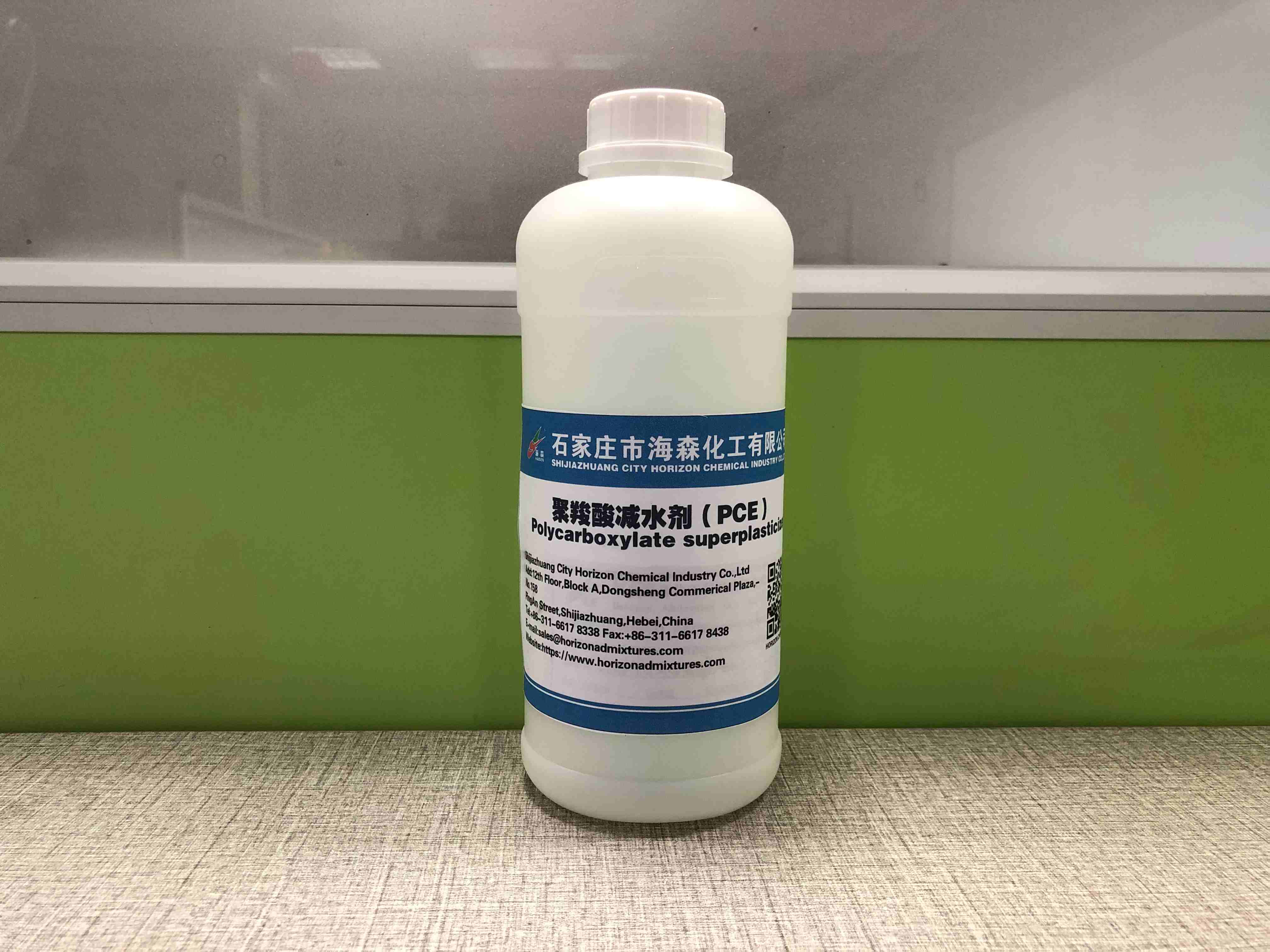
In polycarboxylate-based superplasticizers, the grafted side chains—commonly polyethylene oxide—are not merely static spacers. Their length and grafting density dictate how the polymer adsorbs onto cement grains and how effectively it delays the collapse of fresh concrete workability. Shorter, densely packed side chains tend to produce a compact adsorbed layer that delivers strong initial dispersion but limited reserve for later. Longer, more sparsely distributed side chains, by contrast, can stretch into the pore solution, providing a thicker steric barrier that resists compression as hydration products accumulate.
Slump retention also hinges on the gradual chemical evolution of these side chains in the highly alkaline pore solution. Ester linkages between the backbone and side chains can undergo slow hydrolysis, releasing additional carboxylic acid groups over time. This delayed generation of active adsorption sites allows the polymer to re-anchor onto newly exposed cement surfaces, compensating for the consumption of early adsorbed molecules. Tuning the side chain length and linkage chemistry therefore offers a dual handle: immediate workability from the initial polymer architecture, and sustained fluidity from the time-dependent release of dispersing functionality.
Dosage Curves That Prevent Early Stiffening
To keep early stiffening from ruining a mix, you need to look closely at how dosage changes the set behavior over the first few hours. A curve that plots admixture amount against time-to-initial-set often shows a sharp uptick after a certain threshold — below that point, the mix can seize up quickly, while above it, the delay becomes too unpredictable for jobsite scheduling. Mapping this curve from actual batch tests, not just supplier charts, gives you a reliable window where the concrete stays workable without drifting into retardation.
The trick is not to chase a single “magic” dosage but to use the curve’s inflection zone. Once you locate where the early stiffening response flattens out, you can dose within that band and still accommodate minor variations in cement chemistry or temperature. Field adjustments become simpler: if a load starts to tighten earlier than expected, a small bump in admixture within the flat part of the curve restores open time without overshooting into late-setting territory.
Recording these curves for each cement source and aggregate blend pays off on pours where timing is tight. Instead of relying on a generic recommended range, you end up with a practical reference that shows exactly how much extra admixture buys how many additional minutes of workability — and where the law of diminishing returns kicks in. This turns early stiffening from a guesswork problem into a controlled variable you can tune on the fly.
Adjusting Formulations for Local Aggregates and Climate
Concrete mix designs rarely translate perfectly from one region to another, because the physical character of local aggregates shapes how much water and cementitious material a batch actually needs. Crushed stone with sharp, angular edges demands more paste to coat each particle than smooth river gravel, which can lead to over-designed mixes if the source is changed without recalculating. Even the dust content in manufactured sand matters: too many fines can stiffen a mix unexpectedly, while too few leave it prone to segregation. Adjusting the fine-to-coarse aggregate ratio based on sieve analyses from the actual quarry is the first step toward a mix that is both workable and durable.
Climate imposes a second layer of adjustment that is often underestimated. In hot, dry, or windy conditions, water evaporates from the fresh concrete surface faster than bleed water can replace it, increasing the risk of plastic shrinkage cracking. Mixes intended for cooler, humid environments may need a lower water-cement ratio, a mid-range water reducer, or a slightly higher coarse aggregate volume to reduce paste exposure when placed in desert or tropical heat. Conversely, in cold regions, air-entraining admixtures become critical for freeze-thaw resistance, and the dosage must be revalidated whenever the cement source changes because different cements interact differently with air-entraining agents.
A practical way to adapt is to run a small trial batch with the exact local materials before finalizing the proportions, rather than relying on published mix tables. Measure the slump, air content, and temperature of the fresh mix, then cast a few cylinders or beams for early-age strength checks. If the local aggregate absorbs more water than expected, pre-wetting or adjusting the batch water can restore workability without weakening the paste. By tying the formulation directly to the stones and weather at the jobsite, the concrete becomes less of a generic recipe and more of a tailored product that handles the real conditions it will face.
Real Projects Where Workability Stayed Put Past the Pour Window
On a mid-rise residential build in Austin, the ready-mix plant was forty minutes away under normal traffic. The pour for the seventh-floor slab started at six in the morning, but a wreck on the interstate turned that forty-minute haul into nearly two hours. By the time the last truck arrived, the first placement had been sitting for over three hours. The crew expected to add water or send it back. Instead, the mix held its slump at just under five inches, and the pump moved it without choking. Core samples taken at twenty-eight days showed compressive strength two percent above the specified 4,000 psi.
Another case involved a deep foundation pour for a hospital wing in Ohio. The specification called for a low-permeability mix with a high slag content, which typically stiffens fast in hot weather. The temperature climbed to ninety-six degrees by midday, and the last concrete arrived two and a half hours after batching. Rather than rejecting the load, the inspector ran a spread test and found the mix still responded to vibration. The contractor placed all ninety-two cubic yards without cold joints, and the subsequent thermal monitoring showed no unusual cracking during the first week.
A bridge deck overlay in Washington State offered a different kind of challenge: a latex-modified concrete that normally sets up quickly. Rain delayed the pump setup, and the first mixed material waited nearly two hours before placement began. Because the admixture package slowed early hydration without sacrificing bond strength, the crew finished the overlay in one continuous pass. The owner's pull-off tests exceeded the minimum bond requirement by thirty percent, even at the edges where the concrete had waited longest.
Testing Protocols That Catch Performance Drift Before It Costs You
Performance drift rarely announces itself with a single failing test. It creeps in through small, compounding changes—a database query that loses an index, a third-party script that loads 200ms later, a caching layer that silently stops hitting the cache. A robust testing protocol doesn't just run Lighthouse or JMeter on deploy day; it fingerprints key user journeys and compares the 95th percentile timings against a rolling baseline. If the median stays flat but the tail balloons, that's drift. The tests should block the release automatically, not just paint a red badge in a dashboard nobody checks.
The trick is pairing synthetic checks with production telemetry. Synthetic tests catch deterministic regressions—like an unoptimized image or a missing code split—before they ship. But they miss the messy reality of real user conditions: throttled CPUs, flaky mobile networks, memory pressure from a dozen open tabs. Use canary deployments that sample 5% of traffic and compare Core Web Vitals and custom latency metrics against the previous build. If the drift exceeds your preset tolerance band (say, more than 150ms on p75 response time for three consecutive five-minute windows), roll back automatically. This turns drift from an after-the-fact surprise into an engineering decision with clear cutoffs.
FAQ
Older naphthalene-based superplasticizers often demand higher dosages and cause rapid slump loss, especially with low water-cement ratios. Polycarboxylate ethers work through steric hindrance and electrostatic repulsion, so you get much better dispersion at 0.1-0.3% by weight of cement. That means lower water demand, less stickiness, and a more predictable rheology from truck to placement.
It does not act like an accelerator or a hardening agent. The strength gain comes mainly from water reduction. By deflocculating cement grains, it releases trapped water that would otherwise be locked in flocs. You can cut the water-cement ratio significantly while keeping the mix placeable. Lower porosity in the hardened paste translates directly into higher compressive strength at all ages.
Yes, and that is the core advantage. The molecules adsorb onto cement surfaces and create a comb-like brush layer that pushes particles apart. The mix behaves as if it has more water, but the actual free water content stays the same. You get a flowing, self-consolidating slump without sacrificing the hardened properties.
Typical dosage is 0.1% to 0.3% of total cementitious material. Going above 0.5% rarely gives additional flow. Instead you see segregation, excessive air entrainment, sticky mortar, and sometimes delayed setting. The sweet spot is usually found by trial batches, not by guessing from a data sheet.
Delayed addition works best. Let the aggregates, cement, and part of the water mix for 30-60 seconds first. Then add the superplasticizer with the remaining water. This prevents the polymer from being consumed by early hydration products and keeps the slump longer. If you add it too early, you often need a higher dose for the same workability.
Yes, and this is where most field problems start. High C3A cements, high alkali contents, and certain fly ashes or slags can adsorb the polymer differently. Sometimes a cement that works perfectly with one PCE fails badly with another. You need a simple compatibility test—marsh cone or mini-slump—before committing to a supplier or formula.
Hot weather accelerates slump loss because hydration speeds up. You may need a retarding version of the polymer or a slightly higher dose, but never chase slump by adding water on site. In cold weather, some PCEs can delay setting noticeably, so choose a formulation with less retardation or adjust the accelerator dosage.
Control moisture in aggregates daily, not weekly. Reduce sand ratio slightly if the mix feels sticky. Use delayed addition and calibrate the dispenser regularly. Keep a log of batch temperatures, slump retention over 90 minutes, and compressive strength at 7 and 28 days. These small habits prevent most incompatibility and overdosing mistakes.
Conclusion
Manufacturers of polycarboxylate superplasticizers have long observed that standard concrete mixes rarely achieve their full strength potential. Often, the issue lies in how the admixture's polymer side chains interact with cement particles over time. By fine-tuning the length and density of these side chains, producers can extend slump retention without sacrificing early hydration. This prevents the all-too-common problem of mixes stiffening before placement, which leads to added water on site and a corresponding drop in final strength. A well-designed dosage curve—not just a single recommended rate—lets contractors adjust for temperature and haul time, keeping the mix workable longer while still hitting target compressive strengths.
Beyond chemistry, local conditions matter more than many realize. Aggregates with high fines or unusual absorption rates can quickly consume free water, while hot climates accelerate slump loss. Real projects show that when formulations are adjusted for these variables, concrete remains pumpable and finishable well past the expected pour window. To catch performance drift early, robust testing protocols should include rheology checks at multiple time points, not just a single slump test at the batch plant. This proactive approach helps identify subtle changes in admixture performance before they translate into costly on-site corrections or weaker concrete.
Contact Us
Contact Person: Sam Lee
Email: [email protected]
Tel/WhatsApp: 86-311-6617 8338
Website: https://www.horizonadmixtures.com/