

Plywood Die Board Laser Cutting Machine Company: Your Partner for Accurate and Efficient Die Cutting
2026-11-02
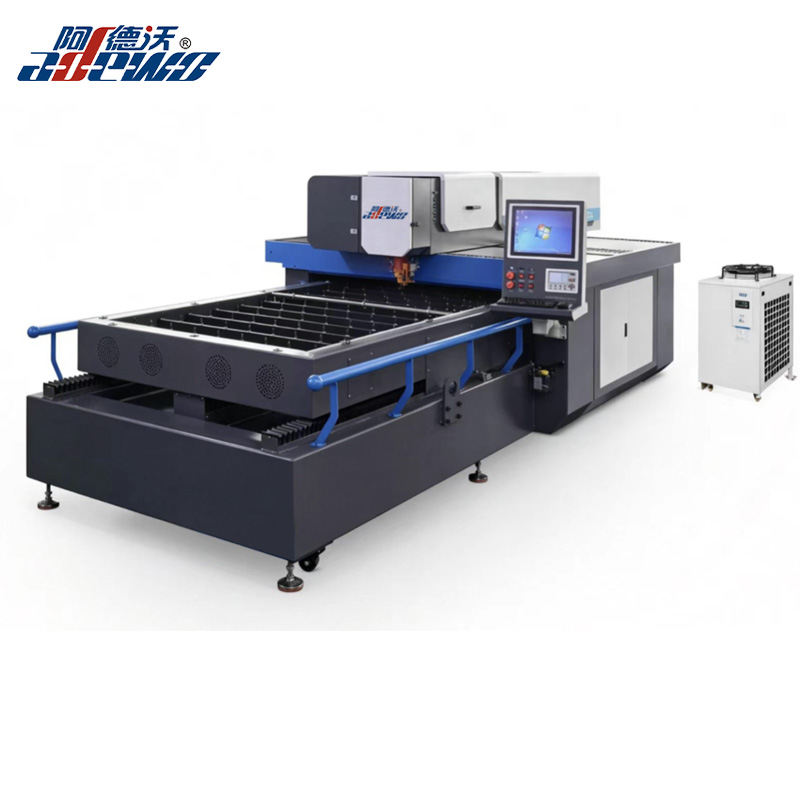
Every misaligned die board has a cost—wasted material, jammed feeders, or a call from a frustrated customer. That’s why choosing the right plywood die board laser cutting machine isn’t just about specs; it’s about finding a partner who treats accuracy and efficiency as baseline expectations. ADEWO has built its reputation on that principle, engineering laser systems that cut cleanly and repeatably without constant recalibration. What follows is a closer look at the design choices and real-world results that set ADEWO apart from generic machine suppliers. If you think all laser cutters are the same, this might change your mind.
Laser Precision That Keeps Die Boards True
A die board is only as reliable as the path its laser follows. When the beam drifts even a few thousandths, slots widen, bridges weaken, and blades no longer seat with the pressure needed for clean cuts. Our setup runs a closed-loop calibration before every sheet, mapping the bed and correcting for thermal expansion in real time.
That consistency shows up where it matters most. Repeated runs produce identical slot widths across the full board, so rule bends, ejection rubber, and nicked areas align without hand-fitting. The result is less time at the bench and fewer rejected impressions on press.
Precision here isn’t a spec sheet number. It’s the difference between a board that holds register for a full production day and one that slowly walks out of true after the first hundred sheets. We verify every board against its digital master before it leaves the floor.
Fast Cuts Without Wasting Plywood
Stop treating a full sheet like one giant piece. Before you plug in any saw, sketch your cut list on the plywood with a chalk line or a straightedge and pencil. Group pieces that share a dimension—two 12-inch strips and a 24-inch panel can often come out of a single 48-inch width with nothing left over but sawdust. Set your circular saw or track saw to just barely clear the thickness, and run the good side down so any tear-out lands on the back face.
A sharp, fine-tooth blade does more than prevent splinters; it lets you cut exactly on the line the first time. If you're using a table saw, add a zero-clearance insert and a splitter to keep the offcut from binding. For freehand cuts, clamp a straight board as a fence instead of guessing. And never trim a plywood edge twice—measure from the factory corner whenever possible, since that corner is already square and true.
From CAD File to Cut Board in One Run
The moment a CAD file leaves the design screen, it usually triggers a chain of manual steps—exporting layouts, juggling software settings, rechecking dimensions, and finally babysitting the cutter. This workflow fragments the process and invites errors. The alternative is to treat the transition from digital model to physical cut as one continuous motion, where the geometry in your file maps directly onto the toolpath without intermediate hand-offs.
In practice, that means the software reads the CAD contours, recognizes cut depths and material boundaries on the fly, and generates clean, collision-free movements ready for the cutter. There is no separate conversion session, no re-importing, and no need to rebuild the model in a CAM environment. Whatever you see in the design—holes, slots, pocket cuts—appears on the board as if the machine simply continued the line you drew on screen.
This single-run approach changes the pace of prototyping and production. A board designed in the morning can be cut, fitted, and tested the same day. Because the translation happens automatically, even last-minute edits to the CAD file flow through without adding extra setup time, keeping the transition from file to finished piece almost unnoticeable.
Handling Plywood Variability Without the Guesswork
Plywood never arrives exactly as the spec sheet claims. Thickness can drift by a few hundredths of an inch from one edge to the next, and core voids hide behind smooth face veneers. Instead of assuming every sheet behaves the same, grab a pair of calipers and measure at four corners plus the center before you start cutting. That thirty-second check tells you which sheets need to be sorted for drawer bottoms versus cabinet sides.
Core gaps and patches are the usual culprits when a saw cut suddenly exposes a hollow spot. A quick tap test along the edges with a screwdriver handle gives you a dull thud where the core is solid and a hollow ring where it isn’t. You don’t need to inspect every inch—just mark suspect areas so they land in the offcut zone instead of a visible edge.
Moisture content shifts can turn a flat sheet into a subtle potato chip overnight. Let the stack sit in your shop for a few days, preferably with stickers between sheets, and check for crown or bow before you commit to a layout. Track which supplier batch you’re pulling from, because variability often repeats within a lot and knowing that saves you from chasing the same issue twice.
Machine Uptime That Matches Your Production Schedule
Your equipment should be ready when the line is scheduled to move, not idling through shift changes or waiting on maintenance that could have happened yesterday. We match machine availability to your actual production calendar, so every planned hour counts.
Instead of forcing a generic uptime target, we look at when each asset really needs to run. That means high-demand periods get the support they need, while lower-priority windows can absorb routine service without slowing your output.
The result is less firefighting and fewer surprises. Your team can trust that the right machines will be up at the right time, which keeps throughput steady and makes schedules easier to hold.
A Partner on the Floor, Not Just a Supplier
When a line goes down at 2 a.m., the last thing you need is a phone tree. Our people are embedded with your shift leads, watching the same monitors and feeling the same pressure. That means we don't just ship parts—we carry toolboxes, share coffee from the break room, and argue about the best way to shave seconds off a changeover until we get it right.
Suppliers send invoices. Partners send ideas that actually survive contact with the floor. We've sat in on your morning huddles and seen the gap between what engineering drew and what the machine will actually do. So we adjust brackets, reroute cables, and re-time the sequence before the work order even reaches your crew. No red tape, no "that's not in our scope." Just someone who knows your line as well as you do.
The difference shows up in small moments: a heads-up about a worn guide rail before it fails, a prototype dropped off on a Friday because we knew you'd be running Saturday. That's not account management. That's showing up like a member of the team—because on your floor, that's the only kind of relationship that keeps things moving.
FAQ
We build laser cutting machines specifically for plywood die boards, focusing on clean cuts, sharp corners, and repeatable accuracy for diemaking shops.
The laser follows a programmed tool path with minimal vibration and no physical blade drift, so slots, bridges, and knife locations come out exactly as designed.
Yes, the cutting parameters can be adjusted for common die board thicknesses, and operators can store presets for each material to switch between jobs without guesswork.
We focus only on plywood die board applications, so our team understands kerf compensation, bridge spacing, and layout constraints that general laser suppliers often overlook.
Installation includes on-site setup, operator training, and test cuts on your own plywood stock, plus remote diagnostics if anything needs attention later.
The machines come with enclosed cutting areas, fume extraction, and safety interlocks that meet standard industrial requirements, so they fit into an active production floor.
Routine care is mostly cleaning the lens and mirrors, checking the exhaust filters, and wiping down the motion rails; we provide a simple checklist and can schedule preventive visits.
Laser cutting often finishes a full sheet in far less time than manual jigsaw or knife cutting, and it removes the need for pilot holes or secondary deburring.
Conclusion
A die board is only as good as the laser path that cuts it. This company tunes every beam to hold tight tolerances across the full sheet, so slots and bridges stay true even when plywood grain shifts or thickness jumps between batches. Instead of fighting variability, the machine reads the material and adjusts on the fly, keeping scrap to a minimum. Your CAD file goes directly to the cutting head—no manual rework, no second passes—and the result is a board that drops into the press without shimming or sanding. Because the cutting strategy is optimized for sheet yield, you also get more finished boards from the same stack of plywood, which matters when margins are thin and every square foot counts.
Uptime is planned around your production calendar, not the other way around. These machines are built for back-to-back shifts, with quick-change consumables and remote diagnostics that catch small issues before they stop a run. Scheduled maintenance fits into your slow periods, not your rush orders. And when something does need attention, the response is from an engineer who knows your floor, not a call center script. That is the real difference: a partner who treats your throughput as their own, and a machine that earns its place in the work cell every single day.
Contact Us
Contact Person: KAELYN LEE
Email: [email protected]
Tel/WhatsApp: +86 15012673758
Website: https://www.china-adewo.com