

OEM Connection Fasteners for Reliable Mechanical Connections
2026-11-02
In the world of precision machinery, even the smallest component can make or break a system. OEM connection fasteners are the silent backbone behind reliable mechanical connections—yet they rarely get the attention they deserve. Whether you're engineering industrial equipment or assembling high-performance devices, the right fastener ensures stability under stress, vibration, and temperature swings. At BOYIKUN, we understand that true reliability starts at the thread. This post explores how choosing the right OEM fasteners can elevate your mechanical designs from functional to fail-safe.
Why Fastener Geometry Changes Everything Under Load
Most load-related failures in bolted joints don't start in the material itself; they start in the shape. A shallow thread root radius, for instance, concentrates stress at the first engaged thread, which can carry over a third of the total tensile load. Change that root from a sharp V to a rounded profile and the stress gradient flattens dramatically, extending fatigue life by orders of magnitude. The same principle applies to the shank-to-head transition. A sharp corner acts like a pre-cut crack, while a generous underhead fillet spreads bending moments across a larger section, letting the bolt flex slightly instead of snapping when the assembly sees cyclic or off-axis loading.
Head geometry matters just as much once clamping force is applied. A countersunk flat head, for example, introduces a wedging effect that can pull mating parts out of alignment if the hole is even slightly off-center. In contrast, a flanged hex head distributes bearing stress over a wider annulus, reducing embedment and preserving preload over time. Thread pitch and engagement length then tune how that preload is maintained. Coarse threads bite faster but leave less material between roots, making them more prone to stripping in soft substrates. Fine threads offer a larger stress area and finer adjustment, but they demand tighter tolerances to avoid cross-threading. None of these choices is universally better; what matters is matching the geometry to the joint's actual load path, not just its static rating.
Selecting the Right Thread Pitch for Vibration-Prone Joints
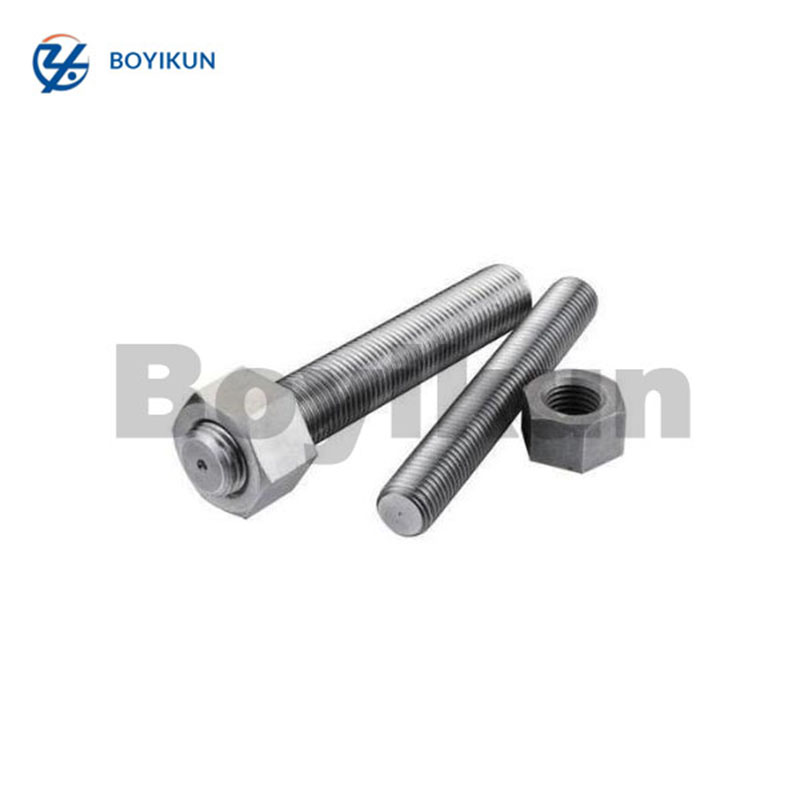
Fine-pitch threads often hold an edge in vibration-heavy assemblies because the shallower thread angle creates a lower helix angle, which translates into more friction under the same clamp load and a reduced tendency to back off when the joint sees cyclic lateral or axial shaking. The larger minor diameter also leaves more material in the engaged region, which can help the fastener resist fatigue cracking that typically starts at the thread root.
That said, pitch alone won't save a badly designed joint. Surface finish, lubrication, and tightening method all shift the actual preload, and a fine thread that is slightly over-torqued can strip more easily in soft base materials like aluminum. For joints where disassembly is frequent or threads may see dirt and debris, a coarse pitch can be more forgiving, while fine threads make sense for compact, high-strength connections that stay assembled for long service intervals.
A practical approach is to test both candidates under the real vibration profile, measure residual clamp load after a set number of cycles, and choose the pitch that keeps preload loss within acceptable limits without requiring excessive torque or risking thread damage during installation.
Coatings and Base Metals That Outlast the Assembly
The longevity of a fastened joint often comes down to choices made before installation. In harsh environments, standard zinc plating can fail within months, leading to rust bleed, seized threads, and premature rework. Switching to engineered coatings like zinc-nickel or geomet can extend service life by a factor of three to five compared to conventional zinc, especially in salt-spray and cyclic corrosion tests. These finishes form a sacrificial layer that corrodes preferentially, protecting the base metal beneath.
Base metal selection is equally critical. Carbon steel fasteners are economical but need a robust coating to survive outdoor or chemical exposure. For applications where coating damage is likely during assembly, stainless steel or alloy bases offer inherent corrosion resistance without relying solely on a surface layer. In high-temperature or high-stress settings, nickel-based alloys can maintain strength and resist oxidation long after standard steel would have degraded.
Rather than chasing a universal solution, matching the coating and base metal to the actual service conditions prevents hidden failures. A coastal installation might demand a duplex coating system over a marine-grade stainless core, while an indoor HVAC unit could perform reliably with a basic phosphate and oil finish. Thoughtful material pairing reduces maintenance intervals and keeps the entire assembly functional well past its expected design life.
Torque-to-Yield Versus Angle Tightening in Practice
On the shop floor, the choice between torque-to-yield and angle tightening often comes down to what the joint actually demands. Torque-to-yield fasteners, once stretched past their elastic limit, rely on that permanent deformation to maintain clamp load. But hitting that zone consistently means watching fastener behavior, not just the wrench reading. A bolt that's been reused after yielding may not give you the same response the second time around, and that's a detail many manuals gloss over.
Angle tightening, by contrast, sidesteps the friction variables that plague pure torque methods. By rotating the fastener a set number of degrees past the snug point, you're controlling elongation directly. In practice, this works beautifully on rigid joints where the bolt is the main spring. On gasketed or soft assemblies, though, that same angle can produce wildly different clamp loads depending on how much the mating parts compress.
What's less talked about is how tool maintenance shifts between the two. Torque-yield work demands sensitive, well-calibrated tools that can detect the subtle slope change at yield. Angle tightening can run on simpler equipment, but the process needs tighter control over the initial snug torque. Many shops mix the two without realizing it: using angle to get close, then torque to verify. A better rule is to pick one method based on joint stiffness and fastener history, then stick with it across the line.
Custom OEM Fasteners When Standard Parts Fall Short
Off-the-shelf fasteners work for many jobs, but pushing a standard bolt into a tight enclosure or mating it with an unusual alloy often ends in compromises. Custom OEM fasteners exist for exactly those moments. Maybe the head needs to sit flush in a pocket only 3 mm deep, or the thread pitch has to match a non-standard insert. Instead of redesigning the entire assembly around a fastener, you can have the fastener engineered around the assembly.
The real value shows up in how the part behaves once installed. A custom shoulder screw can double as a locating pin, a vented fastener can prevent pressure buildup in sealed housings, and a selectively hardened thread can resist galling in stainless-to-stainless joints. Working with a manufacturer that understands heat treating, plating, and dimensional tolerances under actual load conditions changes what you can achieve with a single component.
Cost often raises an eyebrow at first, but compare that to field failures, warranty claims, or the labor spent modifying standard parts. A properly specified custom fastener usually pays for itself within the first production run. It also opens the door to consolidating multi-part assemblies into one piece, reducing part count and assembly time without adding new failure points.
Avoiding Galling and Seizing in Stainless Steel Connections
Galling in stainless steel threads is not a simple friction problem—it is a localized cold weld. When the passive oxide layer on fasteners like 304 or 316 is scraped away under high contact pressure, bare metal surfaces touch and momentarily fuse. The resulting torn threads then seize the joint before it ever reaches design preload. Most failures occur during assembly, especially when using power tools at high speed or forcing mismatched threads.
Prevention starts with reducing heat and metal-to-metal contact. Use an anti-seize compound containing nickel, molybdenum disulfide, or ceramic particles, applied sparingly to both internal and external threads. Slow down installation; a cordless drill on high speed is often the root cause. Keep threads clean and undamaged, and avoid repeatedly assembling the same stainless fasteners, since work-hardened surfaces gall more readily.
Material pairing and surface finish matter more than thread lubricant alone. Hardened stainless alloys like Nitronic 60 resist galling against 304 or 316, while a light phosphate or silver plating can break the adhesion path. A slightly rougher surface (around 32 to 63 microinches Ra) is sometimes better than a mirror finish, because it holds lubricant without creating high friction peaks. If a joint repeatedly seizes, change one side to a different alloy or add a thick, soft washer to absorb the twisting motion.
FAQ
OEM fasteners are engineered around your specific joint geometry, load conditions, and assembly process. Instead of forcing a generic part to work, we adjust thread form, under-head profile, material, and coating to match how the connection actually behaves in service. This reduces the chance of loosening, fatigue, or corrosion over time.
We look at the entire joint, not just the fastener. By specifying the right preload, choosing thread-locking features or prevailing torque elements, and validating with transverse vibration or shock testing, we can keep clamp load from decaying. For many applications a flanged head or a serrated bearing surface helps distribute load and resist rotation.
Yes. We often handle mixed-material joints by adjusting the fastener material, plating, and length-to-diameter ratio to reduce galvanic corrosion and thermal mismatch. For aluminum-to-steel connections, a zinc-nickel coating or an isolating washer can make a big difference in long-term durability.
Depending on the part, we run dimensional inspections, hardness testing, coating thickness checks, and salt spray testing. For safety-critical joints we also do batch-level tensile and proof load testing, and can provide full material certifications or PPAP documentation if your program requires it.
Absolutely. Many customers start with a small batch for fitment trials and joint testing. We can machine or cold-head low volumes with quick turnarounds, then transition to high-speed cold forming once the design is locked. This way you validate the connection without committing to large inventory.
A frequent one is focusing only on tensile strength and ignoring joint relaxation, embedment, or thermal expansion. Another is specifying a coating that looks good on paper but causes hydrogen embrittlement risk. We help review the mating materials, service temperature, and installation method so the fastener survives the real operating envelope.
For elevated temperatures we select alloys that retain strength and resist creep, such as stainless grades or heat-treated alloy steels, and avoid coatings that degrade. We also calculate preload loss from differential thermal expansion and may use conical spring washers or specific thread engagement to maintain clamp load.
Conclusion
The difference between a bolted joint that holds and one that fails often comes down to details that standard catalogs never capture. When an OEM specifies connection fasteners, the geometry of the head, shank, and underhead radius directly controls how stress flows through the joint under load—a subtle change in fillet shape can shift fatigue life by an order of magnitude. In assemblies subject to vibration, thread pitch becomes a quiet but decisive variable: finer pitches increase friction and preload retention, while coarser threads tolerate debris and repeated disassembly better. Pairing the right base metal with a coating matters just as much, since a zinc-flake finish on a high-strength bolt can prevent hydrogen embrittlement while extending corrosion resistance well beyond the life of the surrounding structure.
When production demands exceed what off-the-shelf hardware can deliver, custom OEM fasteners fill the gap with tailored shoulder lengths, captive washers, or non-standard drive features that simplify automation. Equally important is how those fasteners are installed. Torque-to-yield strategies deliberately stretch the bolt into its plastic range to achieve consistent clamp force, but angle tightening offers a more repeatable alternative when thread friction is unpredictable. For stainless steel assemblies, galling and seizing remain the most common field failures; using dissimilar alloys for nut and bolt, reducing installation speed, and applying anti-seize compounds transforms an otherwise fragile connection into one that can be serviced repeatedly without damage. Reliable mechanical connections are not engineered by accident—they are built from deliberate choices about geometry, material, and installation method.
Contact Us
Contact Person: Xianchen Hu
Email: [email protected]
Tel/WhatsApp: 86-13248645200
Website: https://www.hexnb.com/