

Laser Safety Curtain Supplier: How to Choose the Right Protection for High-Power Lasers
2026-06-10
High-power lasers demand more than just operational precision—they require uncompromising safety. Selecting the right laser safety curtain supplier is a decision that directly impacts workplace protection and regulatory compliance. Whether you're outfitting a research lab or an industrial facility, the choices can be overwhelming. This guide from LASERPAIR cuts through the noise, helping you understand what truly matters in high-power laser protection and how to avoid costly missteps.
Beyond the Beam: Why Standard Barriers Fail with High-Power Lasers
Standard laser safety barriers are typically built around acrylic or polycarbonate panels doped to absorb specific wavelengths. This approach works well for low‐power systems, where the tiny fraction of energy converted to heat stays trivial. However, when kilowatt‐class beams hit the same material, even a fraction‐of‐a‐percent absorption rate dumps enough thermal load to raise the surface past its melting or ignition point within milliseconds. The barrier doesn’t fail gradually—it erodes, blisters, or catches fire, turning a protective shield into a sudden thermal hazard.
Another overlooked factor is the sheer intensity gradient in high‐power setups. While barrier ratings assume uniform illumination, real‐world beams often carry “hot spots” from imperfect optics or mode fluctuations. At high average power, these localized peaks can cause dielectric breakdown or plasma formation on the barrier surface, effectively drilling through the material before any thermal sensor can trip. Standard polycarbonate also off‐gases under such stress, leaving opaque carbonized tracks that further trap heat, accelerating catastrophic failure in a feedback loop no passive panel can stop.
Finally, the assumption that a barrier can safely absorb and re‐radiate heat ignores the rapid energy deposition of pulsed lasers. Even if the average power stays within the barrier’s published limit, the peak power in a nanosecond pulse can exceed the material’s damage threshold by orders of magnitude. Without reflective coatings or active cooling, standard barriers act less like armor and more like a wick for the very energy they’re meant to contain—making them not just ineffective, but a liability in high‐power laser environments.
Material Matters: What Actually Stops a Kilowatt-Level Pulse
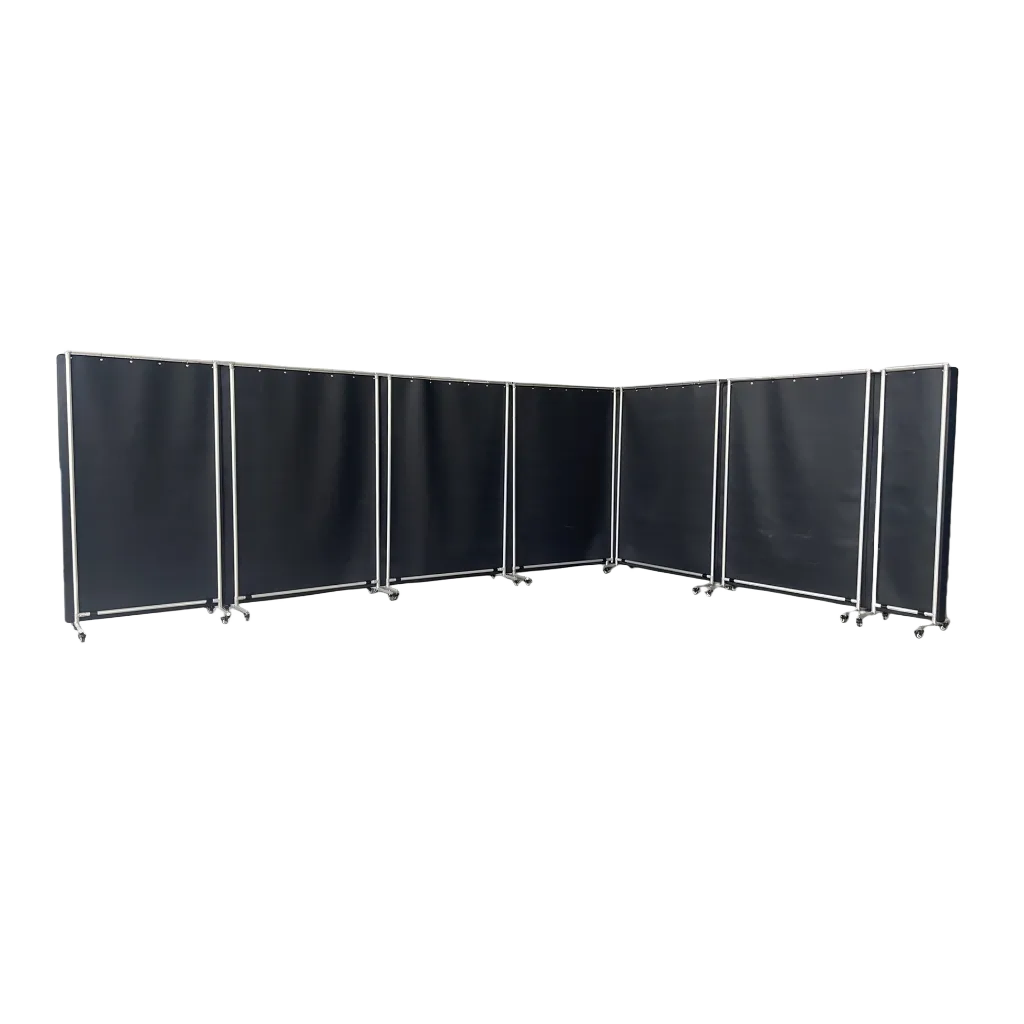
When you’re dealing with a pulse carrying kilowatts of power, the kind of material that can effectively stop it isn’t just about brute strength—it’s about how the material interacts with that sudden surge of energy. High-energy pulses, whether electromagnetic or particle-based, don’t simply push against a barrier; they heat, ionize, and sometimes even vaporize whatever’s in their path. For a material to truly halt such a pulse, it needs to either absorb that immense energy without catastrophic failure or redirect it through mechanisms like reflection, scattering, or phase changes.
In practice, this means looking beyond traditional metals. While a thick steel plate might seem like an obvious choice, its conductivity can actually work against it—intense currents can induce surface arcs and rapid thermal expansion that crack or melt the metal in an instant. Advanced composites and layered structures often perform far better. For example, certain carbon-based materials like fine-grained graphite or carbon-carbon composites can handle extreme thermal shock because they ablate in a controlled manner, carrying energy away through vaporization. Meanwhile, ceramics like boron nitride or alumina excel at dissipating electrical stress without conductive breakdown, making them invaluable in high-power switching or pulse-forming networks.
Ultimately, the most effective approach is rarely a single material but a engineered stack. Think of a composite sandwich: an outer layer that reflects or scatters the initial pulse front, a middle layer of phase-change material that absorbs energy through melting or sublimation, and a tough inner backing that catches any remnants. This layered defense exploits different physical processes—reflection, latent heat absorption, and mechanical strength—to sequentially strip the pulse of its power. The exact combination depends on whether you’re stopping a sub-microsecond electromagnetic burst or a millisecond-long laser shot, but the principle remains the same: smart material pairing beats monolithic toughness every time.
Certification Confusion: Decoding EN 60825 and IEC Standards
When working with laser products, it's easy to get tangled in the web of EN 60825 and IEC 60825 standards. They're essentially the same document, but the EN prefix marks its adoption by the European Committee for Electrotechnical Standardization, often with minor regional tweaks. This mirroring trips up engineers who assume a product compliant with one automatically satisfies the other—an oversight that can lead to costly redesigns if a specific EU directive demands the EN version with its Z annexes pointing to relevant legislation.
Adding to the mess is the fact that both sets evolve at different paces. IEC updates its laser safety standard, and then EN follows after a harmonization period, creating awkward gaps where manufacturers must juggle old and new requirements. For instance, a product tested to the latest IEC draft might not yet be covered under the outgoing EN edition, leaving distributors in limbo about which certificate to present to authorities.
The real decoding trick is looking beyond the headline number. Always check the publication year and any amendments, because a declaration mentioning only "EN 60825" without specifics is meaningless. If you're aiming for global distribution, base your laser hazard assessment on the parent IEC standard, then overlay the EN peculiarities as a secondary layer—this prevents reworking your technical file every time Europe tweaks its own version.
Custom or Off-the-Shelf? When One-Size-Fits-All Doesn't
Off-the-shelf solutions promise quick wins, but they rarely account for the quirks of your business. A generic CRM might handle contacts, but what if your sales process hinges on custom quoting or unique approval chains? The gap between what the software does and what you actually need often widens over time, leading to workarounds piled on workarounds. When your team spends more time forcing the tool to fit than doing real work, it’s a clear sign that a one-size-fits-all approach has failed you.
Custom development isn’t just about building from scratch; it’s about sculpting a solution around your existing workflows. The initial effort can feel daunting, but the payoff is a system that moves with you, not against you. Think about data structures: off-the-shelf might store customer info in a flat table, while your reality demands intricate relationships between accounts, equipment, and service histories. A tailored system can mirror that complexity, reducing errors and unlocking insights you didn’t know were there.
The choice isn’t always binary. Many hybrids emerge—starting with a flexible platform and extending it precisely where you need differentiation. The key is to recognize when the friction of adapting your processes to a pre-built solution outweighs the cost of crafting something specific. If your competitive edge lives in how you operate, not just what you sell, settling for a generic tool can quietly erode that advantage.
Installation Pitfalls: Gaps, Overlaps, and the Devil in the Details
It’s easy to assume a fresh installation will come together cleanly if the materials are cut to size and laid out as planned. But the real test happens at the seams. Even the most careful measurements can’t always account for how materials shift after they’ve been placed—thermal movement, settling, or just the natural imperfections in a surface can turn a tight joint into a gap or force edges to overlap in ways that throw off the entire pattern.
Gaps aren’t just cosmetic—they collect moisture, weaken the assembly, and invite problems that often stay hidden until it’s too late. Overlaps, on the other hand, can create pressure points that lead to buckling, cracking, or uneven wear. What makes both so frustrating is their inconsistency; one corner might fit perfectly while an adjacent section develops a lip barely noticeable to the eye but impossible to ignore underfoot. Chasing these flaws once everything is locked in place rarely ends well.
The things that catch you off guard are rarely the headline considerations. It’s the subtle mismatch between substrate and adhesive, the half-millimeter difference from one batch of material to the next, or the way ambient humidity silently reshapes what was, moments earlier, a flush edge. No spec sheet calls out these risks, and no drawing captures how cumulative small errors can unravel an otherwise meticulous job. The only real defense is a readiness to adapt on the fly, because the details won’t announce themselves until they’re already part of the finished work.
Future-Proofing Your Lab: Scalability and System Integration
The digital transformation sweeping through laboratories demands more than just the latest instruments—it requires an infrastructure that evolves alongside scientific discovery. Designing for growth means moving beyond a simple upgrade cycle; it’s about ensuring your setup can absorb new technologies without a complete overhaul. Whether it’s expanding data storage, adding analytical capabilities, or accommodating higher throughput, a truly adaptable lab is built on flexible foundations that anticipate change rather than react to it.
At the heart of this adaptability lies seamless integration. Too often, labs are hampered by siloed systems that trap data and stifle collaboration. Prioritizing open architectures and standardized communication protocols allows different pieces of equipment and software to work as a unified ecosystem. This not only streamlines workflows today but also creates a plug-and-play environment where future tools—from AI-driven analysis platforms to next-generation sensors—can be incorporated with minimal friction, protecting your investments from premature obsolescence.
Seeing scalability and integration as strategic assets transforms how a lab operates in the long run. Instead of perpetually chasing isolated upgrades, you cultivate an environment that adjusts to shifting research demands, new regulatory requirements, or breakthroughs in adjoining fields. The result is a durable operational model that reduces long-term costs, accelerates discovery timelines, and keeps your lab at the forefront no matter where science heads next.
FAQ
Focus on the optical density (OD) rating at your laser's specific wavelength, the material's damage threshold (how much power it can withstand before degrading), and whether the curtain is certified to relevant standards like EN 60825-4 or ANSI Z136. Also, check if the supplier provides test reports from independent labs—this is usually a sign of a trustworthy product.
Ask them detailed questions about their testing protocols and how their curtains perform under continuous wave versus pulsed lasers. A knowledgeable supplier will talk about beam attenuation, back-reflection risks, and thermal management, not just quote a generic OD. They should also be able to explain how the material behaves if the laser accidentally hits it for an extended period.
It depends on your workspace. Flexible curtains are great for areas that need frequent reconfiguration or where you need to enclose irregular shapes. Rigid panels offer more durable, permanent protection and are often easier to clean. However, for high-power lasers, flexible curtains with reinforced materials can be just as effective if they have the right ratings. Just make sure the mounting system doesn't leave dangerous gaps.
Look for CE marking with EN 60825-4 compliance for European markets, or ANSI Z136.7 for the US. Some suppliers also have their materials tested to ISO 11810 for laser resistance in surgical settings, but that can be a good proxy for durability. Don't just take a supplier's word—ask to see the actual certificates and verify they cover the full range of wavelengths and power levels you're working with.
Ask about the material's 'bleaching' behavior—some materials may darken or become more transparent after prolonged exposure, which reduces protection. For pulsed lasers, look for a high 'laser-induced damage threshold' (LIDT) value. A reputable supplier will share accelerated aging test data and offer warranties that reflect their confidence in the product's long-term performance.
Inquire about their experience with custom configurations: How do they handle seams and joints without creating weak spots? Will they provide on-site support for complex installations? Also ask if they can integrate interlocks or safety sensors into the curtain system. A supplier who asks about your lab layout and laser placements before quoting is usually a good sign.
Conclusion
Choosing laser safety curtains for high-power environments goes far beyond picking a barrier that blocks light. Standard enclosures often fail under the intense thermal and energy loads of kilowatt-level beams, as they can melt, crack, or transmit harmful scattered radiation before anyone realizes the danger. This is where material science takes center stage: specialized composites, multi-layered fabrics, and ceramic-based textiles are engineered to withstand sustained pulses, dissipate heat rapidly, and resist UV degradation. Yet, identifying truly effective protection means wading through a sea of certification labels. EN 60825 and IEC standards aren't mere paperwork; they define real-world performance thresholds, but subtle differences between their editions can lead to mismatched safeguards. A curtain stamped with a generic safety mark might not meet the specific wavelength and power density demands of your setup, making it crucial to scrutinize test reports rather than relying on surface-level credentials.
Even with top-tier materials and certificates, the buying decision isn't straightforward. Off-the-shelf solutions rarely account for the quirks of a custom lab layout—odd angles, moving robotic arms, or varying beam paths—so you're often forced to choose between adapting a standard product or commissioning a bespoke design. The latter, though pricier upfront, frequently prevents hidden costs later. Installation amplifies these risks: a millimeter-sized gap from an improperly fitted curtain, an overlap that shifts with vibration, or a seam that degrades under continuous exposure can create dangerous leakage points that aren't obvious until a routine safety audit. Forward-thinking facilities also weigh scalability, opting for modular systems that allow reconfiguration as lasers are upgraded or processes change. Integration with interlocks, warning systems, and building controls further separates a reliable supplier from one that simply sells fabric. In the end, the right choice balances proven material performance, transparent certification, and a partner who understands that laser safety is a dynamic, evolving practice rather than a one-time purchase.
Contact Us
Contact Person: Jenny
Email: [email protected]
Tel/WhatsApp: +86 13537713281
Website: https://www.laserpair-safety.com/