

Laser Cutting Machine Company: What to Look for in a Reliable Manufacturing Partner
2026-09-27
When sourcing a laser cutting machine, the real challenge isn't finding a supplier—it's identifying a partner who won't disappear after the invoice is paid. Downtime from subpar components or vague after-sales support can quietly drain your margins. That's why the criteria for vetting a manufacturer go far beyond glossy spec sheets. HUNSONE has built its reputation on transparency and endurance, but before you commit to any brand, you need to know which questions separate dependable partners from costly gambles.
Prove It on the Factory Floor
In a conference room, a prototype looks flawless. But the factory floor does not care about your CAD renders or lab results. It will find the weak weld, the over-tight clearance, the material batch that behaves differently at 2 p.m. on a Friday. Proving it on the factory floor means wheeling the idea into the actual production line and letting real operators, real machines, and real time pressure expose what the simulations missed.
The proof is not a single successful cycle. It is surviving a month of varied orders, tool wear, and substitute materials when the usual supplier runs late. It is watching a new fixture work after the third shift has been running for six hours, when the air is humid and the conveyor speed has drifted. If the process still holds tolerance and the team does not need heroic intervention, then you have something worth scaling.
This standard also reshapes collaboration. Instead of asking engineering to finalize the spec, you ask them to stand beside the line, feel the vibration through the floor, and adjust the design until it works under real conditions. That kind of proof builds trust because it is earned in the place where the product is actually made.
Ask Where the Laser Source Comes From
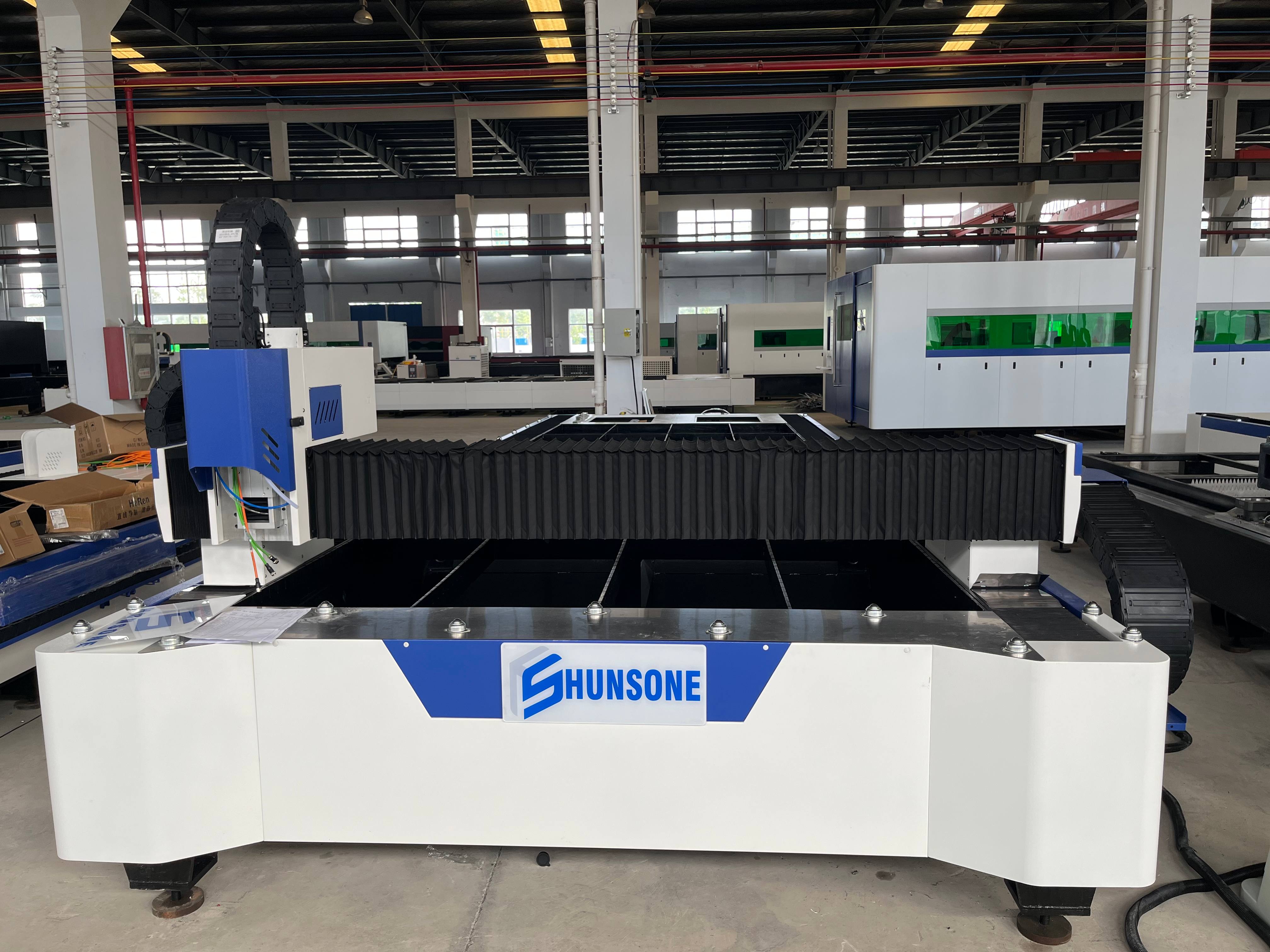
Any serious evaluation of a laser system should begin with a simple yet often overlooked question: where does the laser source actually come from? It’s easy to get distracted by output power, beam quality, or wavelength specs, but the origin of the source—the manufacturing process, the materials used, and the facility behind it—tells you far more about long-term reliability than a datasheet ever will. A source built in a controlled, well-documented environment with rigorous quality checks tends to behave consistently, while one assembled from unverified components may hide flaws that only surface under load.
Digging into the source’s origin also reveals the engineering philosophy behind the product. Some suppliers develop and grow their own laser crystals or diodes, giving them tight control over material purity and doping levels. Others source these core elements from third-party vendors, which isn’t necessarily bad—but it means you need to ask about traceability and incoming inspection procedures. A factory that can show you cleanroom certifications, burn-in test logs, and component batch records is far more likely to deliver a source that won’t drift or fail prematurely.
In practical terms, asking where the laser source comes from helps you avoid the trap of buying a “spec-sheet laser” that performs on paper but disappoints in the field. Field failures in laser systems often trace back to contamination in the gain medium, poor thermal bonding, or inconsistent pumping diodes—all issues rooted in the source’s origin and manufacturing discipline. Taking the time to trace that origin, whether through factory audits, supplier references, or teardown analysis, gives you confidence that the source will hold up when it matters most.
Test Their Response When Things Break
Real reliability shows up when something actually goes wrong. It's easy to look great during a demo or while the dashboard stays green, but the moment a payment fails, an API returns gibberish, or a file upload silently corrupts, you get a clear view of how a vendor or partner handles pressure. I once worked with a shipping integration that worked flawlessly for months. Then one afternoon it started rejecting valid addresses. The company's response wasn't just slow; they sent an automated ticket reply and then went silent for two days. That silence cost us a full day of manual order processing.
To test this early, don't wait for a real outage. Deliberately push a service past its documented limits or feed it malformed data during a trial period. Watch what happens: do you get a clear error message, a support engineer reaching out with a workaround, or just a vague "we're investigating"? A good partner will own the problem immediately, explain what broke in plain language, and offer a temporary fix even if they haven't found the root cause yet. The worst ones blame your setup, your browser, or your API key—anything but their own stack.
This kind of stress test reveals more about a company's internal culture than any sales call or feature comparison ever could. If their team panics or disappears over a minor hiccup, imagine what they'll do during a weekend outage or a data migration gone wrong. Treat how a vendor responds to breakage as a core selection criterion, not an afterthought. You'll save yourself from the kind of partnership that only works when nothing needs fixing.
Look for a Partner, Not Just a Seller
A transactional supplier answers emails and ships orders, but a true partner asks questions you didn't think to raise. They flag risks in your planning, suggest adjustments when demand shifts, and treat your growth targets as shared objectives. That difference shows up in small moments—a heads-up about a material shortage before it hits, a phone call to rethink a delivery schedule, or a quiet push toward a more durable option that costs less over time.
When you start evaluating vendors, pay attention to how they handle friction. Sellers defend their terms; partners look for workable trade-offs. They remember your production calendar, know which specs matter for your customers, and bring ideas instead of waiting for instructions. Over months, that kind of relationship reduces surprises and turns procurement into a source of momentum rather than a recurring chore.
Dig Into Real Customer Histories
Every support ticket, every past purchase, every abandoned cart tells a story that most teams never bother to read. Real customer histories are not just timestamps and order numbers—they are a running narrative of frustration, delight, hesitation, and trust. When you actually dig into these records, you start to see patterns that no dashboard summary can capture. A customer who had a delivery issue six months ago might still be wary today, even if they never said a word about it. That quiet hesitation shows up in how they browse, how they ask questions, and how long they wait before clicking buy. The history is already there; the only question is whether you are willing to look past the surface.
The difference between a generic "How can I help you?" and a genuinely useful conversation often comes down to context. If you know that a returning customer has already tried two different product lines, complained about sizing once, and then came back to leave a positive review, you can skip the beginner talk and get straight to what matters. Treating every interaction as if it is day one is not just inefficient—it is quietly disrespectful. People remember when you remember. Digging into real histories means connecting the dots between a phone call in March, an email in June, and a chat session today. That kind of attention builds something far more durable than a quick sale.
Of course, digging is not about stalking or collecting endless data for its own sake. It is about listening to what the record already tells you, and using it to make the next step feel natural. A history full of long gaps between purchases might suggest a customer who shops only when a specific need arises, not someone who wants weekly promotions. Someone who consistently asks about durability over price is not going to be swayed by a flashy discount. The more you understand the actual journeys people have taken with your brand, the less you have to guess. And the less you guess, the more human your response becomes—not because you used their first name, but because you actually saw them as a whole person moving through time.
Check the Fine Print on Safety and Upgrades
Before you sign off on any product or service, pull up the actual documentation—not the marketing page. Safety certifications often apply to a specific hardware revision or software build, and the version you're buying might not be covered. If the specs mention a testing standard, look for the test report number or certification mark that matches your exact model.
Upgrades can quietly change what's included. A "free safety update" might disable a feature you relied on or shift liability to you if something goes wrong. Check whether the upgrade automatically opts you into data sharing or requires new hardware at extra cost. The fine print usually spells this out, but it's buried in a changelog or terms update rather than the headline.
Ask for a written confirmation if the answer is unclear. A support email that says "your unit meets the latest safety requirements" means little without a dated document linking your serial number to the specific upgrade. Keep that record; it's the only proof you have if a claim ever gets disputed.
FAQ
Ask them to process a sample part from your own material and then look beyond the cut edge. A shop with real application experience will discuss kerf width, dross formation, heat-affected zone, and how their assist gas pressure changes with different alloys. If they only talk about wattage and speed, they may be selling a commodity instead of solving your production problem.
The frame matters more than the laser source for long-term accuracy. A thermally stress-relieved steel frame with machined mounting pads will hold alignment far better than a lightly welded box. Ask if the manufacturer can show you how they measure flatness and squareness after assembly, not just before welding.
Look for a clear response-time commitment, remote diagnostic capability, and a defined spare parts program. A trustworthy company will tell you which parts wear out, roughly when they need replacement, and whether they keep them in local stock. If they promise lifetime support but can't explain how a service call escalates, that's a warning sign.
Because software determines how quickly your operators can go from a drawing to a finished part. Good integration means nesting, automatic lead-ins, and job queues that reduce idle time. Ask whether updates are included, whether you can export production logs, and whether the interface can be customized for your shop floor skills.
It depends on whether they use modular platforms. A company with standard gantry sizes, swappable cutting heads, and configurable tables can tailor a machine without designing everything from scratch. That keeps lead times reasonable and spare parts common. Custom work that starts from a blank sheet often means you pay for their R&D twice—once in price and again in delays.
Watch for machines that are only partially assembled during a factory visit, incomplete test bays, or a lack of repeat orders from existing customers. Also notice how they handle your questions about tolerances and material thickness. Vague answers such as it can cut everything usually mean they haven't done proper process validation.
Compare the beam delivery optics, the rigidity of the Z-axis, and the quality of the cutting head itself. A 6kW fiber laser with a poorly mounted lens will underperform a well-built 4kW system on thin sheet. Ask for cutting speed charts under identical assist gas conditions, and if possible, the same test file on the same material.
Beyond the purchase price, count consumables such as nozzles, protective lenses, filters, and chiller maintenance. Factor in expected downtime for cleaning optics and replacing wear items. A slightly more expensive machine with a robust dust extraction system and accessible service panels can save more over three years than a cheaper one that forces an hour of maintenance per shift.
Conclusion
A dependable laser cutting machine supplier rarely hides behind polished brochures. You need to watch the equipment run on a real factory floor, cutting the same materials and thicknesses you handle daily. Pay attention to how the beam source is sourced and whether the company is transparent about its origin and performance specs. If something breaks during a demo or in a customer's shop, their reaction tells you more than any spec sheet. Do they send a technician quickly, or do they deflect and blame the operator? That response is a strong signal of what your first year with the machine will feel like.
Beyond the hardware, look at how the company treats its existing customers. Ask for a list of real installations and talk to those shops without a salesperson present. You’ll hear about delivery delays, hidden costs, and whether the company stood behind its promises. Also examine the details that often get skipped: safety certifications, training requirements, and the cost and ease of software or laser source upgrades over time. A manufacturer that treats these as afterthoughts is not building equipment for your long-term production. Choose a partner who acts like they will still answer your calls three years after the invoice is paid, not just until the machine ships.
Contact Us
Contact Person: James Chen
Email: [email protected]
Tel/WhatsApp: 86 13770803946
Website: https://www.hunsone.com/