

Industrial Sectional Door Manufacturer Insights for Efficient Facility Design
2026-07-17
When designing a high-performance industrial facility, every component matters—especially the doors. They’re not just entry points; they’re critical to workflow, energy efficiency, and safety. As a leading industrial sectional door manufacturer, NORTON brings deep insights into how the right door choices can transform facility design. Discover what top-performing operations already know about optimizing for speed, durability, and seamless integration.
How Industrial Sectional Doors Influence Workflow Efficiency
The speed at which a sectional door opens and closes directly dictates how long a loading bay remains exposed. High-cycle doors with rapid-drive motors cut the gap time between a truck's arrival and the actual exchange of goods, preventing the constant loss of heated or cooled air that forces HVAC systems to work harder. In food processing or pharmaceutical environments, this tight control of interior conditions means staff don't have to pause operations to wait for temperatures to restabilize, keeping the entire line moving without micro-interruptions that add up over a shift.
Because these doors travel vertically and tuck away overhead, they leave every square foot of floor space on either side completely usable—forklifts can stage pallets inches from the opening without worrying about the swing arc of a traditional door. That alone removes the ritual of clearing the zone before activating the door, and when combined with motion sensors that trigger the door only when a vehicle is actually aligned, the process becomes almost invisible. Operators stay in their vehicles longer, which trims seconds per cycle that, across hundreds of daily transactions, translates into measurable extra throughput.
Maintenance windows shrink when a door is built with fewer pivoting parts and breakaway bottom edges that simply snap back into place after an accidental nudge from a pallet. Rather than calling a technician for a bent track, a worker can often reset the door themselves and keep going. Some facilities tie these doors into their warehouse management system so that as a forklift finishes a task, the nearest bay door begins opening automatically, removing the need for a separate button press. These subtle automation points remove friction that, while small in isolation, collectively smooth out the rhythm of a busy floor.
The Quiet Design Features That Cut Energy Costs
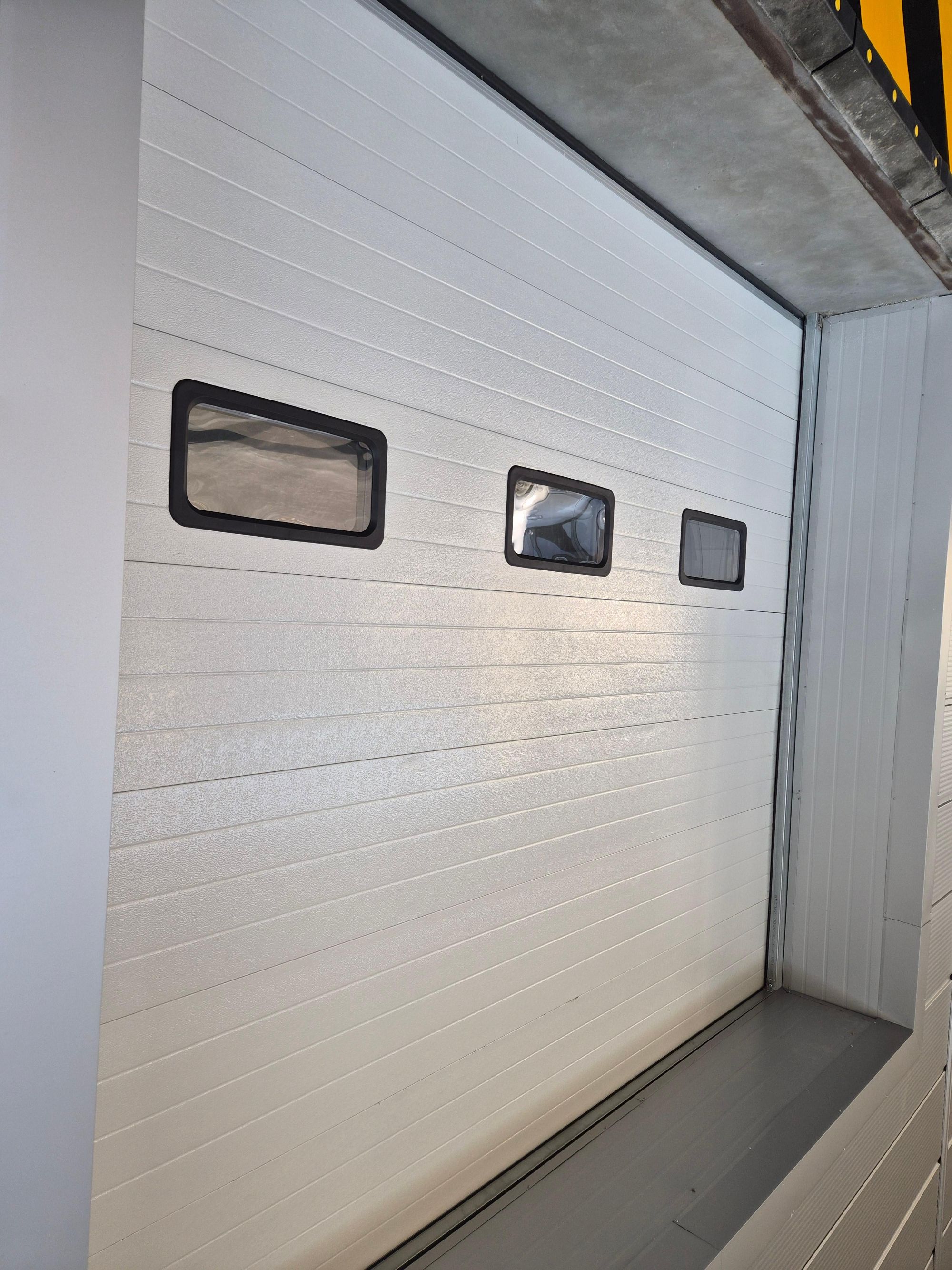
Many architectural elements that silently boost efficiency go unnoticed—until you see the utility bill. Thoughtfully angled rooflines, for instance, can block harsh midday sun while welcoming winter light, easing the load on heating and cooling without any moving parts. Strategic window placement and deep overhangs work in tandem, turning passive solar gain into a year-round ally.
Material choices also play a subtle yet powerful role. High-performance glazing and insulated frames look nearly identical to standard versions but drastically reduce thermal transfer. Inside, thermal mass materials like concrete or stone absorb warmth during the day and release it slowly at night, smoothing out temperature swings and cutting runtimes on HVAC systems.
Even layout decisions contribute to energy savings. Open floor plans allow air to circulate naturally, while carefully positioned interior walls can funnel breezes to where they're needed most. These quiet design moves never advertise themselves—they just keep working, reducing consumption in ways that feel effortless.
Beyond Standard Sizes: Custom Configurations for Unique Facilities
Not every project fits neatly into a catalog. When a sterilizer needs to slide into a cramped basement corner or reach a mezzanine without a freight elevator, our team rethinks dimensions, door swings, and loading heights from scratch. We’ve built units as narrow as 28 inches for century-old hospital wings and created walk-in double-door models that handle oversized veterinary cages without sacrificing cycle performance. The chassis, steam jacket, and piping layout are all re-engineered on a per-order basis—this isn’t just picking a larger cabinet, it’s designing a system that breathes within your existing infrastructure.
Beyond footprint, custom configurations often mean rethinking access and workflow. We’ve delivered sterilizers with off-set chambers so technicians can load from a cart directly at seated height, and units with front-loading pass-through design where a cleanroom wall restricted depth. One research lab needed a hydrogen peroxide vapor phase added to a steam cycle for sensitive polymer instruments—the plumbing and control logic were built from the ground up. These adaptations demand more than flexible mounting brackets; they require recalibrating thermal dynamics, drain rates, and safety interlocks for a one-of-a-kind environment.
The biggest difference in a truly bespoke build is how it handles validation. Instead of handing you a universal test script, we map out the load patterns you actually run—whether it’s oddly shaped glassware sets or dense implant trays—and tune the sensor placement and cycle programming until every cold spot resolves. That custom thermal mapping report becomes your baseline, not a generic pass-fail document. It’s the reason a veterinary oncology suite can sterilize tumor ablation probes in half the time their old oversized unit managed, with zero wet packs. Off-the-shelf logic ends where your facility’s quirks begin.
Why Modern Sectional Doors Outperform Older Overhead Models
Modern sectional doors are a leap forward in both design and function, leaving older overhead doors feeling clunky and outdated. The secret lies in their segmented construction, where individual panels travel along a curved track, sliding smoothly into a position parallel to the ceiling. This eliminates the awkward swing-out motion of traditional one-piece doors, freeing up driveway space and allowing cars to pull right up to the entrance without obstruction. The journey is quieter too, thanks to precision engineering and advanced sealing that dampen vibrations and shut out drafts.
What truly sets these doors apart, however, is their insistence on safety and energy efficiency. Unlike older models that relied on sheer weight and bulk for security, sectional doors incorporate pinch-resistant hinges and intelligent auto-reverse mechanisms that sense the slightest resistance, reducing the risk of accidents. Insulation is no longer an afterthought—thick polyurethane or polystyrene cores sandwiched between steel or aluminum skins turn the garage into a conditioned space, cutting energy bills and muffling outdoor noise. It’s a complete rethinking that makes the garage an extension of the home rather than a cold, forgotten box.
Durability has also seen a quiet revolution. Where old overhead doors would bow, warp, or rust after a few seasons, modern sectional panels are built with corrosion-resistant materials and factory-applied finishes that shrug off weather extremes. The track system eases strain on the opener, extending the life of every component. Maintenance shrinks to an occasional wipe-down and check of the rollers, leaving you with a door that looks as crisp as the day it was installed, year after year.
Integrating Safety Without Sacrificing Speed
Achieving both speed and safety in product development often feels like chasing two conflicting goals. However, forward-thinking teams are discovering that the right approach to integration can actually turn safety measures into performance enablers. By embedding automated safety checks directly into the deployment pipeline—such as real-time vulnerability scans and compliance validations that run in parallel with builds—organizations can catch issues early without creating bottlenecks. This not only prevents last-minute fire drills but also builds a culture where safety is seen as a natural byproduct of efficient processes, not an obstacle.
The key lies in designing safety systems that complement existing workflows rather than disrupting them. For instance, using lightweight policy-as-code frameworks allows teams to define and enforce security rules without manual reviews. When safety checks are modular and fast enough to run with every code commit, developers receive immediate feedback without waiting for separate audit cycles. Over time, this tight feedback loop reduces the total number of safety-related defects, ultimately accelerating delivery timelines instead of extending them. The result is a seamless blend where speed and safety reinforce each other, pushing the organization toward continuous, confident innovation.
Future-Proofing Your Facility with Smart Door Technology
Smart door systems aren't just about keyless entry anymore. They're the backbone of a building that can evolve with changing demands. By integrating access control with building management systems, you create a framework that adapts as your facility grows—whether that means scaling up occupancy, reconfiguring layouts, or supporting hybrid work models. The hardware might be the visible part, but it's the software-driven approach that truly future-proofs your investment.
One overlooked advantage is how smart doors quietly gather data that helps you make smarter operational decisions. From traffic patterns to energy usage spikes, these insights let you optimize everything from HVAC schedules to staff deployment. And when standards shift or new security protocols emerge, a well-designed system accepts updates without requiring a full hardware swap. That kind of longevity is rare in facility tech.
Think beyond today's requirements. The doors you install now should comfortably accommodate tomorrow's tech—biometrics that don't exist yet, emergency response integrations, or even grid-responsive energy management. Choosing modular components and open-protocol software means you're not locking yourself into a single vendor's road map. It's a quiet kind of confidence, knowing your infrastructure is ready for whatever comes next.
FAQ
Focus on door speed and durability first. A high-cycle spring system and reinforced tracks can significantly cut downtime, especially in busy loading docks where every second counts.
It's often overlooked, but thermal insulation values and perimeter sealing are critical. Doors with a high R-value and tight weather stripping can reduce heating and cooling losses by up to 20% in temperature-controlled areas.
People underestimate corrosion. If the facility deals with chemicals, washdowns, or coastal air, specifying stainless steel hardware and powder-coated panels is non-negotiable—galvanized parts alone won’t cut it.
Absolutely. Pairing high-speed fabric roll-up doors with sectional doors in the same bay zone lets you separate pedestrian and vehicle traffic safely, while maintaining thermal separation when both are closed.
Look for smart-ready operators that support remote diagnostics and predictive maintenance alerts. This isn't just about convenience—it directly prevents unplanned repair costs and extends door lifespan.
They've pushed for breakaway bottom edges and photo eyes with higher sensitivity. But beyond code, a good manufacturer embeds anti-drop safety catches into the counterbalance system, which adds a physical fail-safe layer.
Conclusion
Modern industrial sectional doors do more than open and close—they are engineered to reshape how materials, vehicles, and people move through a facility. A well-designed overhead door can eliminate bottlenecks at loading docks and production bays by offering faster cycle times and smoother operation, reducing the idle time that quietly drains productivity. When doors are built to exact facility dimensions rather than forcing operations around standard panels, workflows become significantly more efficient. Custom heights, widths, and track configurations allow seamless integration with existing racking, conveyor systems, and internal traffic patterns, effectively turning the door into a productivity tool. Compared to older rolling steel or rigid overhead models, today’s sectional doors feature lightweight yet durable curtain assemblies that place less strain on motors and hardware, resulting in fewer maintenance interruptions and a longer, reliable service life.
Beyond workflow, the latest designs incorporate insulation and gasketing that actively contribute to energy management, keeping conditioned air in and exterior noise out. This thermal performance directly lowers utility bills while creating a quieter, more comfortable workspace—a factor that also supports personnel focus and safety. Speed does not have to come at the expense of security: integrated sensor arrays, light curtains, and brake systems respond instantly to obstacles, enabling rapid operation without risk of collision or entrapment. Meanwhile, smart controllers and cloud-based monitoring are redefining facility preparedness. These systems track cycle counts, diagnose wear, and even predict failures, allowing maintenance to become proactive rather than reactive. By investing in doors that can communicate with building management platforms, facility designers ensure that today’s entry points evolve alongside automated warehouses and logistics centers, future-proofing critical access points against tomorrow’s demands.
Contact Us
Contact Person: Cyril He
Email: [email protected]
Tel/WhatsApp: 8613969697307
Website: https://cqyqgd.en.alibaba.com/