

How an Original Gantry Crane Manufacturer Ensures Quality and Long-Term Reliability
2026-07-24
When investing in lifting equipment for heavy-duty operations, the difference between a standard supplier and an original gantry crane manufacturer is immense. Authentic craftsmanship and meticulous engineering determine whether a crane will serve dependably for decades or falter under pressure. At LugongMachinery, we have transformed decades of hands-on expertise into a quality system that ensures every crane leaving our factory is built for enduring performance. But what truly sets aside a manufacturer that designs its own machines from one that merely assembles parts? The answer lies in a proactive blend of precision manufacturing, rigorous testing, and a genuine commitment to after-sales support. In this post, we’ll walk you through the concrete ways we guarantee long-term reliability and why choosing a true OEM partner can save you from costly downtime.
Material Selection Not Left to Guesswork
Every project demands materials that not only meet technical specifications but also align with long-term performance requirements. Rather than relying on intuition, our method uses data-driven analysis to match each application with the most suitable options. We examine factors like thermal stability, chemical resistance, and load-bearing capacity to eliminate guesswork from the start.
Testing protocols further refine the selection, pushing candidate materials through simulated real-world conditions. This rigorous approach reveals how each substance performs under stress, aging, and environmental exposure. By the time a material is chosen, its behavior is well understood, ensuring it fits the project like a glove.
Collaboration with suppliers adds another layer of certainty. Detailed performance records and batch-specific data are scrutinized to guarantee consistency. This blend of empirical rigor and industry insight transforms material selection into a precise science, not a roll of the dice.
Engineering That Anticipates the Unexpected
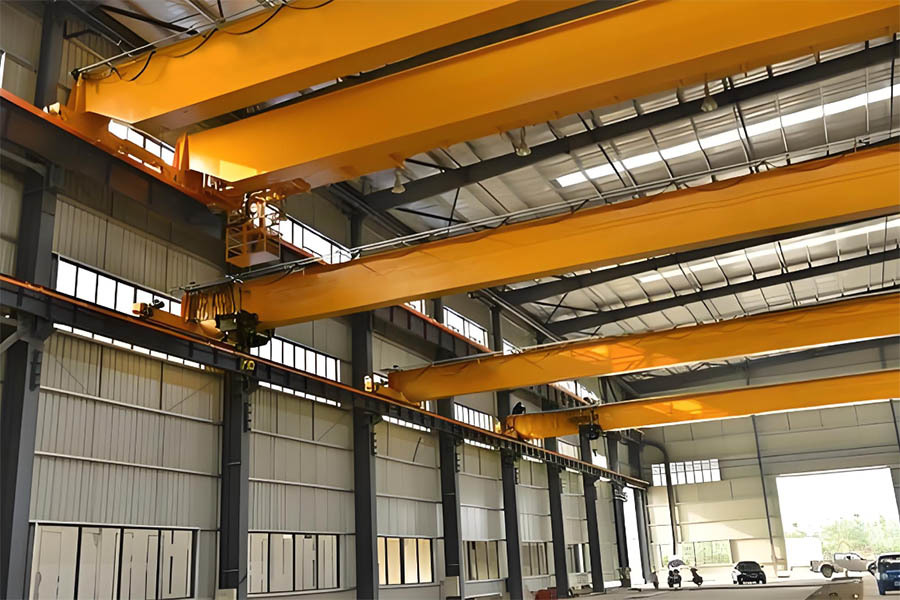
In complex systems, the difference between a minor hiccup and a catastrophic failure often comes down to how thoroughly the design accounts for edge cases. By stress-testing components under scenarios that mimic real-world chaos—sudden power losses, material fatigue, or human error—engineers uncover vulnerabilities that textbook conditions would never reveal. This proactive approach doesn't just prevent breakdowns; it builds a deep-seated resilience that keeps critical infrastructure operational when it matters most.
Redundancy and graceful degradation are more than backup plans—they are philosophies embedded into the architecture itself. For instance, aircraft control systems don't simply rely on a single pathway; they distribute decision-making across multiple, isolated channels that cross-check each other continuously. If one path falters, the system reconfigures instantly, often without the operator even noticing. It's a quiet choreography of trust and verification, designed not only to survive faults but to carry on seamlessly.
True anticipatory engineering also extends beyond hardware into the realm of human behavior. Control room layouts, alarm prioritization, and even the color-coding of status indicators are intentionally crafted to reduce cognitive load during high-stress moments. Every element is placed with the understanding that under duress, even experienced professionals can misread a signal. By shaping the environment to guide correct action, engineers embed safety into the interaction itself—turning potential panic into a controlled, instinctive response.
Production Standards Others Only Claim to Follow
A glossy certificate on a lobby wall is easy to display; far harder is maintaining the rigor those standards demand every single shift. Our production floor operates under live monitoring systems that flag deviations the moment they occur, not after a batch is completed. From ambient temperature controls to machine calibration logs, nothing is taken for granted—every parameter is verified against the actual specification, not a faded printout of the original standard.
Third-party auditors frequently note one defining trait: the people on the line can explain not just what they do, but why it matters to the standard. That depth of understanding comes from ongoing training and a culture where shutting down a line for a quality discrepancy is rewarded, not penalized. Documentation isn't a back-office afterthought either; traceability records follow each unit in real time, so you can pinpoint the exact moment, station, and operator associated with any production step.
Testing Beyond the Typical Checklist
Checklists can lull teams into a false sense of security, ticking boxes without truly interrogating the software. They often miss the nuanced, context-driven defects that only surface when testers stray from the prescribed path and follow their instincts.
Exploratory testing breaks the mold by treating test design and execution as a simultaneous, adaptive process. Instead of rigidly adhering to steps, testers probe the application in real time, chasing leads and questioning behaviors that a static list would never consider.
Cultivate a habit of looking beyond the obvious—immerse yourself in the user’s world, ask disruptive “what if” questions, and let risk guide your focus. This mindset shift turns testing from a verification task into a genuine investigation that uncovers hidden vulnerabilities.
Support That Extends Decades, Not Just Warranties
When the purchase is complete and the installation wraps up, most companies consider their job done—except for maybe a limited warranty that runs out faster than you’d expect. We take a different path. Our support team becomes a permanent part of your operation, staying by your side for decades, ensuring the equipment performs as promised year after year. It’s not about fixing things when they break; it’s about making sure they rarely do.
Behind the scenes, we maintain deep inventories of components, continuously train technicians on legacy systems, and proactively reach out with upgrades that keep you ahead of the curve without disrupting your workflow. A client once ran a machine from us for over thirty years and still received same-day service when a rare issue surfaced. That’s not an accident—it’s how we build relationships that outlast multiple industry shifts.
This philosophy transforms a transactional sale into a lasting partnership. You’re not just buying a product; you’re gaining a dedicated team that refuses to let you down, long after the initial handshake fades. Whether it’s a simple question or a complex retrofit, we answer with the same urgency on day one as we do on day 10,000.
Evolution Driven by Field Feedback, Not Just Spec Sheets
Real progress rarely begins in a boardroom or on a whiteboard. It emerges from the gritty, unpredictable environments where products are actually used. Our design loops start when a technician in a remote site explains why a certain button placement slows them down, or when a long-term user casually mentions a workaround they’ve invented. These moments reveal more than any focus group ever could. By building direct channels for field observations to reach our engineering teams, every small friction becomes a catalyst. The result isn’t just a list of new features—it’s a steady, organic evolution shaped by the people who depend on our tools every day.
Specifications have their place: they set a baseline, define boundaries, and keep projects aligned. But a spec can’t anticipate how dust clogs a vent in a desert installation, or how screen glare makes a critical reading unreadable at dusk. We’ve learned to treat our initial specs as a starting hypothesis, not the final word. After every deployment, we gather unfiltered feedback—the kind that doesn’t appear in formal reports. A subtle vibration pattern that irritates operators, a connector that loosens after months of vibration—these details reshape our priorities. Iterating in response to real-world demands keeps us from polishing things that don’t matter and forces us to refine what truly does.
There’s a certain humility in admitting that the best ideas often come from outside your own walls. When we stopped trying to guess what users needed and started listening to their lived experiences, our development cycles became faster and our solutions more durable. It’s tempting to chase the next shiny capability on a datasheet, but the feedback loop from the field anchors us to practicality. Each update we release carries the fingerprints of the people who pushed the previous version to its limits. That’s how we build things that don’t just look good on paper, but actually work better in the real world—where it counts.
FAQ
During the design phase, the manufacturer conducts finite element analysis and fatigue life calculations on critical components like the main beam and end carriages. They also simulate various load conditions and environmental factors—such as wind, temperature swings, and operational cycles—to validate structural integrity. This proactive approach helps pinpoint potential weak spots early, so they can reinforce them before production starts.
The manufacturer sources high-grade structural steel with strict specifications for yield strength and impact toughness. All incoming materials are inspected with spectrometry and ultrasonic testing to verify compliance. For components like wheels and gears, they use alloy steels that are heat-treated for hardness and wear resistance. This ensures the crane maintains performance under heavy, repetitive loads without premature fatigue or failure.
Welding is performed by certified welders following detailed weld maps. Each weld is visually inspected and then tested with non-destructive methods like magnetic particle or ultrasonic testing. After assembly, the entire crane undergoes a thorough dimensional check using laser trackers to ensure alignment within micron-level tolerances. Any deviation is corrected immediately before moving to the next stage.
Every gantry crane is load-tested at 125% of its rated capacity, sometimes higher for custom designs. During the test, engineers monitor deflection, strain, and electrical system performance. They also simulate real-world movements—lifting, lowering, and trolley traversing—for hundreds of cycles to uncover any potential issues. Only after passing these rigorous tests is the crane approved for shipment.
They implement a documented quality management system that covers every stage, from supplier audit to final inspection. Critical processes like welding, machining, and painting are controlled through standardized work instructions. Regular internal audits and third-party certifications help maintain consistency. Additionally, traceability is kept for all key components, so if a problem arises, it can be isolated and fixed without affecting other units.
They provide comprehensive after-sales support, including installation supervision by experienced engineers, operator training, and proactive maintenance plans. Remote monitoring systems can be integrated to track usage and alert for anomalies. They also stock critical spare parts and offer fast-response service teams to address unexpected downtime, helping extend the crane's service life and safeguard reliability.
Yes, features like double-girder construction with ample stiffening plates, anti-sway mechanisms, and integrated load cells provide a structural advantage. Premium brands often use direct-drive gear motors rather than chain drives to reduce wear. Additionally, they might include smart features like adaptive speed control and self-diagnostic systems, which not only enhance safety but also contribute to consistent, long-term operation.
They use a combination of analytical methods and physical testing. Finite element models are run under varying load spectra to estimate cumulative damage. For critical details like weld joints, full-scale fatigue tests can be performed on prototypes. The results are compared against industry standards (such as FEM, CMAA, or DIN) to ensure a design life that meets or exceeds the customer's requirements, often specifying a safe working period of decades under normal use.
Conclusion
An original gantry crane manufacturer builds quality from the ground up, starting with materials that aren't just ordered from a catalog. Every steel plate and weld wire is sourced against strict specifications, often exceeding industry norms, because guessing isn't part of the process. Engineering teams don't just design for standard loads; they model for rare events like sudden wind gusts, seismic shifts, or operator errors that could cascade into failures. This anticipation of the unexpected becomes embedded in the crane's DNA, from redundant structural paths to controls that fail safe. On the factory floor, production standards are not just aspirational posters—they are living protocols reinforced by in-house training and real-time quality checks.
Testing goes beyond ticking boxes; each crane endures overload trials, cyclic fatigue runs, and environmental simulations that mimic decades of service in weeks. When the crane finally ships, the relationship has only begun. Support spans far beyond warranty periods, with a commitment to parts availability and expert field service that can span thirty years or more. The real secret to long-term reliability, however, is evolution. Insights from maintenance crews, load data, and even failure analyses are fed back into the design cycle, not just spec sheets. This closed loop of field feedback ensures that every new generation inherits the practical wisdom of the last, making reliability an ever-improving trait.
Contact Us
Contact Person: Zhang Zhenlai
Email: [email protected]
Tel/WhatsApp: 8618563210000
Website: https://en.lugongmachinery.com/