

High Speed Corrugated Pipe Machine: Key Features and Benefits for Modern Manufacturing
2026-11-02
Modern manufacturing demands more than just output—it requires precision, speed, and adaptability. For pipe producers, the difference between leading the market and lagging behind often comes down to one critical investment: the right machinery. COMRISE high speed corrugated pipe machines are built to deliver exactly that, combining rapid production cycles with robust engineering to meet today’s toughest project specifications.
Stability Factors That Make High Speed Pay Off
High speed becomes a genuine advantage only when the underlying structure can absorb the shocks that velocity creates. That means hardened workflows, redundant systems, and decision-making guardrails that prevent small errors from cascading into costly reversals. Without these, extra speed simply converts latent weaknesses into visible failures. A stable base lets teams push rhythm and throughput farther because they trust the floor will not give way beneath them.
The payoff also depends on how well measurement and correction loops are embedded. When feedback arrives in near real time and adjustments are made without recrimination, fast cycles turn into compounding improvements rather than repeated mistakes. Stability here is not rigidity; it is the ability to hold a direction while adapting details. Organizations that pair rapid execution with calm, predictable interfaces between teams capture the upside of speed and leave the chaos to those chasing raw acceleration alone.
Keeping Melt Quality Consistent at Full Throttle
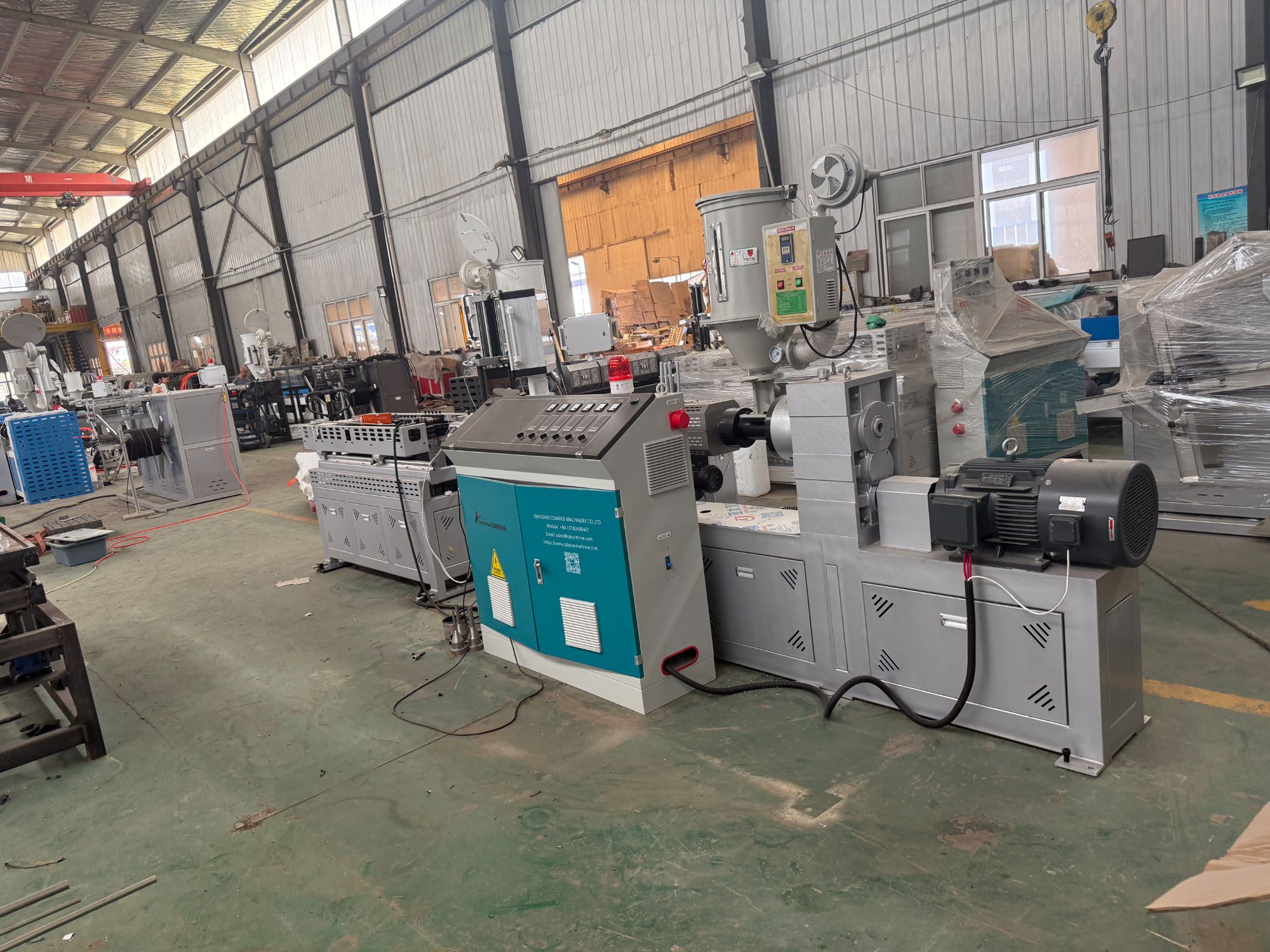
At full throttle, the temptation is to push every parameter to its ceiling, but melt quality doesn't respond well to brute force. Small shifts in feed rate or barrel temperature can cascade into inconsistent viscosity, trapped volatiles, or degraded additives. Instead of chasing speed alone, operators who hold melt quality steady tend to lock in a narrow thermal window and monitor backpressure as a real-time signal, not an afterthought.
Screw design quietly sets the ceiling for what's possible. A high-output run will expose any mismatch between compression ratio, L/D, and the material's shear sensitivity. When the melt starts to fluctuate at high throughput, it's rarely a single sensor drifting; it's usually the screw fighting the material. Matching the screw profile to the resin's melt curve—rather than relying on higher temperatures to mask the problem—keeps the melt homogeneous without sacrificing rate.
Consistency also depends on what happens before the material ever reaches the barrel. Drying, blending, and regrind ratios become non-negotiable at full throttle because there's less residence time to absorb variation. A disciplined incoming-material routine, paired with routine checks of melt pressure and melt temperature at the die, lets a line run hard without the quality swings that tend to appear only after the shift ends.
Tooling and Calibration Choices That Reduce Scrap on Fast Lines
On a fast line, scrap often starts long before a part ever gets measured. Tool holders with runout beyond a few microns force every insert to carry an uneven chip load, which chips edges early and sends dimensions drifting between shifts. Swapping to shrink-fit or hydraulic holders, even on less glamorous stations, keeps the tool centerline where the programmer intended. Pair that with preset tool lengths verified offline, and the machine spends less time cutting air or correcting taper.
Calibration routines that only check spindle position at warm-up miss the drift that happens after two hours of aggressive cycling. On high-speed lines, mid-shift touch probing of a reference bore or a simple gauge pin can catch thermal growth before it turns a whole pallet into suspect parts. Setting the probe to re-reference tool offsets every 20 or 30 cycles, instead of once per shift, often returns more good parts than chasing faster feed rates.
The least popular choice is usually the one that saves the most material: slowing down a tool change to verify clamping force or checking insert seat wear every time a magazine cycles. Fast lines reward consistency, not raw speed. Machines with calibrated clamping and clean, repeatable tool pockets produce fewer random burrs and less sudden edge failure, which is what actually keeps scrap bins empty at the end of the week.
Cutting and Handling Without Slowing the Line
Maintaining line speed while cutting and handling starts with fixture design that locks parts into position without extra measuring. A sliding stop set to the batch length lets operators push material through, make the cut, and clear the offcut in one motion, so the line never waits for a tape measure.
Blade changes are another hidden brake. Using quick-release arbors and pre-sharpened blades stored at the station cuts swap time to under ten seconds. Pair that with a small drop tray positioned directly below the cut line, and scrap falls away by gravity instead of being carried to a bin by hand.
Finally, tie the handling rhythm to the conveyor speed. If parts are grabbed with the same hand that triggers the saw and placed onto a moving belt in the direction of travel, there's no pause between cycles. Operators learn to let the line carry the part the last few inches while they reach for the next blank.
What Faster Corrugated Pipe Production Does to Energy and Floor Space
When a corrugated pipe line speeds up, the first number people watch is output per hour. But the less obvious shift happens in kilowatt-hours per meter and square meters per ton. A faster extruder and haul-off don't simply scale energy use linearly; they often push the cooling and vacuum systems harder, which can raise specific energy consumption until line balance is recalibrated. Meanwhile, floor space doesn't always shrink just because the line runs quicker. You may replace two slower lines with one fast one and free up the bay, but you also need more aggressive cooling baths, larger coilers, and buffer zones for reel changes. In many plants, the real saving comes from eliminating duplicate material-handling paths rather than from the pipe-making machinery itself.
Faster production also changes how energy is metered and managed. Peak loads get spikier, especially during start-up and tooling changes, so transformers and chiller compressors sized for an older pace can become bottlenecks. Some operators find that a quicker line reduces total run time enough to lower overall weekly energy draw, even if instantaneous power is higher. Floor space benefits tend to show up only when the faster line is paired with smarter layout decisions, like moving regrind handling closer to the extruder or stacking finished coils vertically. Without that, a high-speed line can end up occupying more room than expected because downstream handling can't keep pace.
Matching a High Speed Corrugated Pipe Machine to Real Product Demands
A high-speed corrugated pipe machine only earns its place on the floor when the output profile matches what the market actually buys. Rather than chasing theoretical line speeds, start by listing the three most common pipe diameters, wall thicknesses, and material blends your customers order week after week. Corrugation pitch, crest width, and inner liner adhesion often shift with each product family, so a machine with quick-change mandrels and modular cooling sections prevents a single product from monopolizing the schedule. Operators should be able to switch between a 50 mm double-wall drainage pipe and a 110 mm cable duct in under twenty minutes without disturbing the vacuum calibration or melt temperature profiles.
Real demand also includes how the pipe will be handled after extrusion. Perforated corrugated pipe for agricultural drainage needs consistent slot geometry and clean punch-outs, while smooth-interior cable conduit demands a tight inner wall with no flash. The downstream cutting, perforating, and coiling units must be sized for the pipe's stiffness and coil diameter, otherwise the fastest extruder will idle behind a saw or winder that cannot keep pace. Look at your order history: if 70% of output goes into coils under 1.2 m diameter, a heavy-duty caterpillar and large-bore coiler make more sense than investing in extra haul-off speed.
Finally, match energy consumption and floor footprint to the product mix rather than the peak output. A smaller screw with a grooved feed section may process recycled HDPE flake with less shear heat than a high-output barrier screw, reducing degradation and gel specks in thin-wall pipe. Test the line with actual regrind or off-spec material, not virgin pellets, because many corrugators fail on post-consumer resin at high throughput. The machine that holds stable diameter and crush strength at 90% of rated speed with realistic feedstock will outperform a spec-sheet hero that needs perfect pellets and a dedicated operator.
FAQ
Modern models combine fast linear output with precise wall control, so a line can run longer between adjustments. Quick-change corrugator blocks and servo-driven cutters let operators shift product sizes without slowing the downstream equipment, which keeps overall equipment effectiveness high.
Closed-loop control of melt pressure and barrel temperature makes the biggest difference. When extruder zones stay stable, the corrugation profile repeats within tight limits, and the vacuum forming stage pulls the pipe wall evenly around the mold blocks.
Scrap drops mainly through faster stabilization after startup and through precision cutting. Some machines recapture edge trim and reintroduce it into the core layer, while automatic length measurement prevents overruns and reduces short-shot rejects.
Yes, if it uses modular corrugator blocks and a calibrated downstream haul-off. Operators typically swap the mold blocks, adjust the vacuum zones, and reset the cutter length; on well-designed lines this can be completed in under thirty minutes for a size change.
Automation handles the variables people tend to overcorrect, such as line speed, cooling water flow, and vacuum level. The machine self-adjusts those parameters around a set point, so the inner diameter and wall thickness stay within specification even when ambient conditions shift.
Maintenance access has moved from guesswork to routine. Wear parts are grouped in quick-release modules, lubrication points are centralized, and the control system logs run hours for each bearing, so technicians replace parts based on actual use instead of fixed calendar intervals.
The fastest payback usually comes from higher throughput per labor hour and less material lost during size changes. When a shop moves from slower lines to a high-speed model, the reduction in overtime and scrap often covers the equipment cost within two to three years.
Sensors track melt temperature, motor load, and vacuum pressure continuously. When a value drifts outside its normal band, the control system warns the operator or makes a small correction before a full fault develops, so many stops become brief adjustments rather than emergency repairs.
Conclusion
Modern corrugated pipe lines live or die by how well they hold speed without losing control. A high-speed machine only pays off when the extrusion process remains stable at elevated throughput, so builders focus on rigid frame construction, precision screw geometry, and responsive temperature control. Melt quality cannot be an afterthought once the line is at full throttle; consistent homogenization and pressure stability keep wall thickness uniform and prevent surging. Tooling and calibration choices also do much of the heavy lifting on fast lines, since optimized sizing sleeves and vacuum calibration reduce drag and keep the pipe round without freezing in stress. When those elements are right, scrap drops sharply even as output climbs.
Downstream equipment has to keep pace, which means cutting and handling systems are designed to track the pipe without clamping too hard or creating dwell time that slows extrusion. The payoff shows up in more than output: faster lines often use less energy per meter of pipe, and compact layouts shrink the floor space required per kilogram produced. Still, the real benefit comes from matching the machine to actual product demands rather than chasing speed for its own sake. A line sized for the right diameter range, material blend, and wall thickness will reach high output while holding tolerances, which is what modern manufacturing actually needs.
Contact Us
Contact Person: LISA LEE
Email: [email protected]
Tel/WhatsApp: +86 13780696467
Website: https://www.qdpipemachine.com