

High Precision Shunt Resistors: The Importance of Choosing a High-Quality Manufacturer
2026-07-07
In precision current sensing, the choice of shunt resistor can make or break your design—and the manufacturer behind that component matters just as much. While countless suppliers offer seemingly similar specifications, only a handful deliver the consistency, temperature stability, and long‑term reliability that demanding applications require. When accuracy drifts or thermal EMF creeps in, you realize that not all shunts are created equal. That’s where Milliohm comes in: a manufacturer that prioritizes tight tolerances and robust construction, so you can trust every measurement. Let’s explore why partnering with a high‑quality manufacturer is the hidden key to unlocking the full potential of high‑precision shunt resistors.
Precision Beyond Numbers: What Defines a Quality Shunt Resistor
A quality shunt resistor does far more than meet a datasheet tolerance figure. While nominal resistance and initial accuracy are the starting point, true performance is shaped by how the device behaves under electrical stress, temperature swings, and prolonged operation. The difference between a mediocre component and an exceptional one lies in its ability to maintain precision when the circuit environment becomes demanding, often revealing flaws that a simple bench measurement would never catch.
Key indicators of a superior shunt include an ultra-low temperature coefficient of resistance (TCR) and minimal thermal electromotive force (EMF). TCR directly affects measurement drift as ambient or self-heating temperatures change, while low thermal EMF prevents spurious voltages from corrupting sense signals at junctions. Beyond these, power coefficient and long-term stability separate laboratory-grade shunts from commodity parts—exhibiting negligible resistance shifts even after thousands of thermal cycles or continuous rated load.
Construction details often make the decisive difference. The choice of resistive alloy, the method of attaching sense terminals, and the thermal design of the element all influence current distribution and localized heating. A well-executed four-terminal Kelvin connection, paired with materials that resist oxidation and mechanical stress, ensures that the resistance value remains faithful to its calibration. This holistic approach to design is what elevates a shunt resistor from a simple sense element to a precision metrology tool.
The Manufacturing Edge: How Top-Tier Production Impacts Performance
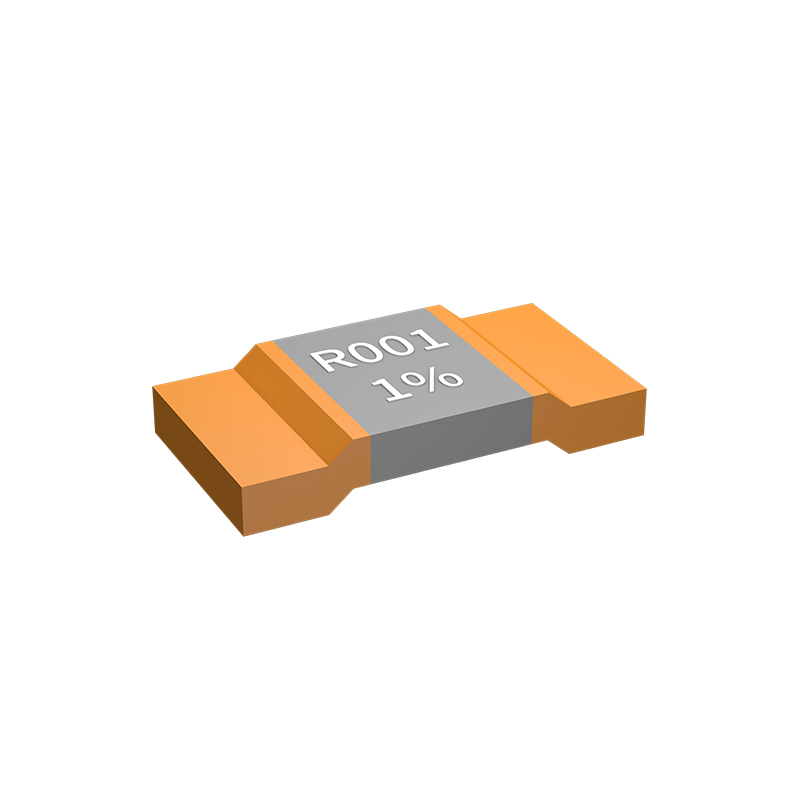
When a product is built with precision, every detail works in harmony. It’s not just about using better materials—it’s about a process where each step is calibrated to reduce friction and amplify output. This kind of meticulous assembly means the end result doesn’t just meet a standard; it sets one. The quiet confidence of flawless engineering is felt every time you rely on it, turning an ordinary task into something effortlessly smooth.
Behind the scenes, strict quality gates and skilled hands make all the difference. Rather than settling for mass production compromises, leading workshops treat each component as critical—testing, refining, and often rebuilding until it’s right. That attention to detail creates a ripple effect: components bond more securely, surfaces wear evenly, and stress points are fortified. The outcome is a product that doesn’t just perform; it endures, maintaining its character long after cheaper alternatives have faded.
This advantage extends beyond the spec sheet. In real-world use, top-tier production manifests as responsiveness and reliability that you can feel but rarely quantify—a tool that never hesitates, a device that reads your intent. It’s the absence of compromise that separates a truly high-performance instrument from the ordinary. And while that difference may be invisible at first glance, it becomes unmistakable the moment you put it to work.
Material Matters: The Hidden Factor in Resistor Accuracy
It’s easy to assume that a resistor’s precision is solely a matter of manufacturing tolerances, but the core material often dictates long‑term stability in ways a datasheet can obscure. Metal‑film resistors, for instance, owe their low temperature coefficients to carefully deposited alloys like nichrome, whose crystal structure resists drift even under thermal cycling. Carbon‑composition parts, by contrast, are inherently noisier and more hygroscopic—moisture absorption can permanently shift their resistance, a flaw that no amount of initial trimming can correct.
In precision circuits, material choice ripples beyond the nominal value on the label. Wirewound resistors excel in high‑current scenarios because the bulk metal element dissipates heat evenly, avoiding the microscopic hot spots that degrade film‑based parts. Even the termination caps and lead‑attachment method matter: a mismatched expansion coefficient between the resistive element and its housing can introduce strain that manifests as a slow, irreversible resistance change. When every microvolt counts, overlooking the raw materials is a quiet recipe for calibration drift.
Real-World Demands: Why High Precision Isn’t Optional
In sectors like medical device manufacturing or aerospace engineering, even a fraction of a millimeter can determine success or catastrophic failure. Consider a surgical implant designed with imprecise tolerances—over time, microscopic wear particles may trigger inflammation or implant rejection, putting a patient’s life at risk. Similarly, in jet engine components, a single miscalculated dimension under extreme temperatures could lead to blade fractures, causing mid-flight emergencies. These are not hypothetical risks but documented failures that highlight why precision is hard-wired into safety protocols. The relentless demand for accuracy stems from an uncompromising reality: lives and multi-million-dollar assets hang in the balance, making high precision a non-negotiable baseline rather than a luxury.
Beyond life-critical systems, manufacturing economics ruthlessly punish imprecision. A consumer electronics assembly line producing smartphone casings with slight dimensional drift might see reject rates soar from 2% to 15% overnight—a hemorrhage of materials, energy, and labor that erodes margins. Worse, components that marginally pass inspection but fall at the edge of tolerance bands often fail early in the field, triggering warranty claims, recalls, and brand damage that no marketing budget can repair. The hidden cost of “good enough” metastasizes across supply chains, turning small measurement uncertainties into profit-destroying liabilities. In contrast, investing in high-precision processes consistently reduces scrap, rework, and long-tail reputational risk, proving that precision is actually a cost-saving strategy when viewed through the lens of the entire product lifecycle.
The shift toward miniaturization and multifunctional integration further cements precision’s role. As devices shrink—think of micro-electromechanical systems (MEMS) sensors in autonomous vehicles, or lab-on-a-chip diagnostics—the room for error contracts to near-zero. A MEMS accelerometer’s proof mass misalignment by a micron can skew inertial readings, corrupting the navigation algorithms that guide a self-driving car. In these domains, precision ceases to be a specification on a blueprint; it becomes the fundamental enabler of functionality. Without capabilities that push the boundaries of metrology and process control, entire product categories—from wearable health monitors to quantum communication nodes—would remain stuck in the conceptual stage, unable to transition from prototype to production at scale.
The Cost of Compromise: When Low-Quality Components Fail
In the rush to meet budget targets, it’s tempting to source cheaper components, but the hidden price of that compromise can dwarf any initial savings. A single failed capacitor in a power supply might cost pennies to replace, yet when it triggers a chain reaction that fries an entire circuit board, the repair bill skyrockets. Beyond the immediate hardware damage, there’s the downtime—machines sit idle, production halts, and every minute of inactivity bleeds revenue. The real sting comes when you trace the failure back to a part that was never built to last, and you realize the bargain you struck was never a bargain at all.
Low-quality components don’t just break; they undermine the trust that holds businesses together. Consider a sensor in a medical device that gives erratic readings due to poor shielding—it’s not just a technical glitch, it’s a liability that can lead to misdiagnosis and legal nightmares. Engineers end up spending countless hours debugging systems that should have been reliable from day one, pulling talent away from innovation and into firefighting mode. The ripple effects hit customer relationships hardest: late deliveries, recalled products, and a reputation that takes years to rebuild. When a critical system goes dark because of a ten-cent connector, the savings evaporate into a fog of frustrated clients and missed opportunities.
The true cost of compromise often surfaces long after the purchase order is forgotten. A fleet of field equipment might chug along for months before the cheap seals begin to crack, letting moisture seep into sensitive electronics. By then, the warranty has expired, and the manufacturer is left holding the bag for a systemic flaw that could have been prevented with a slightly better component. Smart teams learn to weigh the upfront price against the lifecycle cost—factoring in maintenance, replacement, and the intangible toll on team morale when they’re constantly patching avoidable failures. In the end, opting for quality isn’t about spending more; it’s about refusing to pay the same bill twice.
Future-Proofing Your Designs: The Long-Term Value of Premium Resistors
Design longevity goes far beyond initial specs—it's about how a component behaves after years of thermal cycling, vibration, and humidity. Premium resistors, particularly metal foil and high-stability thin-film types, routinely offer load-life stability below 0.01% drift even after 2,000 hours under full rated power. That consistency means your precision circuit stays within calibration without expensive rework, which is a direct, measurable extension of product life.
In high-reliability applications like medical instruments or aerospace, field failures aren't an option. Here, the extra cost of a premium resistor disappears against the backdrop of a single recall. But the value isn't just about failure avoidance—it's about reducing unexpected drifts that force recalibration or cause subtle performance degradation that chips away at your brand's trust. A well-chosen resistor quietly locks in the performance margin you originally designed for.
Real-world design cycles also benefit from this low-drift trajectory. When a product outlives its expected service window, a stable resistor network means you can extend field deployments without costly design revisions. This flexibility lets you allocate engineering resources to innovation instead of chasing component drift, turning a seemingly minor BOM line item into a strategic tool for sustainable product roadmaps.
FAQ
They are primarily used for accurate current measurement by measuring the voltage drop across a known low resistance. This is critical in applications like power management, battery monitoring, and industrial automation where precise current sensing ensures system efficiency and safety.
A high-quality manufacturer ensures consistent resistance values, low temperature coefficient, and long-term stability. These factors directly impact measurement accuracy and reliability. Inferior resistors may drift over time or have higher thermal EMF, leading to errors that can compromise system performance.
Temperature variations can change the resistance value, causing measurement errors. High-quality resistors use materials with low temperature coefficient of resistance (TCR) to minimize this effect. Additionally, they are designed to handle power dissipation and heat build-up without significant degradation.
Common materials include manganin, nichrome, and various metal alloys with low TCR. Manganin is particularly favored for its excellent stability and low thermal EMF against copper connections, making it ideal for precision applications.
In battery management, shunt resistors measure charge and discharge currents. This data is vital for state-of-charge estimation, overcurrent protection, and balancing. Accurate current sensing prolongs battery life and prevents hazardous conditions, so the resistor must be reliable and precise.
Engineers should evaluate the manufacturer's track record for quality control, their ability to provide detailed specifications (like TCR, tolerance, and power rating), and their testing procedures. Certifications and customer support are also indicators of a trustworthy supplier. Choosing a specialist with expertise in precision resistors often yields better long-term performance.
Conclusion
In the realm of precision current sensing, high-quality shunt resistors are defined by far more than their listed tolerance figures. A reputable manufacturer ensures that every resistor leaving the facility reflects a meticulous blend of design expertise, advanced production techniques, and rigorous testing. The inherent accuracy of these components hinges on the interplay between material purity and structural integrity—where top-tier suppliers utilize electron-beam welded joints and specially formulated resistive alloys to minimize thermal EMF and long-term drift. Without such manufacturing discipline, even a resistor with an impressive datasheet specification can underperform when subjected to real-world stresses like temperature swings, vibration, and overload conditions. In high-stakes applications such as electric vehicle battery management, industrial motor drives, or medical power systems, precision is not a luxury; it is a fundamental requirement that guards against measurement errors and ensures system reliability.
Choosing a low-quality shunt resistor from an unreliable source often leads to silent failures that cascade into costly repairs or safety hazards. Inferior materials and lax process controls result in unpredictable resistance shifts, excessive self-heating, and poor repeatability—faults that only become apparent after deployment. When these components fail, the price of replacement hardware is dwarfed by downtime, damaged equipment, and lost trust. Conversely, partnering with a high-quality manufacturer builds longevity into your designs. Premium resistors with tight temperature coefficients and proven stability not only meet today’s requirements but also adapt to future performance demands. This forward-thinking approach safeguards your product’s reputation and reduces the total cost of ownership over its lifecycle, making the initial investment in a superior component a strategic decision rather than an expense.
Contact Us
Contact Person: Yuying Gao
Email: [email protected]
Tel/WhatsApp: +86 18926013721
Website: https://en.milliohm.net/