

Fiberglass Geogrid Supplier Qualities That Ensure Long-Term Pavement Performance
2026-11-16
Pavement failures rarely happen overnight. They start with small stresses—thermal cracks, subgrade movement, repeated traffic loads—that gradually compromise the surface. The right fiberglass geogrid can interrupt this cycle, but only if the supplier behind it delivers consistent tensile strength, dimensional stability, and reliable coating adhesion. That’s why engineers are looking beyond product specs to the supplier’s manufacturing discipline and quality control. WEN FENG STONE has built its reputation on these very qualities, providing geogrids that hold their performance through years of service. In this post, we’ll explore the supplier attributes that truly safeguard long-term pavement performance.
Glass Fiber Purity and Long-Term Tensile Stiffness
Raw glass composition governs how well a fiber holds its tensile stiffness over years. Even trace amounts of alkali oxides or residual sizing agents can create surface flaws that slowly concentrate stress under cyclic or sustained loads. High-purity formulations—especially those with tightly controlled boron and alkali content—tend to show less microcrack growth, so the fiber resists the gradual decline in modulus that often goes unnoticed until a structure is already in service.
Long-term stiffness isn't just a material property; it's also a record of how clean the fiber stayed during drawing and coating. Contaminants trapped at the glass–sizing interface can absorb moisture and promote local hydrolysis, weakening the load-transfer path between fiber and resin. In contrast, fibers refined to remove metallic inclusions and volatile residues maintain a more stable stress–strain response, with tensile modulus staying within a narrow band after thousands of hours under load.
For applications that can't tolerate creeping deflection, specifying purity levels pays off. A small difference in raw material quality—measured in parts per million of sodium or iron—can separate a reinforcement that retains 95% of its original stiffness from one that loses meaningful rigidity after a few seasons outdoors. Testing under accelerated aging with wet heat and sustained tension usually reveals which grades deserve a place in critical, long-life composites.
Heat-Resistant Coatings That Withstand Hot-Mix Overlays
When a hot-mix overlay goes down at 150–180°C, the coating underneath has about ten seconds to prove itself. Most conventional waterproofing membranes soften, blister, or lose bond almost immediately. That’s why heat-resistant coatings for this application lean on heavily crosslinked epoxy or polyurethane chemistries, often loaded with ceramic microspheres or aluminum flakes. The goal is not just surviving the temperature spike—it’s keeping enough tensile adhesion to bridge minor cracks in the old concrete or steel deck once the overlay cools and starts moving under traffic.
Field performance hinges on details that rarely show up in product data sheets. A coating that passes a 200°C heat-soak test in the lab can still fail if the contractor skips primer on a damp substrate or sprays too thin at the edges. On my last bridge rehab, we specified a two-coat epoxy system with a minimum dry film thickness of 20 mils, then ran pull-off tests after placing a 40 mm SMA overlay. The readings held above 1.5 MPa at every core, but only where the surface had been lightly grit-blasted the same day as coating. Skip that step, and the heat from the paver turns any trapped moisture into steam that lifts the membrane clean off the deck.
Roll-to-Roll Uniformity in Aperture and Strength
Achieving consistent aperture and tensile strength across the full width of a moving web remains one of the more stubborn challenges in roll-to-roll processing. Small shifts in coating thickness, drying rate, or web tension can cascade into measurable variations that are invisible to the naked eye but show up later in filtration efficiency or tear resistance. Uniformity, in practical terms, is less about hitting a single ideal value and more about narrowing the distribution of values so that every meter of the roll behaves like every other meter.
The aperture side typically suffers when fluid rheology changes with temperature or when slot-die lips accumulate residue after hours of continuous operation. Operators who rely only on off-line sampling often miss these drift patterns until a downstream converter rejects the material. Real-time inspection, combined with closed-loop tension control, tends to keep the web in a narrower operating window. That approach also feeds directly into mechanical uniformity, since localized over-stretching can thin the substrate unevenly and lower its burst strength in ways that static lab tests rarely capture.
Strength variation is a separate but tightly coupled problem. Polymeric substrates that cure too quickly at the edges may exhibit brittle zones, while the center retains more ductility. Adjusting the drying profile rather than simply raising line speed usually yields a better balance between output and consistency. In high-volume production, the real metric is not whether a single sample passes specification but whether the roll can survive downstream slitting, laminating, and end-use stresses without surprising weak spots.
Interface Bond Retention Under Repeated Traffic Loads
Field sections rarely fail from a single heavy axle passage. Instead, the interface between an asphalt overlay and the underlying concrete or stabilized base degrades through a slow accumulation of micro-damage during each load cycle. Repeated traffic loads generate cyclic shear and tensile stresses at the bond line, which gradually weaken the adhesive or cohesive strength that was present shortly after construction. Early cycles may produce no visible distress, but the bond begins to lose stiffness as tiny slips accumulate at the contact surface.
What makes this deterioration difficult to predict is the combined effect of load magnitude, axle configuration, and pavement temperature. Under moderate temperatures, the asphalt layer remains stiff enough to transfer stress efficiently into the interface, but high tire pressures and slow-moving or channelized traffic concentrate those stresses in narrow wheel paths. Over time, localized debonding initiates at edges or around joints, then spreads inward. Once the bond retention drops below a threshold, the overlay starts to behave as an independent thin plate, which accelerates top-down cracking and rutting even though the asphalt itself may still be intact.
To assess long-term performance, many agencies now run cyclic shear tests or accelerated pavement testing that reproduce thousands or millions of load repetitions. The key output is not the initial bond strength, but the residual bond after repeated loading—often expressed as a percentage of the original value. A mix that retains 80 percent of its interface shear capacity after one million cycles will perform very differently from one that drops to 40 percent after only one hundred thousand cycles. For design purposes, this retention ratio should be linked to the expected traffic spectrum and climatic conditions, rather than relying solely on a single pull-off test conducted right after construction.
Testing Protocols That Replicate Real Pavement Stress
Modern pavement evaluation leans heavily on protocols that don't just measure static strength but reproduce the complex, shifting stress fields seen under actual traffic. This means cycling loads at frequencies that match vehicle speeds, applying lateral wander patterns rather than a single wheel path, and introducing rest periods to capture viscoelastic recovery in asphalt layers.
Temperature and moisture are woven into the test matrix because real pavement stress is never purely mechanical. A slab subjected to thermal gradients behaves differently under the same axle load, so advanced setups pair mechanical actuators with environmental chambers that can swing from freezing nights to sun-baked afternoons within a single test sequence.
The most convincing protocols also incorporate realistic tire contact geometry and inflation pressures. Instead of a flat circular plate, segmented loading heads with rubber pads distribute pressure like an actual tire footprint, including edge stresses that often trigger top-down cracking before bottom-up fatigue ever appears.
Supplier Support Grounded in Geotechnical Field Data
Field data does not sit in a binder on a shelf when the supplier's team has boots on the ground. Every CPT trace, pore pressure reading, and settlement marker feeds directly into how support is delivered. Instead of generic advice, the supplier interprets what the soil is actually doing at the moment of installation, adjusting anchoring depths, grout mixes, and load-transfer expectations on the fly. This means the support you receive is not a replay of a catalogue solution but a response to the ground under your specific site.
The value shows up in the details: a sudden spike in inclinometer readings triggers a phone call before the morning report is even drafted, and a revised shoring sequence is proposed based on last night's piezometer trends. The supplier's engineers treat field instruments as extensions of their own judgment, not as paperwork. When unexpected layers of soft clay or fractured rock appear, the conversation shifts from “what the spec says” to “what the ground is telling us right now.” That is the kind of support that keeps a project moving without waiting for a formal change order.
Over time, this approach compounds. Every pile driven, every anchor tested, and every excavation monitored adds to a local dataset that the supplier uses to refine recommendations for the next phase or the next site down the road. You benefit from a support model that is not just reactive but quietly predictive—leaning on actual measured behavior rather than assumptions from a textbook. It is the difference between a vendor who ships products and a partner who works the ground with you.
FAQ
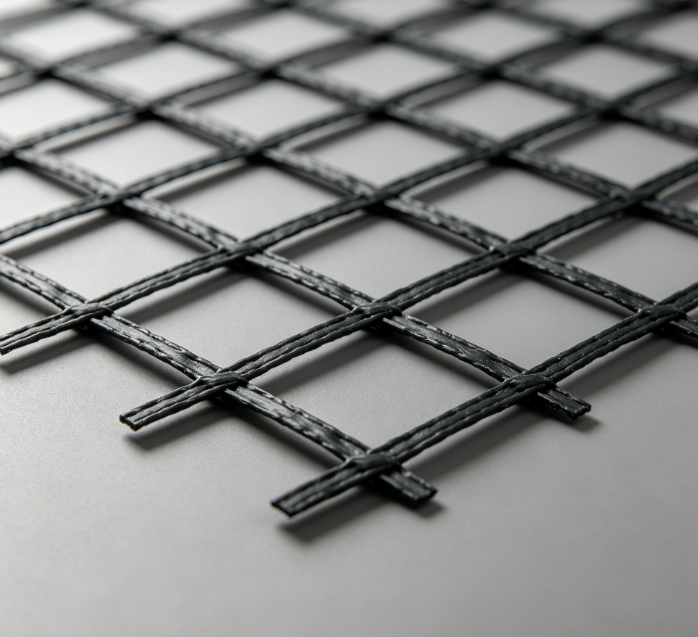
Look beyond tensile strength numbers. Ask how the supplier controls fiber alignment, coating thickness, and junction melt points. A geogrid with uneven yarn tension may test fine on a small coupon but will develop weak spots under repeated traffic loads. Also check that the supplier reports creep testing at realistic temperatures—many failures happen not from initial loading but from slow elongation over hot summers.
If the supplier doesn't monitor yarn tension and coating viscosity in real time, the grid can have hidden thin spots or inconsistent apertures. During paving, those areas allow localized strain to concentrate, which is exactly where reflective cracks start. Reliable suppliers use automated inspection cameras and pull random rolls from each lot to verify that coating adhesion and aperture stability stay within narrow tolerances.
Coatings do more than protect fibers during shipping. A polymer-modified coating can create a better bond with the tack coat and resist chemical attack from asphalt binders, while a cheap bituminous coating may soften in high heat and let the grid slip. Ask the supplier for compatibility data with the specific tack coat you plan to use—generic claims about 'universal adhesion' are a red flag.
A dependable supplier will ask about your pavement structure, traffic level, and climate before recommending a product, rather than quoting the same roll for every project. They can provide documented case histories from similar roads, offer on-site installation advice, and stock rolls in widths that minimize waste. If a supplier cannot explain why their geogrid works in a mill-and-fill overlay versus a full-depth reconstruction, treat that as a warning sign.
Ask for accelerated pavement testing results or long-term field monitoring data from at least three to five years. A credible supplier should share sections where their product was installed alongside a control section without geogrid, showing crack counts and ride quality over time. If all they have is a single project photo and a warranty card, that's not evidence of long-term performance.
Get specifics on minimum overlap width, whether the grid should be placed on a tack coat or directly on milled surface, allowable paver turning radius, and temperature limits during installation. A supplier that knows its product will also tell you how to handle wet weather, how to prevent wrinkles under the paver, and what to do if the grid bunches up during paving. Vague answers like 'just follow standard practice' usually mean limited field experience.
High-quality glass fiber with the right sizing chemistry resists abrasion and moisture damage during the window between grid placement and paving. Some suppliers use lower-grade fiber that looks the same on the roll but loses strength after exposure to moisture or minor scuffing from trucks. Ask for the fiber type (E-glass versus cheaper alternatives), sizing treatment, and results from simulated construction traffic abrasion tests.
Look for flattened or telescoped rolls, which suggest the grid was stored improperly and may have damaged edges. Check for white chalky residue on the surface—this can indicate coating degradation from UV exposure or moisture. Also feel for stiff or brittle spots; a quality geogrid should still be flexible at the edges. If the supplier dismisses these signs as cosmetic, escalate the concern because hidden damage often shows up later as localized cracking.
Conclusion
The first thing that separates a reliable fiberglass geogrid supplier from the rest is the quality of the raw glass itself. High-purity glass fibers hold their tensile stiffness over decades, resisting creep and environmental degradation that would otherwise let cracks propagate through the overlay. Equally important is the coating system—some suppliers use heat-resistant polymer coatings that survive hot-mix asphalt placement without melting or losing bond. This means the grid remains fully engaged with the surrounding aggregate rather than slipping or delaminating when temperatures spike during paving.
Beyond material properties, roll-to-roll uniformity matters more than many engineers realize. Consistent aperture size and tensile strength across every roll prevent weak spots that become crack initiation sites under repeated traffic loads. Leading suppliers also run custom testing protocols designed to mimic real pavement stress states—cyclic loading, temperature swings, and moisture exposure—so the geogrid's interface bond retention is verified before it ever reaches the field. Finally, the best suppliers back their products with geotechnical field data, offering pavement design support that accounts for subgrade conditions, traffic spectra, and climate. That kind of ground-truth expertise turns a commodity geogrid into a performance guarantee.
Contact Us
Contact Person: Jennifer LEE
Email: [email protected]
Tel/WhatsApp: 8618553418999
Website: https://vip.e-baixing.com/wenfengshitong