

Drone Simulator Supplier Selection: Key Factors for Optimal Training Solutions
2026-08-03
Could the success of your drone training program hinge on a single supplier decision? It might. Picking the right drone simulator isn’t just about fancy graphics—it’s about real-world transfer of skills, operational safety, and long-term ROI. Before you commit, weigh the critical factors that separate a basic tool from a true training solution. We’ll guide you through them, and show how SRIZFLY sets the benchmark.
Recreating Real-World Physics: Why Flight Dynamics Can't Be an Afterthought
Flight dynamics form the backbone of any simulation claiming authenticity, yet many developers treat them as a secondary concern. When the physics governing lift, drag, and thrust are approximated with simplistic formulas, even the most visually stunning cockpit becomes a hollow shell. Pilots notice immediately—the subtle buffeting during a stall, the asymmetrical thrust effect during an engine failure, the weightless moment at the top of a parabola. These aren't mere details; they are the language through which a pilot communicates with the aircraft. Without them, the experience is reduced to a video game with wings rather than a genuine replication of flight.
The challenge lies in modeling the continuous, fluid nature of real-world physics. Air isn't a uniform substance; it's a chaotic blend of thermals, pressure gradients, and wake turbulence that shapes every second of flight. A true simulation demands aerodynamic coefficients that shift with angle of attack, Reynolds number variations across the envelope, and ground effect calculations that alter behavior just feet above the runway. Off-the-shelf physics engines, designed for rigid-body collisions and projectile motion, fall catastrophically short here. Building a dedicated flight model from scratch—one that iterates through the equations of motion dozens of times per second—is the only path to capturing that visceral sense of suspension in a dynamic fluid.
Ultimately, the fidelity of flight dynamics determines not just realism, but trust. A simulator that fails to replicate a crosswind landing's crab-and-kick technique or the delicate dance of maintaining altitude in mountain wave conditions erodes the pilot's confidence in every instrument reading. When the physics are right, the pilot stops thinking about the machine and starts reacting to the air itself. That immersion—the disappearance of the interface—is what separates a training tool from a toy. Flight dynamics can't be an afterthought because the soul of simulation lives in the invisible forces that keep an aircraft aloft.
Scalability Without Surprises: Future-Proofing Your Training Infrastructure
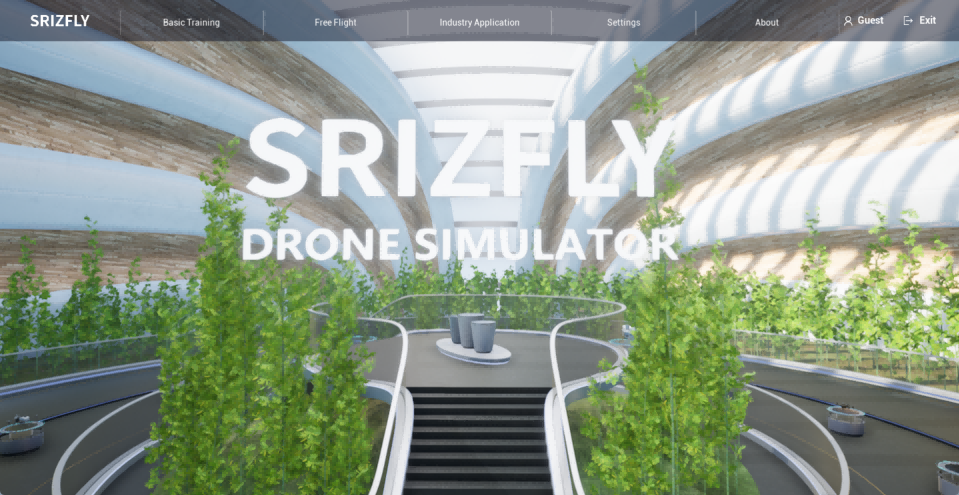
Scaling your training infrastructure often feels like walking a tightrope—one misstep and you’re hit with unexpected costs or performance bottlenecks. The goal isn’t just to add more GPUs; it’s about building a system that grows smoothly without constant firefighting. Start by designing for elasticity from day one, using containerized workloads that can span on-premise clusters and cloud resources seamlessly. This approach lets you handle spikes in demand without overprovisioning, keeping both your team and your budget sane.
A future-proof setup also means paying attention to the less glamorous parts: data pipelines, checkpointing strategies, and failure recovery. If your data staging can’t keep up with the increased compute, your fancy GPU cluster will sit idle. Implement tiered storage that automatically moves data based on access patterns, and invest in high-throughput networking that won’t crumble under concurrent read requests. Regular chaos engineering—intentionally breaking parts of the system—helps you expose weaknesses before they cause real downtime during a critical training run.
Finally, treat your infrastructure as code and version it alongside your model code. Configuration drift is the silent killer of reproducibility. When you can spin up an exact replica of your training environment with a single command, onboarding new team members becomes trivial and debugging becomes less of a guessing game. By baking observability into the foundation—custom metrics, structured logging, distributed tracing—you turn capacity planning from a quarterly nightmare into a continuous, data-driven process that adapts as your research evolves.
Taming the Data Deluge: Turning Telemetry into Actionable Training Insights
Modern training environments generate relentless streams of telemetry—heart rate, power output, stroke rate, GPS coordinates—a digital avalanche that can overwhelm even the most dedicated coaches. The real challenge isn’t gathering the data, it’s filtering out the noise and surfacing the few metrics that actually shape performance. Without a clear lens, coaches end up drowning in dashboards, chasing numbers that don’t move the needle.
The shift from raw data to actionable insight starts with asking the right questions: not ‘how much data do we have?’ but ‘what do we need to know to make a decision today?’ By mapping telemetry directly to training principles—specificity, overload, recovery—you can turn a wall of numbers into a meaningful story. Instead of tracking everything, zero in on the handful of longitudinal patterns that predict readiness, fatigue, or technical breakdown. That’s when a quick glance at a trendline replaces hours of spreadsheet wrangling.
The real art is embedding this thinking into daily routines so it feels intuitive rather than analytical. When coaches learn to read telemetry like an athlete reads the field, they stop reacting to data and start anticipating adaptation. The goal isn’t a more complicated system; it’s a clearer conversation between the plan and the reality, where every metric earns its place by answering a specific coaching question.
The Price of Realism: Unpacking Total Cost of Ownership
Chasing photorealism isn’t just a creative decision—it’s a financial commitment that goes far beyond the sticker price of your tools. Most people fixate on the obvious numbers: the render engine license, a beefier GPU, or that subscription to the latest asset library. But the real drain happens in the margins—time spent tweaking shaders, the electricity bill from overnight renders, and the silent lag when your entire pipeline slows down because every frame has to calculate subsurface scattering on seventeen layers of skin. That’s where total cost of ownership starts to bite.
Think about the hardware cycle. That top-tier card you bought two years ago already struggles with the newest updates, and cloud rendering costs can spiral if you’re not tracking them daily. Then there’s the human factor—specialists who can actually build these hyper-real scenes don’t come cheap, and their time gets eaten by endless test renders and shader debugging. Even storage becomes a quiet expense: realistic simulations produce massive data sets, and suddenly you’re managing server expansions or pricier cloud tiers just to keep yesterday’s work accessible.
The smarter approach is to audit where realism actually adds value. Sometimes a stylized shader does the job faster and costs a fraction of the resources. Other times, investing in better training for your team on optimization techniques pays off more than another hardware upgrade. Total cost of ownership isn’t about avoiding realism—it’s about knowing when the last 10% of visual fidelity is going to cost you 300% more, and whether your project genuinely needs it.
Beyond the Console: The Critical Role of Sensory Immersion
Sensory immersion is not just a feature of modern gaming—it is the bridge between a player and a believable world. When the haptic feedback of a controller simulates the recoil of a weapon or the rumble of uneven terrain, the brain begins to accept the virtual as tangible. Audio cues, from the subtle rustle of leaves to the directional footsteps of an approaching enemy, construct a three-dimensional soundscape that pulls attention away from the living room and into the game. Visual fidelity matters, but without sound and touch, it remains a flat canvas. True presence is built on the richness of sensory input, transforming passive viewing into active participation.
Developers have begun to treat sound design, controller feedback, and even environmental lighting outside the screen as legitimate storytelling tools. Consider how a horror game uses the faint crackle of a radio or the slow dimming of console lights to escalate tension without a single line of dialogue. These layered sensations invade the player’s personal space, blurring the line between real and simulated environments. It’s a psychological exchange: the more senses a game engages, the deeper the emotional investment. This shift has elevated game design from mechanical challenge to nuanced, felt experience.
What makes sensory immersion so critical is its power to suspend disbelief longer and more convincingly than visuals alone ever could. When the warmth of a simulated sun is felt through adaptive triggers, or the click of a reload feels distinct in your palms, the brain stops questioning the fiction. The console becomes a window, not a barrier. The outside world fades—not because graphics are hyper-real, but because the body’s own responses are woven into the digital narrative. That is where immersion transcends novelty and becomes a fundamental layer of interactive art.
When Systems Must Talk: Integration With Existing Training Ecosystems
Bringing a new learning platform into an organization rarely starts from a blank slate. More often than not, there's a sprawling mix of legacy LMS platforms, content libraries, HR tools, and performance management systems already in place. The real challenge isn't just technical compatibility; it's ensuring that data flows seamlessly across these systems so that learner progress, credentials, and engagement metrics aren't trapped in isolated silos. Without thoughtful integration, adoption suffers and administrative overhead skyrockets.
A well-integrated training ecosystem should treat interoperability as a core capability, not an afterthought. This means leaning on standards like SCORM, xAPI, or LTI for content portability, while designing APIs that allow authentication, roster syncing, and event-driven webhooks to work effortlessly with tools people already use daily—whether that's Microsoft Teams, Salesforce, or a custom-built portal. It's also about recognizing that integration isn't a one-time setup; it's an ongoing relationship that requires monitoring, version management, and occasional adjustments as both sides evolve.
When done right, the learner doesn't even notice the seams. They move from their company dashboard into tailored learning paths without extra logins, their completions instantly update their employee profile, and managers get real-time visibility into team skill gaps—all because the systems quietly exchange information behind the scenes. That kind of invisible efficiency is what turns a training platform from a standalone destination into a natural part of the workflow.
FAQ
Focus on realism, hardware compatibility, software update frequency, and whether the supplier offers modular training scenarios tailored to your operational needs.
It's fundamental—accurate aerodynamics, wind effects, and system failures replicate real-world challenges, directly impacting trainee preparedness and risk mitigation.
Yes, the best suppliers provide configurable platforms that cover multirotor, fixed-wing, and hybrid drones, with customizable environments for inspection, mapping, or emergency response.
Critical. Look for rapid troubleshooting, regular content expansions, and trainer upskilling programs—these ensure long-term value and operational continuity.
It depends on your security constraints and accessibility needs; many organizations now favor hybrid models that allow offline core training with cloud-based analytics and scenario sharing.
Evaluate using metrics like skill retention rates, transfer-of-training studies, and integration with existing curriculum—not just feature lists.
While not the sole factor, alignment with standards like EASA, FAA, or ISO 9001 can signal a commitment to regulatory rigor and continuous improvement.
Conclusion
Selecting a drone simulator supplier demands probing beyond glossy demos into flight dynamics that mirror real-world physics, because approximations in torque or wind response can embed costly negative training. In parallel, scalability must be proven under load—not merely promised—ensuring the infrastructure accommodates swarms and future airframes without latency spikes. The torrent of telemetry becomes valuable only when the system transforms raw data into actionable coaching cues, tying visual, haptic, and even vestibular sensory channels into a coherent training loop that fosters instinct. Integration with existing learning management and operational ecosystems is not a secondary checkbox; it requires deep API alignment to avoid data silos that fracture debriefing workflows. By weighting these technical and experiential factors, buyers sidestep superficial feature lists and instead assess how each component reinforces skill transfer and operator readiness.
Total cost of ownership extends well beyond licensing to include scenario-authoring labor, hardware refresh cycles, and the hidden expense of re-training that arises from fidelity gaps. A supplier’s approach to sensory immersion—such as nuanced control loading and peripheral visual cues—affects both acquisition and long-term learning efficiency, making it a financial and pedagogical consideration. Decision-makers must validate claims through measured demonstrations that stress-test the physics engine, fleet scalability, and data interoperability simultaneously. This holistic evaluation, anchored in operational relevance rather than novelty, ensures the chosen simulator becomes a durable pillar of the training program rather than an expensive compromise that erodes pilot proficiency over time.
Contact Us
Contact Person: Niles Liu
Email: [email protected]
Tel/WhatsApp: 8619945009803
Website: https://srizfly.com/