

Custom Shangri-La Sheer Shades for Elegant Light Control
2026-09-02
There’s a particular hour when sunlight hits your living room just right—soft, warm, and free of harsh glare. Custom Shangri-La sheer shades capture that exact mood and let you keep it all day. Through ROLLERGY, every shade is built around your window’s dimensions, your preferred opacity, and a control style that actually matches how you use the room. In this post, we break down why these layered shades are redefining elegant light control—and how to specify them without second-guessing.
Designed Around Your Window, Not the Other Way Around
Most window treatments force you to rearrange your space around fixed panel sizes and limited placement options. This approach flips that logic entirely. Instead of choosing from a handful of standard widths or settling for awkward gaps, the design starts with your exact window dimensions and the way you actually live in the room. Need full blackout for a nursery but soft light in the adjacent reading nook? Each section can be tuned independently, so the solution adapts to you—not the other way around.
This flexibility shows up in the details that standard curtains ignore. Offset windows near a corner, a doorframe that sits unusually close to the glass, or a window seat that requires clearance below—all of these constraints become part of the plan rather than obstacles. The mounting hardware and panel splits are chosen to match your wall studs, your preferred stack-back, and even the direction you naturally reach to open or close them. Because the fit is tailored, the finished look feels less like an afterthought and more like the room was built around the light.
What you end up with is not just a covering but a quiet correction to the room's proportions. A too-tall window can be visually balanced, a narrow one made to feel intentional, and an off-center one brought into alignment with the furniture below. It works because the starting point is your space, your daily rhythm, and your view—not a catalog of one-size-fits-all panels.
From Bright and Airy to Softly Dimmed in One Twist
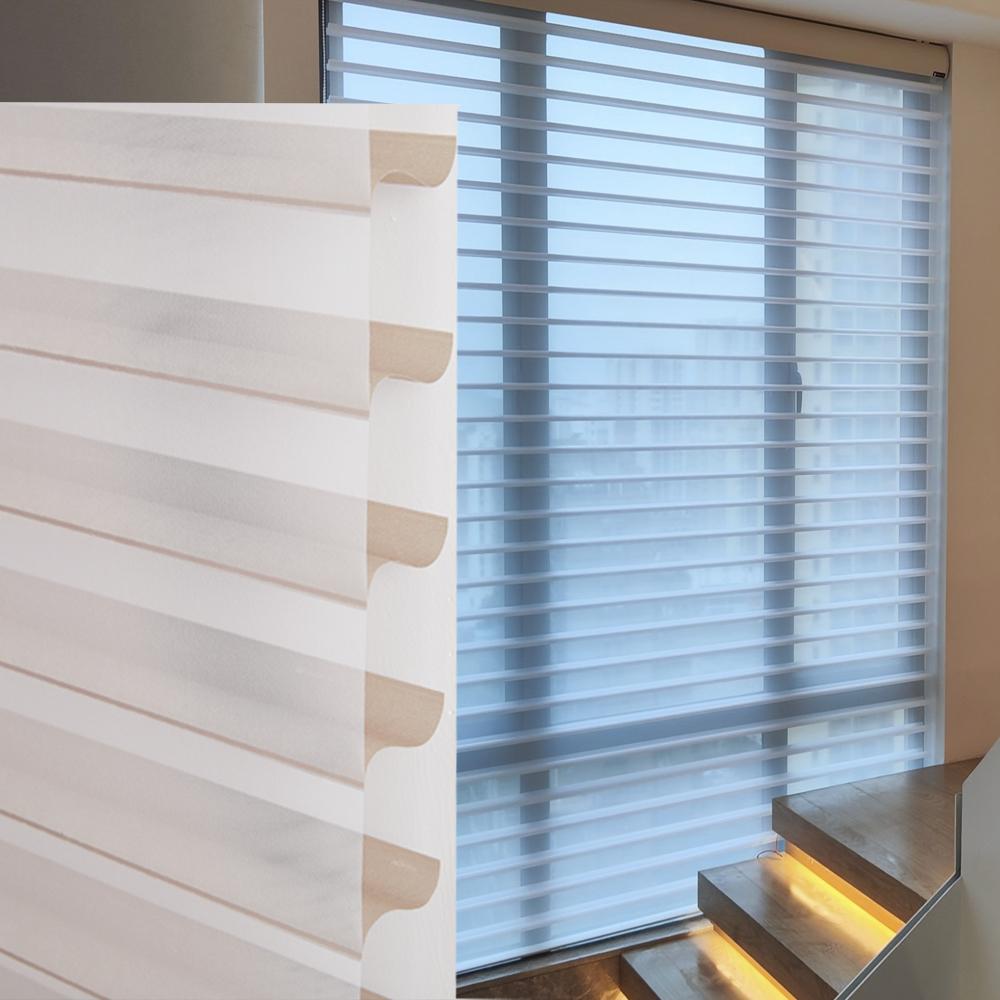
There’s a quiet pleasure in turning a small dial and watching the room settle into exactly the mood you need. No fumbling through an app, no preset scenes—just a gentle twist that shifts the light from crisp and open to warm and low. It feels less like operating a device and more like adjusting the atmosphere by hand.
The range is wider than you’d expect. At its brightest, the space feels clear and energetic, ideal for reading or working through a to-do list. Rotate the ring a few degrees and the glow softens, taking the hard edges off the day. By the time it reaches the dim end, the same room becomes a calm pocket of warmth, perfect for winding down.
This kind of control suits small rituals: a bright start with coffee, a softer tone for dinner, then a faint glow that lets the evening taper off naturally. It’s a simple change, but it shapes how a space feels from one hour to the next.
Keep the View, Lose the Glare
Large windows and glass doors invite sweeping landscapes indoors, but they also bring a punishing brightness that can wash out furniture, overheat rooms, and make screens impossible to read. Instead of reaching for heavy drapes that hide the very thing you love, consider window films that cut visible glare while preserving the clarity of your outdoor scene. Modern optical coatings work like sunglasses for your home—filtering the harshest rays without turning your view into a dim, tinted blur.
The trick lies in selective light management. High-quality films reject a significant portion of solar energy and diffuse direct sunlight, yet they maintain a neutral color balance so blue skies stay vivid and green trees keep their depth. You get the same open feeling, but without squinting or shifting your chair every hour. It is a quiet upgrade that makes a room feel calmer and more usable all day long.
A Fabric Blend That Feels Like a Design Statement
There’s a reason this fabric stops people mid-conversation. The blend itself isn’t just about mixing fibers; it’s about pairing opposites until they sing. A touch of wool for depth, a thread of linen for that dry, crisp hand, and just enough cotton to keep the whole thing breathable. The result reads less like upholstery and more like a deliberate choice—something you’d notice from across the room.
Run your hand across it and you’ll pick up on the subtle texture shifts, almost like a woven gradient. Light catches the surface differently depending on the angle, which gives furniture and drapery a quiet sense of movement. It’s the kind of material that makes a neutral palette feel intentional rather than safe, and it holds its own against bolder colors without competing.
What really sets it apart is how the blend behaves over time. Instead of flattening out, the fabric develops a lived-in character that feels personal. It shrugs off wrinkles in some lights and leans into them in others, which means every piece made from it ends up looking slightly different from the next. That’s the whole point—this isn’t a fabric that tries to disappear. It’s there to be noticed.
Privacy That Adapts to Your Day
Privacy isn't a switch you flip once and forget. It's a rhythm that changes with your day—quiet when you're reading articles over morning coffee, more guarded when you're booking travel on public Wi-Fi, and wide open when you're sharing photos with close friends. The right tools shift with those moments without demanding your attention.
Imagine your browser easing into a private session automatically when you open a banking tab, then relaxing those settings when you return to your usual news sites. No toggles, no pop-ups—just a background awareness of what each context needs. That's adaptive privacy: it listens to the flow of your actions, not to a fixed rulebook.
What makes this feel natural is that the adjustments are subtle. You might notice a small icon change when a tracker is blocked, or a gentle reminder before a site asks for your location. Over time, the system learns your patterns—like how you always want incognito mode for health searches after 9 p.m.—and prepares the space before you even ask.
Quiet Luxury for Everyday Light Control
There’s a particular kind of curtain that doesn’t shout for attention. It hangs with a soft, almost weightless drape, filtering midday glare into something closer to candlelight. The fabric matters more than the pattern: a tightly woven linen or a washed cotton with just enough body to hold its folds.
The hardware is equally quiet. A slim powder-coated rod, a nearly silent glide, a wand that adjusts the slats without clicking. Colors stay close to the wall—warm plaster, oat, stone—so the light control feels architectural rather than decorative.
What you notice over time is the absence of strain. Morning light arrives gradually, afternoon heat is tempered, and the room keeps its calm through every hour. That’s the luxury: not something you show off, but something you live with.
FAQ
They combine alternating sheer and opaque fabric bands that slide past each other, letting you adjust light from a soft glow to full privacy without losing the view entirely. Unlike standard sheers, you get real control over both brightness and visibility.
Each shade is built to your exact measurements, so even arched, angled, or extra-wide windows get a clean fit without gaps. You can also specify mounting depth and side stack preference to match your window frame.
The sheer layers soften direct rays, cutting glare but preserving a warm, diffused light. Tilt the vanes to redirect brightness upward or downward, or close them more fully when you want a calmer atmosphere without darkening the space completely.
A wide range of textures and tones is available, from crisp whites and warm neutrals to subtle patterns and soft pastels. The fabric choice changes the mood significantly, so you can either blend the shades into the wall or make them a focal point.
You can choose cordless, motorized, or standard cord operation. Cordless lifts smoothly with a gentle pull on the bottom rail, while motorized versions pair with a remote or smart home system for scheduled adjustments.
Routine dusting with a low-suction vacuum and a soft brush attachment keeps them looking fresh. For stains, spot-clean the affected area with mild soap and water using a damp cloth, then let the fabric air dry fully before raising the shade.
The layered fabric creates small air pockets that help regulate indoor temperature, keeping rooms slightly cooler in summer and warmer in winter while blocking a portion of UV rays that can fade furniture and flooring.
After final measurements are confirmed, fabrication typically takes two to three weeks. If you need them faster, some providers offer rush production, and professional installation usually takes under an hour per window.
Conclusion
Shangri-La sheer shades rarely feel this intentional. Instead of forcing a standard size onto your window, each one is cut and assembled to follow your exact opening, so the fabric falls in clean, uninterrupted lines from the first bracket to the last. That custom fit changes how light behaves in the room. A single twist of the wand moves the vanes from open and airy to softly filtered, letting you hold onto the bright, breezy feeling of morning or ease into a dimmer, more settled light for reading or rest. The view stays present without the harsh glare that usually sends you reaching for blackout panels.
The fabric itself is part of the appeal. A blend of sheer and solid stripes gives the shade a dimensional, upholstered look that feels closer to tailored interior design than to a standard window covering. As the vanes shift, so does the level of privacy: you can sit near the glass with clear sightlines, then adjust the layers to blur the outside world without sealing the room off completely. It is a quiet kind of luxury, the sort that works in the background, making daylight feel softer and everyday rooms feel more composed and considered.
Contact Us
Contact Person: Vivien Cheng
Email: [email protected]
Tel/WhatsApp: +86 13751758835
Website: https://www.rollergytech.com/