

Custom Road Shot Blasting Machine Factory Delivers High-Performance Surface Preparation Solutions
2026-11-02
Surface preparation failures rarely start at the blast pattern—they start with a machine that was never designed for your substrate. PuHua operates differently. Our custom road shot blasting machine factory delivers high-performance surface preparation solutions that adapt to the job, not the other way around.
Why Contractors Are Moving Away from Universal Shot Blasters
For years, the universal shot blaster was the default choice on job sites, but that's changing fast. Crews are finding that a machine built to handle every surface often masters none. On dense concrete, it leaves uneven profiles; on delicate substrates, it's too aggressive. The result is rework, wasted abrasive, and frustrated operators who spend more time adjusting settings than actually blasting.
Another factor is the rise of specialized equipment that simply outperforms the one-size-fits-all approach. Contractors handling epoxy removal, thin coatings, or polished concrete now reach for machines tuned to those exact tasks. They get cleaner edges, better dust containment, and fewer passes to spec. Universal units, by contrast, demand constant compromise—slower feed rates, extra masking, and unpredictable blast patterns that eat into margins.
Maintenance and downtime have also pushed many teams away. Universal shot blasters often pack complex adjustable components that wear unevenly across varied jobs. A contractor who bounces from warehouse floors to parking decks ends up replacing seals, blades, and recovery hoses far sooner than expected. When a dedicated machine can finish the same work with less babysitting, the old standby no longer looks like a cost-saver.
Setting Blast Width and Speed to Match the Surface Defect
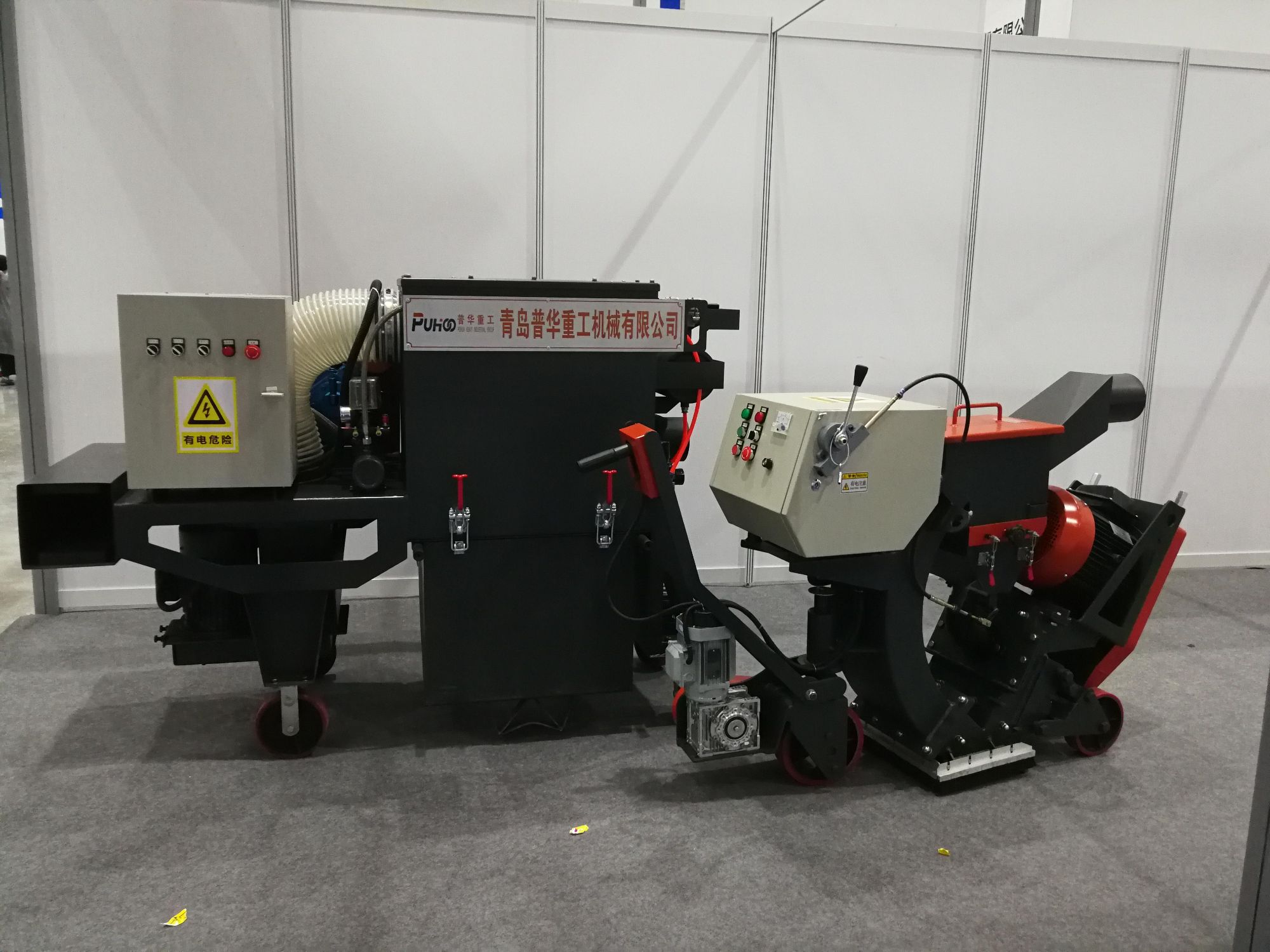
Blasting parameters aren’t one-size-fits-all. A deep, narrow crack demands a focused stream and slower travel speed to let the abrasive bite into the sides without bouncing off prematurely. Rushing here only feathers the edges and leaves the root untouched.
For wider spalling or delamination, you can afford to open the blast width a bit, but keep the nozzle moving at a steady pace—too fast and you’ll skip over low spots; too slow and you risk gouging the surrounding sound material. The trick is to match the effective blast footprint to the defect’s widest point, then adjust speed until the profile looks uniform.
Always do a quick test patch on a hidden area or scrap piece first. Watch how the surface responds: if you see shadowing or uneven texture, tweak the width down or ease off the speed. Small adjustments pay off far more than forcing a single setting through every defect you encounter.
Inside the Factory: How Custom Frames Reduce Job-Site Vibration
On the factory floor, each custom frame begins as a CAD model matched to the specific engine, pump, and generator set it will carry. The engineering team maps the assembly's natural frequencies and then adds gussets, cross-bracing, and thicker plate sections exactly where flex would otherwise show up under load. That means the finished frame does not just hold the equipment—it shifts resonance away from the engine's firing frequency before the unit ever ships.
The isolation points get the same level of attention. Instead of bolting mounts in convenient spots, assemblers place elastomeric pads or coil isolators at measured vibration nodes, where movement is already lowest. Different durometer rubber compounds are chosen for the front and rear of the skid based on real weight distribution, so the frame works with the mounts instead of fighting them.
Before leaving the plant, the frame goes through a shaker test with accelerometers recording lateral and vertical displacement at full load. Weld seams are inspected under black light after the run, and any resonant peak that creeps into the operating range sends the frame back for added dampening. The result on site is a machine that stays noticeably quieter underfoot and puts far less stress on nearby concrete pads and piping.
Dust-Free Operation That Keeps Urban Crews Compliant
Dust drifts across city streets long after a saw cuts through concrete, settling on parked cars, storefront windows, and the lungs of anyone nearby. For urban crews, that cloud is more than a nuisance—it is a compliance liability. New rules in many municipalities now require contractors to capture silica dust at the source, not just spray it down after the fact. A dust-free setup turns a routine curb cut or utility trench into a controlled operation where the air stays clear enough to work without a respirator.
The shift starts with choosing the right attachment: a shroud that hugs the blade, connected to a high-efficiency vacuum with enough suction to pull dust before it escapes. But hardware alone does not keep a crew compliant. The operator needs to check the seal, empty the filter box before it clogs, and position the vac hose so it does not kink behind a wheel. These small habits show up during drive-by inspections, where an officer may look for visible dust or ask for the day’s vac log. A crew that treats dust control as part of the cut—not an afterthought—passes without a second glance.
What separates a clean site from a dusty one is often the order of work. Instead of cutting all day and vacuuming at the end, a compliant crew moves in short passes, letting the vacuum clear each section before moving forward. Wetting the surface helps, but too much water turns the slurry into a paste that clogs the filter and leaves a gray stain on the pavement. The best operators learn the rhythm of their equipment: the pitch of the vacuum when the filter is full, the slight change in saw sound when the shroud lifts. That kind of feel cannot be taught in a half-hour safety video. It comes from repeated days of watching dust fail to rise.
Long-Lasting Blades and Seals for High-Abrasion Environments
In operations where fine particles, grit, or slurry constantly scrape against equipment surfaces, standard blades and seals often fail within weeks. The solution lies in pairing tungsten-carbide edge reinforcements with pressure-compensating lip geometry. This combination prevents micro-cracking at the cutting edge while maintaining a tight interface even when housing bores drift out of tolerance. Field data from mining conveyors shows a 4x increase in service intervals compared to conventional rubber or polyurethane parts.
Material selection matters less than the bonding method. A vulcanized mechanical lock between the blade substrate and hard-facing layer outperforms adhesives or clamps under thermal cycling. For seals exposed to dry abrasive dust rather than slurry, a labyrinth design with a sacrificial wear sleeve avoids direct particle impingement on the primary lip. Operators often overlook that seal groove roughness below Ra 0.8 µm actually accelerates abrasive wear — a slightly textured finish holds a protective micro-film of lubricant.
Tuning the blade's attack angle by as little as 3 degrees can shift abrasive wear from concentrated grooving to an evenly distributed polish across the face. On high-speed rotating shafts, adding a ceramic-filled PTFE backup ring behind the main seal prevents extrusion and cuts dust ingress by nearly half in cement plant trials. The key is not chasing a universal material, but engineering the contact stress map so that wear becomes predictable and gradual rather than sudden or catastrophic.
From Parking Decks to Bridge Gaps: One Machine, Many Profiles
The same machine that clears worn coatings from a multi-level parking deck can be reconfigured in minutes to reach into bridge expansion joints. A quick switch to a narrow-profile attachment lets the operator follow uneven gaps and recessed edges without dragging a second unit to the site. The width, pressure, and tool angle adjust independently, so the equipment matches the surface rather than forcing the surface to match the equipment.
This flexibility comes from a mounting system that accepts full-width drums for open slabs and slim finger-type tools for tight joints. On a parking structure, the wide setup removes traffic markings and thin overlays in long passes. On a bridge, the narrow setup cleans debris and old sealant from joints only a few centimeters wide. Because the core drive unit stays the same, crews spend less time swapping machines and more time working the actual profile in front of them.
FAQ
Custom builds let you match blast width, motor power, and dust collection to the exact job specs—whether it's a narrow bridge deck or a wide highway lane. That avoids the compromise of adjusting your process to fit a machine that wasn't designed for your conditions.
It removes laitance, old markings, and rubber buildup while creating a uniform profile for overlays or coatings. The enclosed blast chamber and vacuum recovery also keep dust and spent abrasive off the surrounding traffic, which matters a lot in live work zones.
Concrete, steel bridge decks, and even grooved pavement can be treated. The key is adjusting blast pressure, shot size, and travel speed to avoid over-etching soft substrates or under-preparing dense ones.
They'll typically modify the blast head width, add magnetic separators for steel shot, or integrate a variable frequency drive for precise speed control. Some also build in remote monitoring so operators can track abrasive consumption and filter status in real time.
Look at the actual blast pattern width, recovery system efficiency, dust emission levels, and the machine's ability to maintain consistent surface profile across joints and uneven patches. Request a demo on a sample surface with your own materials.
Not typically—they're different processes. But a factory can design a multi-functional unit with interchangeable heads or a sequential setup that scabs off high spots first, then shot blasts for the final anchor profile, saving a separate pass.
Beyond standard spare parts, look for on-site commissioning, operator training on abrasive selection, and remote diagnostics. A good factory will also help you fine-tune parameters when you switch between concrete and asphalt jobs.
High-performance machines use negative pressure and cartridge filters to capture dust and fine particles. Without that, operators face visibility issues and the site can violate local air quality rules, especially near schools or residential areas.
Conclusion
Contractors who once relied on one-size-fits-all shot blasters are discovering that surface prep demands more than brute force. A road shot blasting machine built around a custom frame lets operators dial blast width and travel speed to match the exact depth and shape of a defect, whether it's a hairline crack or a spalled section. Inside the factory, engineers weld and brace the frame to absorb recoil and vibration, which reduces operator fatigue and keeps the blast pattern consistent across long passes. This shift away from universal machines isn't about added complexity—it's about giving crews the control they need on real job sites.
Dust-free operation has become a non-negotiable for urban work, and the factory's sealed blast chamber paired with a high-volume vacuum keeps airborne silica and debris below local limits, so crews stay compliant without dragging extra equipment. In high-abrasion environments, long-lasting blades and seals cut downtime because they're machined from wear-resistant alloys rather than off-the-shelf parts. The same machine handles parking deck profiles, bridge gaps, and roadway overlays by swapping a few settings and wear components, which means one investment covers multiple contract types. That kind of flexibility and durability is what high-performance surface preparation actually looks like.
Contact Us
Contact Person: Bruce
Email: [email protected]
Tel/WhatsApp: +86 15166629468
Website: https://www.povalchina.com/