

Cross Table Flat Die Plywood Laser Cutting Machine Supplier Traits That Ensure Long Term Performance
2026-08-17
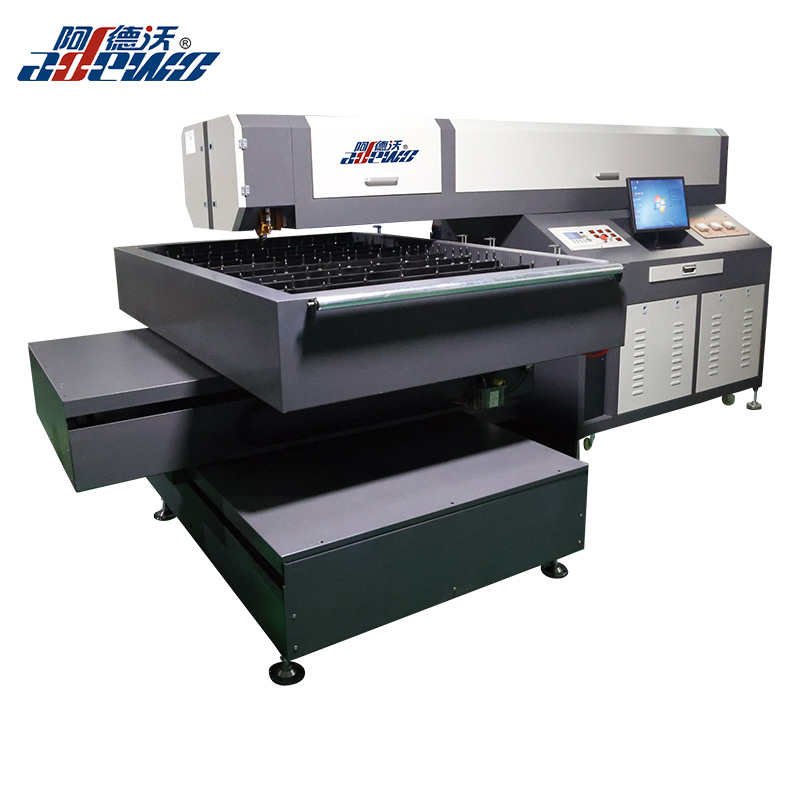
Every plywood factory manager knows the sinking feeling: the laser cutting machine that worked flawlessly during the demo starts misaligning after six months of real production. The problem rarely lies in the hardware itself—more often, it's a supplier that cuts corners on traits essential for long-term durability. That's where ADEWO takes a different path. As a specialist in cross table flat die plywood laser cutting machines, ADEWO focuses on a set of supplier traits that translate directly into years of stable cutting, not just weeks.
Why the Cross Table's Guide Rails Get More Inspection Than the Laser Tube
Maintenance schedules usually put the laser tube at the top of the checklist, but the cross table's guide rails quietly demand more frequent attention. The tube sits enclosed, protected from dust and debris, while the rails are exposed to the same workshop air that carries fine particulates from cutting and engraving. Over time, that residue mixes with the rail lubricant and turns into a gritty paste. If left unchecked, it accelerates wear on the bearings and leads to uneven motion, which directly affects cut quality long before the laser tube shows any sign of degradation.
Another factor is mechanical stress. The cross table moves constantly during a job, with rapid direction changes and varying loads depending on the material and layout. Each pass of the gantry or carriage exerts pressure on the guide rails and their mounting points. Small misalignments creep in from repeated vibration, thermal expansion, and even minor bumps during material loading. The laser tube, by contrast, remains static and only experiences electrical and thermal cycling. So while a tube might run for thousands of hours before needing a recharge or replacement, the rails can develop play, binding, or scoring much sooner if they are not inspected and adjusted regularly.
In practice, operators learn to listen and feel for rail issues before they become visible in the cuts. A faint grinding sound, slightly higher resistance when moving the head by hand, or a subtle wobble in engraved lines are all early warnings. By the time a project shows visible banding or uneven depth, the rail wear is already advanced. That is why seasoned technicians spend more time checking guide rail straightness, cleaning bearing blocks, and reapplying the correct lubrication than they do looking at the laser tube. The tube's decline is slow and predictable, but rail problems can ruin a batch of work overnight.
Flat Die Hardening Choices That Outlast Abrasive Plywood Residue
Running plywood scrap through a flat die pellet mill chews up standard die steel in a hurry. The silica and glue residues act like a grinding paste, so surface hardness alone won't save you. What actually holds up is a deep case depth paired with a tough core. Carburized dies with a 1.2–1.8 mm hardened layer still dent less after hundreds of hours than nitride-only surfaces, because the gradient absorbs impact instead of cracking at the grain boundary.
For smaller shops, a cheaper route is double-tempered D2 or DC53 tool steel with a post-machining cryo treatment. The cryo step converts retained austenite, which stabilizes the die face against micro-chipping from plywood knots. If you're running high-moisture or sandy plywood, add a thin chrome or nickel-boron coating on top—just don't rely on it as the only defense. The coating wears through fast at the land edges, and once it's gone, the base steel needs to carry the load.
Maintenance Tasks Designed for the Operator, Not a Service Contract
Most routine upkeep on this equipment doesn't call for a technician with a bag of specialty tools. The daily checks, the quick cleanings, the small adjustments—these are meant to be done by whoever runs the machine. You'll find the access points placed where you don't have to kneel or stretch or remove half the housing just to reach a filter. A simple latch, a clear label, a five-minute procedure. That's the whole point.
The manual walks you through every task with plain language and photos taken from the operator's angle. No references to obscure torque values or hidden grease fittings. If a part needs occasional replacement, it's designed to slide out without disconnecting a dozen other components. The goal isn't to make you an expert—it's to make sure the machine keeps running between scheduled service visits, without a phone call or a waiting period.
The Supplier Keeps Critical Spares for This Model in Local Warehouses
For this particular model, the supplier maintains a dedicated shelf stock in regional warehouses within a few hours' reach of most operating sites. The inventory focuses on components that either wear predictably or have shown higher failure rates in the field—think drive belts, power supply modules, and specific sensor assemblies. Instead of relying on a central distribution hub, these parts sit closer to where the equipment actually runs, which cuts out a significant chunk of transit time.
When a breakdown happens, the maintenance team can pull the required spare from local stock and often complete the repair within the same shift. There's no waiting for an overseas shipment or a backorder to clear. The warehouse staff run a real-time inventory system tied to the supplier's logistics network, so a replacement part is flagged and restocked before the shelf runs empty. That level of readiness matters for operations where downtime carries a direct cost.
Keeping these spares locally also shifts the burden of inventory management away from the end user. The supplier owns the stock until it's needed, which means the operator avoids tying up capital in rarely used components. It's a practical arrangement for a model that's still in active service but not produced in the same volumes as before—support remains available without the usual overhead of storing everything on site.
On-Site Operator Training That Prevents Typical First-Year Failures
New operators often walk into a plant with classroom knowledge but little feel for how a machine actually behaves under load. On-site training closes that gap by putting them in front of the real equipment, with a trainer who can point out the sounds, vibrations, and small visual cues that textbooks never mention. Those first weeks are when bad habits form, so having someone correct a hand position or a startup sequence right then and there saves months of unlearning later.
The most common first-year failures come from misreading gauges, rushing through lockout procedures, or assuming a quiet machine is a safe machine. Good on-site training builds in deliberate pauses: the operator must explain what they’re about to do and why before touching a control. It’s not about testing their memory but forcing them to slow down and connect the steps to the outcome. When a trainer watches from a few feet away and asks, “What happens if the pressure climbs too fast?” the lesson sticks far better than a slide deck ever could.
What separates effective on-site training from just shadowing is the feedback loop. A trainer who only says “good job” isn’t preventing failures—they’re reinforcing guesswork. Instead, the trainer should create small, controlled challenges: a blocked filter, a misaligned sensor, a sudden change in material thickness. The operator learns to read the machine’s warning signs and react without panic. By the end of the first month, they’ve already seen the most common problems, handled them with guidance, and built the muscle memory to avoid the mistakes that typically show up around month nine or ten.
Real-World Runtime Data Shapes Each Revision of This Machine
Early prototypes were tuned to controlled test benches, but those settings rarely survived first contact with actual job sites. Once operators started logging runtime telemetry, the picture changed. Temperature swings, irregular load cycles, and start-stop frequency all left traces that didn't match the original simulation curves. Those mismatches became the first real blueprint for revision.
Vibration logs proved especially revealing. A harmonic spike at a specific RPM didn't appear in lab endurance runs, yet it showed up within days on three separate customer deployments. That single data cluster led to a redesigned mounting bracket and a shifted counterweight spec. Later revisions pulled from motor current signatures, hydraulic pressure transients, and even ambient dust sensor readings, each feeding small but decisive changes to the mechanical layout.
The result is no longer a machine designed from theory alone. Every new build starts with the accumulated runtime history of the previous one, turning field data into a quiet co-designer. What gets changed next depends less on scheduled milestones and more on what the machines actually report back from the floor.
FAQ
Look at the table drive system. A supplier that uses hardened linear guides and rack-and-pinion on both axes, not just a belt drive, is usually building for long term. Also check how they handle dust extraction around the flat die area—plywood resin and char accumulate fast and kill motion components if ignored.
Very. Plywood cutting runs long duty cycles. If the supplier cuts corners with a small water chiller or relies on ambient air cooling, the tube will drop power and eventually crack. Ask about chiller capacity in BTU or kW, not just 'industrial chiller' wording.
Yes. A welded steel frame with stress-relief treatment is a good sign. Avoid bolt-together aluminum extrusion frames if you run 8+ hours daily. The cross table motion creates repeated lateral forces; aluminum joints loosen, steel doesn't.
Insist on removable side panels, quick-release mirror mounts, and a bed that can be fully exposed for cleaning under the slats. If you have to disassemble half the machine to change a lens, downtime will eat your profits long term.
Check if the focusing lens sits in a sealed cartridge and whether the nozzle has an air curtain. Suppliers that add a positive pressure purge port on the head are thinking about longevity. Open optics without protection will need lens replacements monthly.
Not the brand alone, but the supplier's willingness to provide firmware updates and spare boards for 5+ years. A closed proprietary controller may work fine initially, but if the supplier disappears, you're stuck. Ask for a list of machines still running after 7 years with the same control.
Look for warranty that covers table rails, laser tube, and chiller separately with clear replacement thresholds. A supplier that offers 2 years on motion components and 1 year on the tube, with local service stock, is more believable than a blanket '3-year warranty' with no details.
Request a demo cutting 18mm plywood at their claimed speed for at least 30 minutes, then measure edge squareness and check for table vibration marks. Also ask for reference customers running similar daily volumes for over two years; call them and ask about repeatability drift.
Conclusion
A supplier focused on long-term performance treats the cross table's guide rails as the heart of the machine. These rails get more inspection than the laser tube because any play or wear in the moving table immediately compromises cut accuracy, especially with plywood's abrasive dust. Flat die hardening choices are equally deliberate—suppliers that last don't just coat the surface; they select heat treatments and alloys that resist the fine, sticky residue left by plywood. Maintenance is designed around operators, not service contracts. Grease points, rail wipers, and debris channels are positioned so a shift worker can inspect and clean them in minutes, preventing small issues from becoming major failures. This practical approach keeps downtime low and transfers ownership of routine care to the people who run the machine daily.
Beyond the hardware, dependable suppliers keep critical spares for this specific model in local warehouses, so a failed bearing or lens doesn't mean waiting weeks for an overseas shipment. On-site operator training goes beyond basic startup—it targets the typical first-year failures: misaligned focus after material changes, clogged air assist lines, and improper cleaning of the flat die. By teaching operators to recognize early warning signs, the supplier reduces warranty claims and builds confidence. Finally, each revision of the machine draws from real-world runtime data collected across multiple installations. Changes to the table's stiffness, the die's edge profile, or the software's acceleration curves are not guesswork; they come from thousands of hours of logged cutting. This feedback loop is what separates a supplier that merely sells machines from one that ensures them for years.
Contact Us
Contact Person: KAELYN LEE
Email: [email protected]
Tel/WhatsApp: +86 15012673758
Website: https://www.china-adewo.com