

Closed-Type Goggle Valve Company Innovates Industrial Flow Control Solutions
2026-06-30
In the world of industrial flow control, closed-type goggle valves rarely make headlines—until now. THT is rewriting the rulebook with a fresh approach that combines rugged reliability and smart innovation. This isn’t just another component upgrade; it’s a shift in how industries think about isolation, safety, and efficiency. Curious about what sets these valves apart? Let’s explore the engineering breakthroughs that are quietly reshaping process systems worldwide.
Rethinking Isolation: Closed-Type Goggle Valve Design
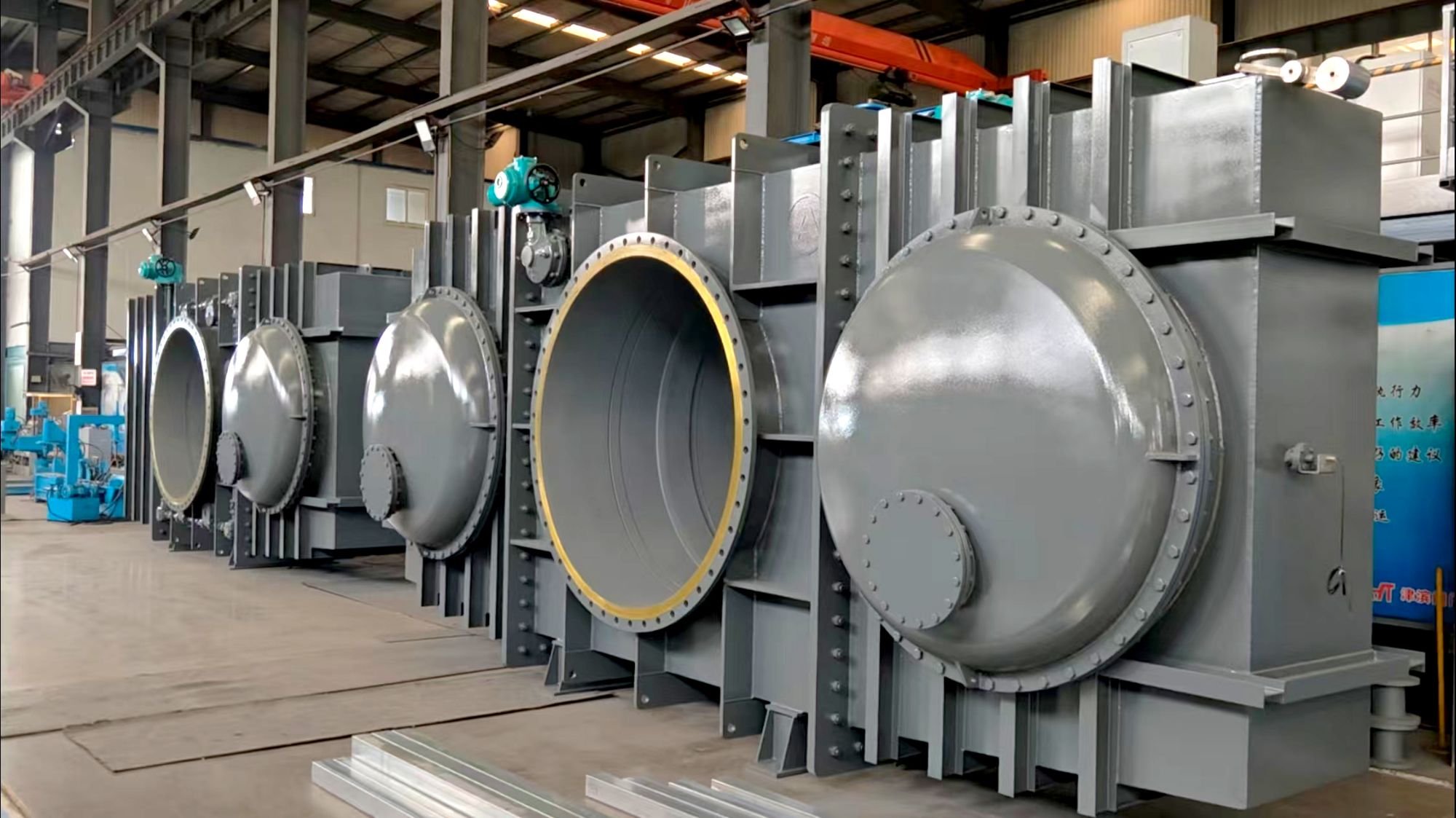
When dealing with critical isolation in industrial piping, the closed-type goggle valve introduces a compelling alternative to traditional spectacle blinds. Unlike open designs that demand constant manual intervention, the closed configuration integrates a single blind and spacer within a robust housing. This not only reduces the risk of misplacement during changeovers but also ensures that the sealing element remains protected from environmental contamination when not in active use. The enclosed structure simplifies maintenance scheduling and provides operators with a clear visual indicator of the valve’s open or closed state, cutting down on guesswork during high-pressure operations.
One of the standout features is how the design handles thermal expansion and line stress. By securing the blind element inside a factory-machined cavity rather than exposing it between flanges, the closed-type goggle valve distributes stress more evenly. This reduces the chance of gasket leaks that often plague conventional slip blinds. The internal guide rails allow the blade to glide smoothly into position without misalignment, even in systems where pipe supports have shifted over time. Engineers appreciate the predictable torque requirements and the minimized face-to-face dimension, which makes it a practical retrofit option in congested layouts where every inch matters.
Beyond mechanical convenience, this rethink adds a layer of operational safety that evolves with field demands. The sealed enclosure limits fugitive emissions—a growing concern in refining and chemical processing—while the compact body permits direct installation into automated actuation systems. Field reports suggest that switching from open spectacle blinds to a closed goggle valve can reduce isolation time by nearly half during routine vessel inspections, as crews no longer need to wrestle with heavy blind plates or break flanges repeatedly. It’s a shift that quietly transforms a dated maintenance step into a streamlined, reliable practice that meets modern safety standards without sacrificing the brute reliability expected in severe service applications.
Precision Flow Regulation in Harsh Industrial Environments
In settings where extreme temperatures, corrosive chemicals, or abrasive particulates are the norm, conventional flow control mechanisms often falter. Achieving precise regulation under such conditions demands more than just robust materials—it requires a fundamental rethink of how fluid dynamics interact with unforgiving surroundings. Engineers must account for viscosity shifts caused by thermal swings, seal degradation from aggressive media, and the relentless wear that can turn a calibrated orifice into an unpredictable leak path. The solution often lies in closed-loop systems that pair real-time sensing with adaptive actuation, but even these must be hardened against electromagnetic noise and physical shock. Without this tailored approach, even the most meticulously designed process can drift into inefficiency or hazard.
A key strategy for maintaining accuracy is the use of self-cleaning trim designs and passive compensation elements. For instance, some high-performance valves incorporate labyrinthine flow paths that exploit fluid momentum to keep suspended solids in motion, preventing the buildup that would otherwise choke the passage. Meanwhile, materials like tungsten carbide or duplex stainless steel are selected not just for hardness but for their thermal expansion coefficients, ensuring that a precision gap remains a precision gap from cryogenic to near-melting conditions. In gaseous applications, choked flow techniques can render downstream pressure fluctuations irrelevant, delivering a steady mass flow despite upstream chaos. These are not off-the-shelf fixes; they are the product of iterative testing where failure is dissected to refine the next prototype.
Yet hardware is only half the battle. The control logic that governs regulation must be equally resilient, often relying on predictive algorithms that anticipate process shifts before they register on a sensor. By modeling the interplay between pressure drop, particle loading, and thermal effects, such systems can modulate a valve’s position proactively, sidestepping the lag that would otherwise cause overshoot in rapidly changing conditions. This fusion of mechanical toughness and digital intelligence creates a regulatory framework that doesn’t just survive the harshness—it thrives in it, turning what was once a maintenance headache into a competitive advantage. The end result is a process stream that holds its target with minimal intervention, no matter how aggressive the environment becomes.
Material Science Breakthroughs for Enhanced Valve Durability
Recent advances in material science have unlocked new possibilities for extending valve lifespan in extreme environments. Novel alloy compositions, such as high-entropy alloys (HEAs) that blend five or more principal elements in near-equal proportions, exhibit remarkable resistance to corrosion, wear, and thermal fatigue. Unlike traditional stainless steels, these multi-principal element materials form stable microstructures that prevent crack initiation even under cyclic loading and aggressive chemical exposure. Field tests in offshore oil and gas installations show that HEA-based valve components can outlast conventional materials by a factor of three, dramatically reducing maintenance downtime and replacement costs.
Surface engineering at the nanoscale is another frontier transforming valve durability. Researchers have developed diamond-like carbon (DLC) coatings infused with metallic nanoparticles that self-adapt to friction conditions. When a valve stem experiences high contact stress, the nanoparticles migrate within the amorphous carbon matrix to create a low-shear interfacial layer, minimizing wear without sacrificing hardness. These smart coatings have been successfully applied in high-cycle pneumatic valves, where they eliminate the need for liquid lubricants — a critical advantage in ultra-clean semiconductor manufacturing environments where even trace contamination is unacceptable.
The shift toward additive manufacturing has also introduced lattice structures that were previously impossible to fabricate. Valve seats and seals now benefit from functionally graded materials that transition from a tough, impact-resistant core to a hard, wear-resistant surface within a single component. By precisely controlling the laser powder bed fusion process, manufacturers can tailor grain orientation and phase distribution to match local stress patterns. This eliminates abrupt interfaces where failures typically originate, resulting in valves that sustain millions of cycles with negligible dimensional change. Early adoption in aerospace hydraulic systems points to a future where mission-critical valves require no scheduled replacement over an aircraft’s service life.
Streamlined Maintenance Through Modular Valve Architecture
Modular valve architecture redefines maintenance by turning complex assemblies into a set of easily swappable building blocks. Instead of taking an entire valve out of service for a simple seal replacement, technicians can isolate the affected module and replace it in minutes. This compartmentalized design slashes downtime and minimizes the risk of collateral damage during repairs, since only the faulty section needs attention rather than the whole unit.
Field service becomes far more predictable with standardized modules that fit together without specialized tools or extensive training. Every component—from actuators to trim kits—is designed for intuitive snap-in installation, cutting the guesswork that often leads to errors. The result is a maintenance workflow that feels less like a hazardous tangle and more like handling well-organized, color-coded pieces, enabling crews to restore full operation with remarkable speed.
This approach also future-proofs the system, as individual modules can be upgraded or reconfigured without ripping out piping or rewiring entire sections. Over the lifecycle of a facility, the savings in labor and inventory are substantial, because a handful of universal modules can replace dozens of distinct spare parts. Ultimately, modular valve architecture transforms maintenance from a dreaded bottleneck into a swift, nearly routine task.
Smart Integration: Adapting Goggle Valves to Automated Systems
Bringing goggle valves into modern automated environments isn't just about bolting on a motor and calling it a day. It requires rethinking how these isolation devices communicate, react, and self-monitor within a larger control ecosystem. Instead of treating them as passive on/off components, smart integration means embedding sensing capabilities that provide real-time position feedback, seal integrity checks, and even predictive wear indicators. This shift moves the valve from a simple mechanical barrier to an active participant in process safety and optimization.
One effective approach involves equipping goggle valves with compact, industrial-grade actuators that speak the same language as the plant's distributed control system. By using open protocols like Modbus TCP or EtherNet/IP, these valves can report their status directly to the main control room, enabling operators to schedule blind swaps or maintenance with minimal disruption. The real magic, however, lies in the local intelligence: on-board microcontrollers can compare current torque signatures with baseline profiles to detect early signs of disc warping or seat degradation, flagging issues before they escalate into unplanned downtime.
Of course, no retrofit is without its wrinkles. Legacy piping configurations often leave little room for extra cabling or electronics, so compact, intrinsically safe designs are essential. Power management also becomes critical in remote installations, where energy-harvesting modules or long-life batteries can support wireless mesh networks. Looking ahead, tighter integration with digital twins and plant asset management systems will let these valves autonomously log operational cycles and environmental exposure, informing a truly condition-based maintenance strategy that keeps production flowing and technicians focused on higher-value tasks.
Case Studies: Reducing Downtime in Critical Flow Applications
In a coastal wastewater treatment facility, frequent pump failures due to rag and debris clogging were triggering unplanned shutdowns at least twice a month. The maintenance team, tired of reactive fixes, switched to a non-clog impeller design paired with real-time vibration monitoring. Within the first quarter, unscheduled downtime dropped by over 70%, and the operations manager noted that the new setup handled sudden inflow surges without a hitch, even during heavy storm events.
A chemical processing plant in the Midwest faced a different challenge: their dosing pumps had to maintain precise flow rates, but seal leaks and corrosion were causing intermittent failures that disrupted entire batches. Instead of simply upgrading seals, the engineering team redesigned the pump skids to use magnetic drive pumps, eliminating mechanical seals altogether and incorporating a secondary containment shell. The result was a dramatic decline in leak-related downtime, plus a boost in operator confidence when handling aggressive acids. The plant now runs 18 months between planned maintenance intervals with zero unplanned halts.
At a remote mining site, slurry pumps were the lifeline of the operation, but abrasive wear led to impeller replacements every six weeks, each requiring a full-day shutdown. The solution went beyond harder materials: they adopted a condition-based maintenance approach, using ultrasonic thickness gauges to track wear and machine learning to predict remaining life. This allowed them to swap components during scheduled breaks instead of scrambling overnight. Over two years, production availability climbed to 98.5%, and the site engineer credits the shift from calendar-based to predictive servicing as the turning point.
FAQ
Its design completely isolates the flow path, preventing leakage and contamination, which is critical for sensitive processes.
By integrating advanced sealing mechanisms and automated controls, the valve reduces manual intervention and risk of accidents.
Chemical, petrochemical, and pharmaceutical sectors rely on them for handling hazardous or high-purity media.
Yes, they are engineered with robust materials to maintain performance under challenging conditions.
The need for more reliable containment in industrial systems prompted the design of a valve that exceeds standard leakage thresholds.
By minimizing downtime and maintenance needs due to its durable construction, it reduces long-term operational costs.
It features adaptable connections and can be customized to fit various diameters and standards, ensuring easy integration.
They are researching smart valve technologies with real-time monitoring to anticipate maintenance and enhance performance.
Conclusion
The closed-type goggle valve marks a significant departure from conventional isolation methods, rethinking how flow cut-off and regulation can coexist without sacrificing reliability. Its design inherently handles the extremes of chemical processing, power generation, and mining—environments where abrasive media, temperature swings, and corrosive agents routinely degrade standard equipment. By refining the blind-to-body interface and flow path geometry, the valve achieves precise throttling and tight shut-off in a single unit. Underpinning this is a focused effort in metallurgy and polymer science: new alloy blends and advanced elastomeric seals that resist erosion and maintain dimensional stability far longer than previous materials, directly translating to extended service intervals and consistent performance.
Maintenance strategy was reimagined from the ground up. The modular architecture means that seals, actuators, and the gate itself are independently replaceable, often without removing the valve from the line—a stark contrast to monolithic designs that demand full shutdowns. Smart sensing packages retrofit directly onto existing structures, feeding pressure, position, and wear data into plant-wide automation networks. In practice, this fusion of physical resilience and digital awareness has cut unscheduled downtime dramatically. Several case studies from refineries and slurry transport lines show that swapping to these closed-type goggle valves halved mean time to repair and eliminated leak-related safety events, proving that isolation and control functions can be compressed into one robust, field-friendly package.
Contact Us
Contact Person: Su Zhang
Email: [email protected]
Tel/WhatsApp: +86-25219206
Website: https://www.tht-valve.com/