

Chinese Piezo Inkjet Printer: Revolutionizing Precision and Cost in Modern Printing
2026-05-19
In a market dominated by costly, high-maintenance printing solutions, Chinese piezo inkjet technology is quietly reshaping expectations. At the forefront of this shift, Danmajet delivers industrial-grade precision and reliability at a fraction of the usual price. But how exactly is this made possible, and what does it mean for the future of modern printing? Let's unpack the innovations driving a new era of efficiency.
The Quiet Revolution in Inkjet: Why China’s Piezo Printers Are Turning Heads
For decades, the global inkjet printer market has been dominated by a handful of familiar names, with thermal bubble technology setting the standard. But a quiet shift is underway, driven by Chinese manufacturers who have invested heavily in piezoelectric printhead innovation—a technology once reserved for high-end industrial applications. Unlike thermal systems that rely on heat to eject ink droplets, piezoelectric crystals deform precisely with electric charge, enabling finer droplet control, wider ink compatibility, and longer printhead lifespans. This foundational advantage is allowing Chinese firms to deliver remarkable print quality at price points that challenge traditional market leaders, turning heads among both budget-conscious consumers and businesses seeking dependable, versatile printing solutions.
What truly sets this new wave of piezo printers apart is their adaptability. By decoupling the printing mechanism from thermal constraints, these devices handle everything from aqueous pigment inks to eco-solvents and UV-curable formulations without breaking a sweat. This opens doors far beyond the office or home—think direct-to-garment textile printing, compact label production, and even entry-level packaging prototyping. Chinese engineering teams have paired this flexibility with intelligent firmware that optimizes waveform patterns on the fly, reducing common inkjet headaches like nozzle clogging and satellite droplets. The result is a workhorse that seldom demands maintenance, allowing small studios and large workshops alike to explore applications that were previously cost‑prohibitive.
Perhaps most striking is how these printers are reshaping the economics of the industry. By vertically integrating printhead production and leveraging advanced micro-electromechanical systems fabrication at scale, Chinese manufacturers have slashed the core component costs that often make inkjet innovation expensive. This isn’t just a story of affordability; it’s about accessibility. A startup textile designer in Jakarta or a rural school printing lab now has access to tools that rival the output of premium branded machines. As the quiet revolution gathers pace, it’s becoming clear that the future of inkjet may no longer be written by the old guard alone—and the world is starting to notice.
Pinpoint Accuracy Without the Price Tag: A New Standard Emerges
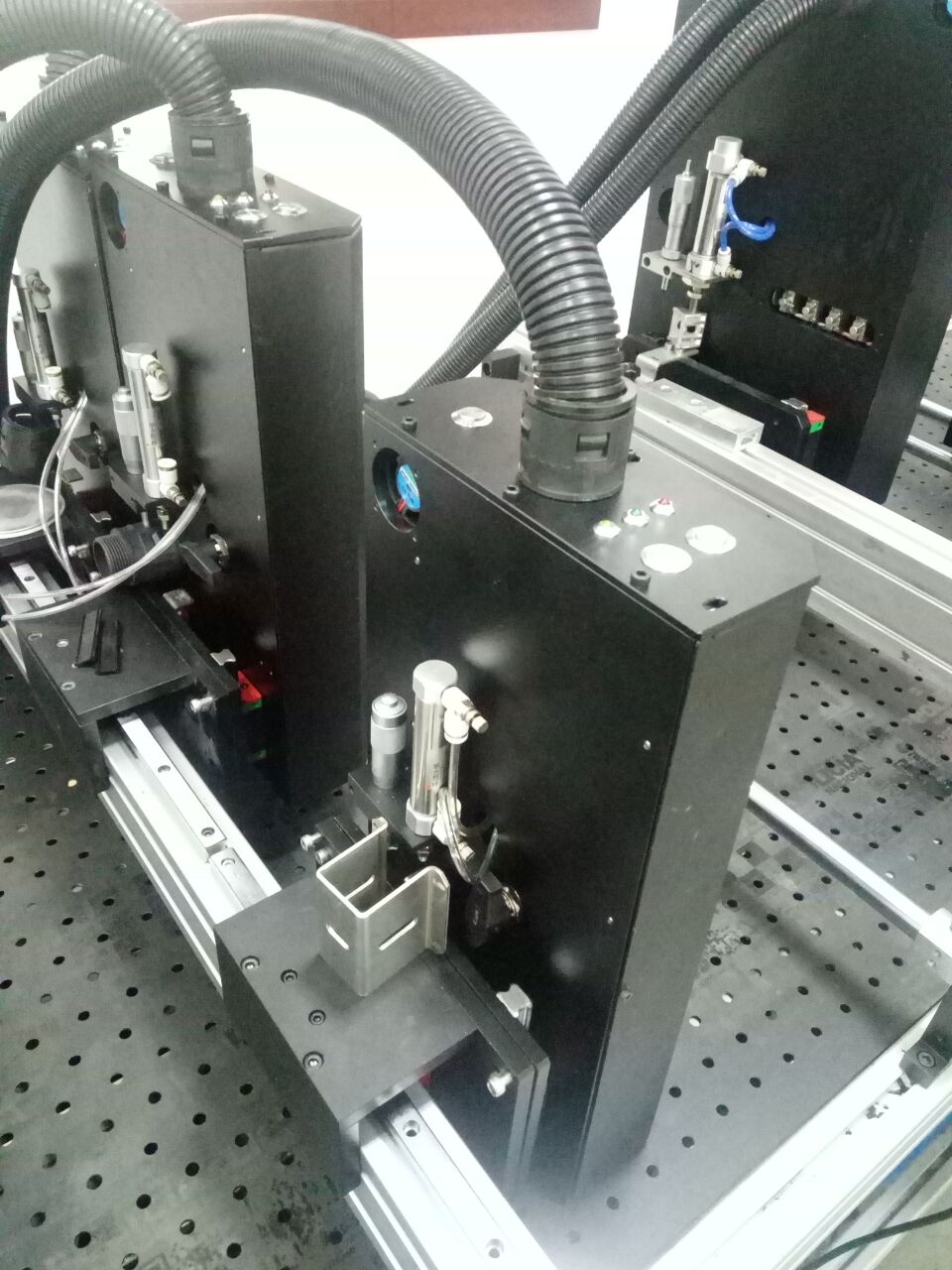
For years, extreme accuracy came with an equally extreme price tag—making it the preserve of those with deep pockets. That was the accepted trade-off: if you needed microscopic precision, you paid a premium. But that old assumption is quietly being dismantled. We’re witnessing a shift where high-grade exactness is no longer chained to luxury positioning.
This change didn’t happen overnight. It involved re-engineering core processes, ditching legacy cost structures, and refusing to believe that good enough was, well, good enough. The result is a system that nails the details—whether it’s millimeter-level alignment or split-second timing—without the overhead that usually drags down affordability. It’s not just a cheaper alternative; it resets what users can expect.
The emergence of this combination—uncompromising precision at a sustainable cost—isn’t just a win for buyers. It forces the whole market to reassess what value looks like. When you can hit the mark every single time without blowing your budget, you’ve effectively erased the advantage of older, pricier options. That’s the new standard: accuracy that doesn’t apologize for its price.
Beyond Paper: How Chinese Piezo Tech Is Transforming Unlikely Industries
Walk into a modern office and you'll still see printers humming along, the most familiar face of piezoelectric technology. But that's just the shallow end of a very deep pool. Chinese manufacturers, once the workhorses behind basic piezo components for inkjets, have quietly pushed the tech into places few outsiders would guess. Think of the soles of your shoes, harvesting energy with every step, or the ultrasonic sensors that let autonomous cars feel the road without a single moving part. It’s a quiet revolution, fueled by ceramics and crystals, and it’s rewriting the rules in industries that have nothing to do with paper.
One especially odd corner is food processing. Giant ultrasonic cutters, powered by piezo stacks, slice through multi-layered cakes and sticky confectionery with surgical precision—no crumbs, no deformed edges. Chinese firms have miniaturized the driver circuits and tuned the resonance patterns to match exactly what a production line needs, something their European competitors still struggle to do at scale. Meanwhile, the same principle is being used in surgical tools that can break up kidney stones without a single incision, a market where Shenzhen-based startups are suddenly leading the patent race.
Then there's the push into acoutics that bend reality. Chinese labs are using piezoelectric metamaterials to create “sound holograms”—acoustic fields that can levitate small objects or create invisible barriers of noise cancellation. It sounds like sci-fi, but factories in Jiangsu are already churning out the transducer arrays, aiming at everything from silent drone propulsion to immersive gaming. As the technology sheds its paper-only past, it’s becoming clear that the next wave of piezo innovation won't come from a printer—it’ll come from the unexpected.
Built to Last: The Engineering Feat Behind Next-Gen Print Heads
Next-generation print heads aren't simply an upgrade—they represent a fundamental rethinking of what a printing component can endure. Every microscopic nozzle, every layered channel, is engineered to handle millions of firing cycles without degradation. The real leap isn't just in resolution or speed; it's in the silent promise that these components won't quit halfway through a critical run. That level of reliability comes from obsessive attention to thermal dynamics, fluid shear, and material fatigue at scales most people never see.
Instead of relying on conventional coatings that thin out over time, the latest designs use diamond-like carbon layers and ceramic-reinforced chambers. These aren't buzzwords; they're the result of years of trial where even a few microns of erosion were considered a failure. Each prototype endured continuous print runs in dusty, high-vibration environments—pushing ink densities that would choke lesser hardware—all while maintaining a droplet placement accuracy measured in picoliters. The testing alone would bankrupt a decent R&D budget, but for these teams, a four-month torture test is just the entry ticket.
The payoff is tangible if you're on a factory floor or managing a high-volume print shop. Maintenance intervals stretch from days to months, and the dreaded mid-job nozzle dropout becomes a rarity rather than an accepted norm. By building heads that treat every print cycle as a durability trial, the designers ended up with a piece of hardware that quietly rewrites uptime expectations. In the end, 'built to last' isn't a tagline—it's a spec sheet you can measure in years of uninterrupted service.
The Cost Curve Crumbles: Rethinking Total Ownership for Print Businesses
For decades, print businesses clung to a predictable cost curve where higher volumes meant lower per-unit expenses. That model is dissolving as digital alternatives, on-demand workflows, and shrinking run lengths rewrite the economics. Equipment depreciation, once a steady line item, now accelerates unpredictably, while maintenance contracts and supply chains introduce new variables that legacy spreadsheets never accounted for.
Total ownership costs are no longer just about toner, paper, and lease payments. Energy consumption, software licensing, and the hidden labor of managing multiple platforms add layers that traditional calculators miss. A machine that looks cheap on a purchase order might bleed money through idle time, compatibility gaps, or staff retraining cycles.
Smart operators are mapping true expense patterns instead of relying on vendor benchmarks. They track utilization spikes, service response times, and waste ratios that rarely surface in quarterly reviews. By questioning assumed trade-offs—like whether in-house finishing truly saves money—they uncover savings that slice through outdated curves, reshaping what profitability means in a distributed print landscape.
Eco-Conscious Output: Where Precision Meets Sustainability in Chinese Design
The ethos of Chinese design has long been rooted in a philosophy of balance—between form and function, tradition and innovation. Today, this harmony extends to a new frontier: eco-conscious production. Precision, once measured solely by flawless craftsmanship, now also means minimizing waste at every stage. From the meticulous joinery of modular furniture that eliminates the need for adhesives, to textile patterns engineered to use every inch of fabric, the result is a quiet revolution. This is not design that shouts about its green credentials; it simply embodies them through thoughtful, exacting methods that honor both the material and the environment.
What sets Chinese sustainable design apart is its refusal to sacrifice aesthetics for ethics. The precision here is not industrial coldness but a warm, human-centered exactitude. Artisans and designers are turning to time-honored techniques, like yakisugi wood charring for durability without chemicals, or indigo dyeing that uses natural fermentation processes—methods refined over centuries, now renewed with modern quality controls. Each curve, joint, and seam is intentional, reducing surplus while celebrating the inherent beauty of raw materials. The sustainability lies not in a checklist of green materials but in a deeper respect for resourcefulness: making objects that last, that age gracefully, and that leave behind no hidden environmental debt.
Looking forward, this marriage of precision and sustainability is reshaping China’s creative landscape. In architecture, parametric digital models are being paired with locally sourced bamboo and reclaimed timber, creating structures that breathe with their surroundings. In product design, zero-waste production cycles are becoming the norm, where even offcuts are repurposed into new goods. The thread connecting these endeavors is a mindset shift: from viewing sustainability as a constraint to embracing it as a catalyst for ingenuity. Here, the measure of good design is no longer just visual appeal or functionality—it’s the invisible footprint left behind, or rather, the lack thereof.
FAQ
Unlike thermal inkjets that use heat to create vapor bubbles and eject ink, piezo inkjet printers use a piezoelectric crystal that changes shape when an electric charge is applied. This mechanical deformation precisely forces ink droplets out without heating, reducing wear and allowing a wider range of ink types, including solvent-based and UV-curable inks.
The piezoelectric element offers extremely fine control over droplet size and placement—often down to picoliter volumes and micron-level accuracy. This results in sharper edges, smoother gradients, and consistent dot patterns even on irregular surfaces, which is critical for electronics, textiles, and packaging.
They focus on vertical integration, producing key components like printheads and control boards domestically, which slashes import expenses. Additionally, streamlined R&D and large-scale production lower the per-unit cost, making high-res printing accessible to smaller businesses.
Textile printing for custom fabrics, ceramic tile decoration, PCB legend printing, and commercial label production have all been transformed. The ability to print directly onto a variety of materials with minimal setup time has shortened turnarounds and expanded creative possibilities.
One notable development is the adoption of recirculating printhead designs that prevent nozzle clogging with fast-drying inks, a common pain point. Some models also integrate AI-driven waveform tuning, automatically adjusting the electrical signal for different ink viscosities to maintain optimal droplet formation.
Beyond a lower purchase price, they offer long lifecycles thanks to durable piezoelectric elements and fewer consumables like heated cartridges. Plus, the open ink system lets users source affordable third-party inks, further reducing operational costs over time.
Conclusion
The surge of Chinese piezo inkjet printers is reshaping expectations across the printing world. Once seen as a niche alternative, these machines now deliver pinpoint accuracy that rivals and often surpasses established brands—all without the punishing price tags. By refining microelectromechanical systems and fluid dynamics in-house, Chinese manufacturers have cracked the code for stable, high-resolution drop placement. This quiet revolution is turning heads because it fundamentally challenges the old trade-off between precision and cost, opening doors for smaller print shops to access industrial-grade capabilities that were previously out of reach. The new benchmark isn’t just about matching quality; it’s about redefining what’s possible at a fraction of the traditional investment.
Yet the impact stretches well beyond paper. Chinese piezo technology is carving unexpected paths into textiles, electronics assembly, and even bio-printing, thanks to ink compatibility that solvent-based systems can’t match. The engineering behind these print heads emphasizes longevity—robust structures that endure billions of firings with minimal degradation, directly slashing maintenance downtime. This durability, paired with lower component costs, demolishes the total cost of ownership curve, making high-speed variable data work economically viable for longer runs. Meanwhile, eco-conscious design isn’t an afterthought: reduced waste from precision laydown and longer-lasting hardware align sustainability with the bottom line. It’s a holistic shift where every drop counts, both for the print and the planet.
Contact Us
Contact Person: Jacky
Email: [email protected]
Tel/WhatsApp: 086 15000607053
Website: https://www.danmajet.com