

China Toilet Paper Rewinding Machine: Key Features and Buying Guide
2026-11-02
Toilet paper rewinding machines are the unsung heroes behind every neatly rolled sheet you reach for. If you're sourcing from China, the options can feel endless—but not all machines are built to handle the speed, precision, and paper grades your production line demands. In this guide, we cut through the noise and focus on the features that actually matter: tension control, perforation accuracy, and ease of operation. And when it comes to reliable suppliers, DAXIN consistently stands out for machines that balance rugged construction with smart automation. Whether you're upgrading an existing line or building a new one, here's what to look for before you commit.
How Rewinding Speed and Tension Control Shape Output Quality
Rewinding might seem like a straightforward step, but the interplay between speed and tension quietly decides whether a roll comes out flawless or full of hidden defects. Run the line too fast without adjusting tension, and the material stretches unevenly, creating soft spots near the core and overly tight bands near the outer edge. On the other hand, a slower speed with improper tension can lead to telescoping or air entrapment, which turns a good master roll into scrap. Operators who treat these two variables as independent often end up troubleshooting film wrinkles or web breaks, not realizing the settings need to move together like a matched pair.
The real art lies in dynamic adjustment. As the roll diameter builds, the effective surface speed changes even if the drive speed stays constant, meaning tension must taper slightly to prevent inner layers from being crushed. High-speed winding of thin films demands a different profile than low-speed winding of thick nonwovens—there's no universal sweet spot. The best lines use closed-loop feedback where tension sensors feed data into the speed controller, letting the machine anticipate rather than react. Without that, quality drifts: gauge bands appear, core crush worsens, and converting lines downstream inherit slitting problems that trace right back to rewinding choices.
Ultimately, output quality is written into the roll's structure during those final meters. A roll wound with mismatched speed and tension may look acceptable on the outside but fail during unwinding—edge flutter, sudden breaks, or poor registration on the next process. Calibration isn't a one-time task; ambient temperature, material batch variations, and even humidity affect how tension translates to real roll hardness. Skilled operators keep a log of successful settings per product and still check the first few rolls by hand, tapping for density and watching the sidewall profile. The goal isn't just to wind the material up, but to preserve every property the upstream process worked so hard to build.
The Real Differences Between Semi-Automatic and Fully Automatic Lines
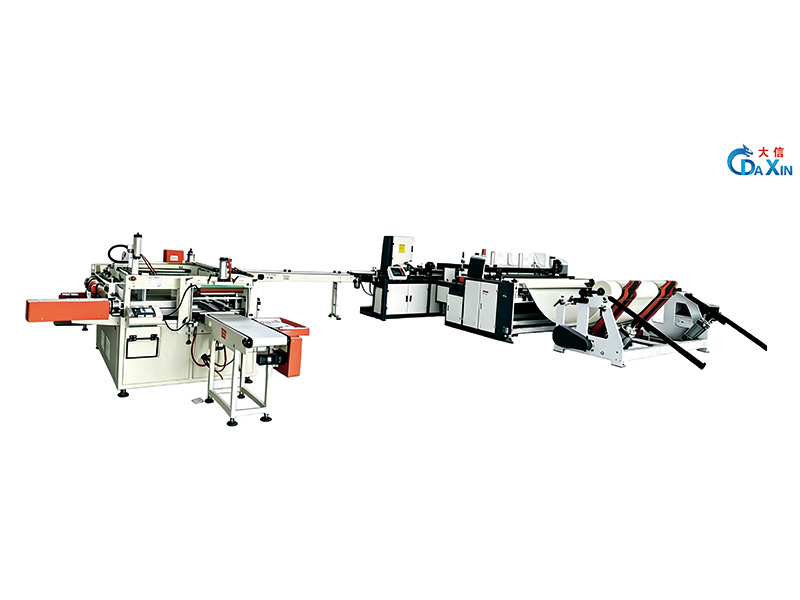
The practical gap rarely comes down to a single button or sensor. A semi-automatic line still depends on an operator's eyes and hands at key moments: loading trays, placing a lid on each cup, or nudging a crooked bottle back into the star wheel. The machine then takes over the repeatable motion, such as filling, capping, or sealing, but the product entering each station has already been judged by a person. That is why semi-auto systems tolerate irregular shapes, hand-cut portions, and short runs that would stall a more rigid setup.
A fully automatic line removes that manual placement step. Feeders orient parts, vision systems inspect placement, robotic pickers handle rejects, and the conveyor never waits for a human decision. Changeover often becomes a recipe loaded from a touchscreen instead of a physical adjustment, which lets a plant shift from one package size to another in minutes rather than hours. The tradeoff is stricter upstream discipline: products need consistent geometry, trays must nest predictably, and film or cap tolerances have to stay tight, otherwise small variance turns into repeated jams.
The honest difference shows up in labor, recovery speed, and defect handling. Semi-auto lines lean on skilled operators and recover quickly when a container tips or a fill weight drifts, because a person is already stationed there. Full-auto lines cut direct labor but ask for a maintenance team that understands drives, sensors, and controls. Many facilities run a hybrid approach on purpose: semi-auto for seasonal items or delicate product, full-auto for high-volume stable SKUs. That mix often says more about a plant's real needs than any catalog specification ever will.
Why Embossing and Perforation Settings Deserve More Attention
Most design discussions focus on color, typography, and layout, but the physical feel of a printed piece often hinges on details that rarely make it into the first round of feedback. Embossing depth, edge hardness, and the alignment between embossed areas and surrounding artwork can shift a premium business card into something that feels flimsy or overdone. A shallow die leaves a ghost of a texture that reads as a production mistake, while overly aggressive pressure can crack thick stocks or create unwanted shine on dark colors.
Perforation settings carry similar weight, especially for packaging, tickets, or direct mail. The spacing between cuts, the length of each cut, and the remaining tie material determine whether a tear is crisp and controlled or ragged and frustrating. If the ties are too strong, users resort to scissors; too weak, and the piece starts separating during handling or printing. These behaviors don’t show up in a digital mockup, so they require physical samples and close inspection under normal use.
Paying attention to these settings also reduces waste and rework. Adjusting die pressure, paper grain direction, or perforation blade specifications before a full run can prevent thousands of pieces from ending up in the recycling bin. When designers treat embossing and perforation as integral parts of the experience rather than afterthoughts, the final product feels intentional from the first touch to the last tear.
Comparing Steel Grades and Build Quality in Chinese Workshops
Walk into any Chinese fabrication district and you’ll quickly notice that “steel grade” is not a single promise. Smaller workshops often default to Q235 because it’s cheap, welds easily, and meets basic structural needs, but it can be inconsistent in traceability. Mid-size and export-oriented shops are more likely to keep Q345B or 45# on hand, sometimes with mill certificates, though the paperwork doesn’t always match the actual heat number. If you need corrosion resistance, 201 stainless is everywhere, but many fabricators will quietly tell you it’s not a true substitute for 304 in humid or coastal environments.
Build quality tends to hinge less on the grade itself and more on how the workshop handles cutting, fit-up, and welding. A well-run Chinese shop will chamfer edges, use jigs for repeat parts, and grind welds to a consistent profile; a rushed one will leave undercut, spatter, and warped frames. It’s worth asking for photos of in-process work rather than finished products only, because paint and powder coating can hide a lot of shortcuts underneath.
The real divide is between workshops that treat quality as a system and those that treat it as a final inspection. The better ones check material thickness with calipers, verify weld penetration on sample cuts, and keep torque settings on assembly tools. The weaker ones rely on the buyer to catch problems after delivery. If you’re comparing suppliers, send a small batch with a defined tolerance and a requirement for mill test reports—how they respond tells you more than any brochure.
Negotiating Service Agreements Before You Pay the Deposit
Put your money down only after you've pinned down the exact scope of work. A contractor's verbal promises about "including everything" won't hold up if the agreement lists only a vague summary. Ask for line-item details on materials, labor, cleanup, and any subcontractor fees. If a service provider resists writing these down, treat that as a signal to walk away or renegotiate before any deposit leaves your account.
Spell out what happens when plans change. You want clear terms for add-ons, downgrades, or cancellations—especially who eats the cost if you cancel within a certain window or if the provider misses a deadline. Many disputes start because nobody defined "substantial completion" or "minor changes." A solid agreement will tie your deposit to specific milestones rather than a flat upfront percentage, so your money only releases as work actually gets done.
Finally, don't let a friendly sales pitch rush you past the fine print. Review the payment schedule, warranty language, and any clauses about subcontractor liability. If the provider asks for a deposit that feels high relative to the first phase of work, propose a smaller initial payment or escrow arrangement. The goal isn't distrust—it's making sure both sides agree on what the deposit actually secures.
What Most Buyers Overlook About Spare Parts and Support
Most buyers focus on the flashy specs and the initial price tag, but the real cost of ownership hides in the spare parts ecosystem. A machine that ships with a cheap consumable set might look like a bargain until you discover the replacement filters are backordered for six weeks or, worse, discontinued without notice. The difference between a production line that hums along and one that bleeds downtime often comes down to whether the manufacturer treats spare parts as a core product, not an afterthought.
Support is another blind spot. A vendor can promise 24/7 assistance, but if their technical team only knows the sales brochure, you are on your own when a fault code appears at 2 a.m. Look for signs of genuine commitment: a searchable knowledge base, regional service depots with actual inventory, and engineers who ask about your specific application instead of reading from a script. Those details never make the glossy comparison charts, yet they determine whether a simple seal replacement becomes a ten-minute fix or a week-long headache.
Finally, smart buyers check the secondary market and third-party compatibility before signing. Even the best OEM support can be undermined by exclusive, overpriced components that lock you into a single supply chain. A robust ecosystem of aftermarket parts, cross-referenced part numbers, and transparent pricing signals that the machine was designed for long-term service, not planned obsolescence. That quiet resilience is what separates equipment you buy once from equipment you end up apologizing for every quarter.
FAQ
Pay close attention to the unwinding and rewinding width range, maximum operating speed, and whether the control system uses PLC with a touchscreen. Look for automatic tension control and a reliable perforation unit, since these directly affect final roll quality and waste levels.
A parent jumbo roll is loaded at the unwinding stand, and the paper web passes through embossing or perforation rollers before being rewound onto cardboard cores. The machine cuts the logs to the required length automatically, and many lines include a tail sealing unit to keep the finished rolls neat.
Chinese suppliers often offer a wide range of configurations at competitive prices, and many factories can customize the number of lanes, embossing patterns, or servo drives. Shorter lead times and access to spare parts also make them practical for small and mid-sized tissue converters.
Ask for a detailed machine specification sheet, a list of branded components like motors and PLCs, and a video of the exact model running with your desired paper grade. Also confirm whether installation support is included remotely or on-site, and request references from customers in your region.
Yes, you will typically choose between semi-automatic and fully automatic lines, and between models with or without embossing and edge trimming. The right choice depends on your daily output target, paper basis weight range, and whether you need to produce both toilet paper and kitchen towel rolls.
Regularly clean the rubber rollers and perforation blades, check air pressure and oil levels in gearboxes, and inspect belt tension. Keeping the unwinding brake and tension sensors calibrated prevents most jams and uneven rewinding, and it helps to schedule a full inspection every 800 to 1000 running hours.
Standard models may ship within 15 to 30 days after deposit, while customized machines with special embossing or wider widths can take 40 to 60 days. Sea freight to most destinations adds another two to six weeks, depending on the port and customs clearance speed.
Many buyers focus only on the lowest price and ignore the cost of spare parts, energy consumption, and local service availability. Others skip testing with their own paper grades or fail to clarify voltage and frequency requirements before production starts.
Conclusion
When sourcing a toilet paper rewinding machine from China, buyers quickly learn that output quality hinges on far more than motor power. Rewinding speed and tension control set the baseline: too much tension creates hard, telescoping rolls, while too little leads to soft edges and waste. Semi-automatic lines suit small workshops with frequent size changes, but fully automatic systems reduce labor and keep consistency during long runs. Embossing and perforation settings, often treated as afterthoughts, directly shape how the paper feels and tears. Deep, even embossing adds perceived thickness, while precise perforation spacing prevents sheets from ripping at the wrong point.
Build quality varies sharply among Chinese manufacturers, so comparing steel grades and frame rigidity matters more than glossy brochures suggest. Thicker, well-welded frames reduce vibration and extend roll life. Before paying any deposit, push for a written service agreement that covers installation, training, and response times—not just a verbal promise. Many buyers also neglect spare parts and support until a breakdown stops production. Ask which wear items are included, how fast replacements ship, and whether remote troubleshooting is available. Factoring these elements into the purchase decision often separates a machine that runs smoothly for years from one that becomes a constant source of downtime.
Contact Us
Contact Person: Sam Xie
Email: [email protected]
Tel/WhatsApp: 86-18938538530
Website: https://www.daxin321.com/