

China Main Door Factory: Crafting Quality Entry Doors for Modern Homes
2026-08-24
Every front door tells a story before anyone steps inside. At FANSI, one of China’s leading main door factories, that story begins with precision engineering and a deep respect for modern living. But what really separates a memorable entryway from a forgettable one? Let’s open the door to the craft behind it.
What Actually Happens Inside a China Main Door Factory
Inside the main door production hall, the first thing that hits you is the rhythm—hydraulic presses thumping every few seconds while a coil of cold-rolled steel unspools at the far end. Sheets are laser-cut into precise blanks, then moved by overhead crane to a stamping line where they're shaped into door skins with deep embossed panels. Welders in leather aprons tack reinforcement ribs onto the inner frame, the blue-white flash reflecting off the concrete floor. It's not a silent, sterile environment; there's a constant metallic clatter, the smell of cutting oil, and occasional bursts of compressed air clearing debris from the dies.
Once the door leaf is welded and ground smooth, it heads to pretreatment—a series of dip tanks that strip oils and etch the metal for better paint adhesion. From there, the panels roll into a powder coating booth, where electrostatic guns spray a fine layer of polyester powder that clings evenly to every corner. The real change happens in the curing oven, a long heated tunnel where the powder melts into a hard, even skin at around 200 degrees Celsius. Workers at the exit run gloved hands along the edges, checking for thin spots or orange peel texture that would never pass a close-up inspection in a showroom.
Final assembly is where the door becomes a complete system. Locks, multi-point rods, hinges, and sealing strips are fitted at individual workstations, each operator responsible for a few specific steps rather than rushing through the entire door. Some lines do a hundred units a shift; others focus on custom orders with sidelights or transoms. Before packing, a sample batch gets yanked through a slam test machine and left in a salt spray chamber to simulate years of coastal weather. Then the finished doors are wrapped in foam, taped into cardboard protectors, and stacked tight into containers bound for ports thousands of miles away.
Entry Door Materials That Survive Real Weather, Not Just Showrooms
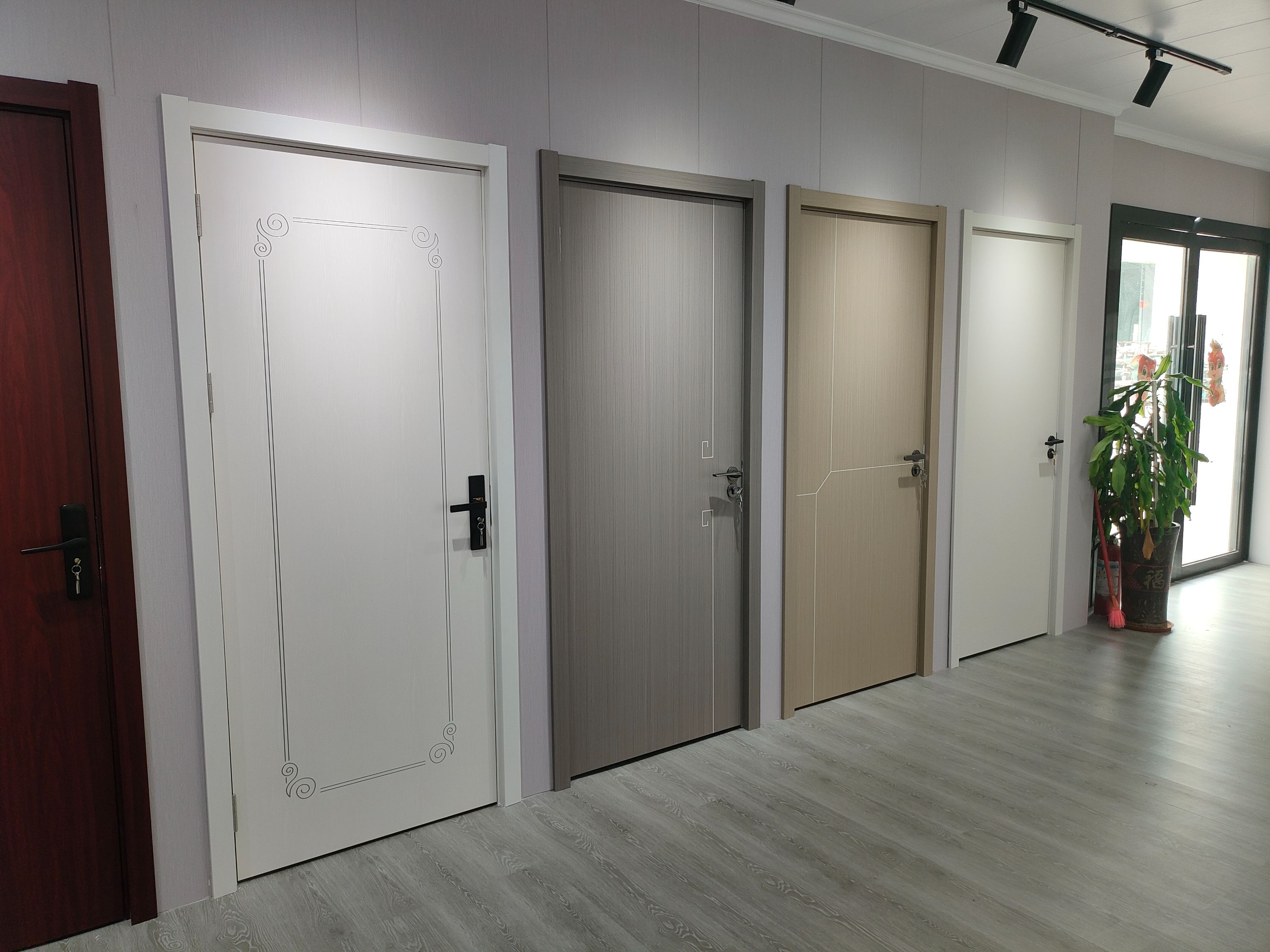
When a door looks stunning in a climate-controlled showroom, that tells you almost nothing about how it will hold up against sideways rain, salt spray, or a week of sub-zero nights. Solid wood, for instance, has undeniable warmth, but in real weather it expands and contracts enough to crack paint and warp stiles unless it's properly sealed and regularly maintained—something many homeowners forget until the door starts sticking.
Fiberglass doors have quietly become the workhorse for harsh climates because they don't absorb moisture the way wood does, and they can be textured to mimic grain almost convincingly. Steel doors bring security and rigidity, but they can dent from hail and can develop rust spots along the bottom edge if water pools against the threshold. The real test isn't the material's spec sheet; it's how the door handles thermal cycling, UV exposure, and the microclimate right at your entryway.
If you live within a few miles of the coast, look beyond the surface finish and ask about the door's core and frame construction. Composite cores with a thermal break tend to outperform solid slabs in both insulation and dimensional stability. And don't overlook the threshold and weatherstripping—those are the first points of failure in real weather, long before the door slab itself shows any sign of trouble.
Custom Door Designs That Don't Look Like Every Other House
Most front doors are nothing more than a flat slab with a handle—safe, predictable, and utterly forgettable. If you want a home that actually feels like it belongs to you, start with the entryway. Think beyond standard wood grain and instead play with unexpected proportions: a door that is slightly taller than normal, or narrower with a single sidelight that acts as a slim window into your world. Color is another easy lever—deep teal, burnt orange, or a matte black that swallows light can completely change the first impression. Don't be afraid to mix materials, either. A steel frame with a solid oak panel, or a glass insert that runs the full height but is frosted just enough to keep privacy. The goal isn't to be loud; it's to be intentional.
Look at the details most people ignore. The hardware alone can tell a story: a oversized cast-iron pull instead of a conventional knob, a vertical handle that runs nearly the length of the door, or hinges that are exposed on the outside as a design element. The way the door sits within the wall matters too—flush with the exterior creates a clean, almost gallery-like face, while a deep reveal adds shadow and depth. For a truly custom feel, consider a door that pivots rather than swings, or one that slides sideways along a track. These choices don't just change the look; they change how you move through your home. Small shifts in scale, placement, and material make a door feel less like a standard product and more like a piece of the architecture itself.
Here's the truth: a custom door doesn't have to be expensive or complicated. It just has to break one convention. Maybe that means skipping the traditional rectangular shape for a rounded arch, or using reclaimed wood with visible saw marks and knots. Maybe it means painting the interior face a different color than the exterior, so the door feels like a transition between two worlds. The key is to look at your entryway from the street and ask: what would make this house feel like no one else lives here? That answer is rarely found in a catalog. It's in the odd-size panel, the hand-carved threshold, the small porthole window that frames your own view. Once you stop trying to match the neighbors, the door becomes the first honest line of your home's story.
The Security Upgrades That Matter More Than a Fancy Handle
Most people fixate on the look of a lockset, but a beautiful handle does little if the door frame splinters under a firm kick. Reinforcing the strike plate with three-inch screws that bite into the wall stud is one of the cheapest and most effective upgrades you can make. It turns a decorative fixture into something that actually holds.
Beyond the frame, look for a deadbolt rated Grade 1 by ANSI, which means it has passed tests for drilling, picking, and forced entry. If you prefer smart locks, choose one with a built-in alarm or auto-lock after a short delay. Just remember that no amount of app control compensates for a weak cylinder or a poorly fitted latch.
Finally, layer in visible deterrents like a motion-activated porch light or a video doorbell. Most burglars are opportunistic and will skip a house that looks harder to approach than the neighbor's. These small additions often matter more than the style of the handle you choose.
How Factory Finishes Outlast DIY Paint Jobs
A factory finish holds up longer mostly because of how the coating is cured. Automotive plants run bodies through heated booths where temperatures climb high enough to trigger full cross-linking in the base and clear layers. That baking step creates a harder, more chemically stable film than the air-dry or infrared-lamp cures most home jobs rely on. Without that controlled heat, DIY paint stays softer at the molecular level and tends to chip, stain, or fade earlier once it faces sun, road salt, and temperature swings.
The prep work and application method also separate the two. Before color ever touches metal, factory lines use phosphate baths or e-coat dips to give the surface a uniform, corrosion-resistant grip. Robotic sprayers then lay down consistent film thickness across every panel, avoiding the thin edges and heavy sags common in garage work. Those even layers, combined with filtered air and solvent-balanced clears, leave fewer microscopic pores where moisture and oxygen can start lifting the finish years down the road.
Delivery and Installation Details Most Homeowners Forget to Ask
You've picked the perfect model, negotiated a fair price, and scheduled the service—but a surprising number of homeowners only realize after the fact that their delivery quote didn't include carrying the unit up a flight of stairs or through a narrow doorway. Before signing anything, pin down exactly where the truck will unload and who is responsible for moving the item from the curb to the final spot inside your home. Some companies leave it at the garage door, while others bring it all the way to the room of your choice, unpack it, and remove every scrap of packaging. That difference can save you a sore back and a pile of cardboard you didn't plan for.
Installation itself is another gray zone. Ask whether the quoted price covers disconnecting and hauling away your old appliance, or if that's an add-on you'll only learn about when the crew shows up. Also clarify how they handle unexpected snags: a shut-off valve that's seized, a wall outlet that's not up to code, or a vent that needs an extra three feet of ducting. If those small parts and labor minutes aren't included, you could be hit with a supplemental bill that erases any savings you thought you'd locked in. A reputable installer will walk you through the most common extras before the day arrives, not after the unit is already half-connected.
Finally, don't leave without a clear understanding of what happens after the last screw is tightened. Will the installer show you how to operate everything, test a full cycle, and clean up any debris? Does the warranty start on delivery day or installation day—and who do you call if something rattles two weeks later? Get the name and direct number of the local service manager, not just a national hotline. Homeowners who ask these questions upfront spend less time chasing answers later, and they end up with a finished job that feels less like a mystery and more like a well-planned project.
FAQ
Most factories work with steel, solid wood, fiberglass, and aluminum alloys. Steel doors are common for security and affordability, while solid wood offers a classic look. Fiberglass resists dents and moisture, making it a solid pick for coastal homes.
Yes, custom sizing is standard practice among established factories. You can send the exact dimensions, and they will build the frame and slab to fit. Some will even request photos or rough sketches to catch potential clearance issues before production starts.
Reputable manufacturers run accelerated aging tests, water spray tests, and thermal cycling to simulate years of exposure. They check seal integrity, warping, and paint adhesion. If a factory cannot explain its testing process, it is usually a sign to look elsewhere.
Matte black and charcoal finishes remain popular, often paired with horizontal glass panels or slim sidelights. Pivot hinges are gaining traction for a cleaner look, and many homeowners choose flush wood grain textures over traditional raised panels.
They can be, if you choose a factory that reinforces the frame and uses multi-point locking systems. Look for doors with a solid steel core or reinforced stiles, and ask about anti-pry tabs and high-security cylinders rather than relying on a single deadbolt.
Expect anywhere from three to seven weeks for production, depending on material and complexity. Ocean freight to North America or Europe adds another three to six weeks. If a factory quotes a much shorter timeline for a fully custom door, ask what steps they are cutting.
Some do. Look for factories that source wood from FSC-certified suppliers, use low-VOC paints and adhesives, or offer recycled steel cores. Energy-efficient cores with polyurethane foam insulation are also common and can reduce heating and cooling loss.
Ask about their coating process, hardware compatibility, and warranty terms. Request a sample corner or finish swatch before committing to a full order. A factory that offers clear communication, realistic lead times, and documented quality checks is usually safer than one that only promises the lowest price.
Conclusion
Inside a Chinese main door factory, the process is less about assembly-line speed and more about controlled repetition. Steel sheets are cut, bent, and welded into reinforced frames before being filled with sound-deadening foam or honeycomb cores. Entry doors built here are tested against rain, humidity, and temperature swings, using galvanized steel, aluminum, or engineered wood composites that resist warping and rust. The factory-applied finishes—powder coating or baked-on fluorocarbon—outlast any brush-on DIY job by years, because the metal is pretreated and cured in dust-free ovens rather than on a driveway.
Custom door designs move beyond the same three panel profiles, letting homeowners choose wood-grain textures, recessed grooves, or matte colors that match the actual facade. Security upgrades focus on multi-point locking systems, reinforced strike plates, and anti-pry channels, not decorative handles. Before the door ships, factories pre-hang it in a jamb, pre-drill hardware holes, and wrap edges in foam. Smart buyers verify door slab thickness, threshold height, and sealing strips ahead of delivery, since those details decide whether the entry stays quiet and dry for a decade.
Contact Us
Contact Person: Liam
Email: [email protected]
Tel/WhatsApp: (+86)16658531012
Website: https://www.fansifiredoor.com