

China Heavy Duty Caster Wheels Factory: Built for Extreme Loads and Smooth Mobility
2026-11-02
Ever watched a caster wheel falter under a load it was never truly rated for? That moment separates genuine heavy duty hardware from empty claims. At CMCL, a China heavy duty caster wheels factory, load capacity isn't a marketing number — it's an engineering target backed by reinforced designs and materials that keep extreme weights rolling with surprising ease. In this post, we'll unpack how CMCL builds casters that survive brutal loads without sacrificing smooth mobility.
What Happens When a Caster Meets 10 Tons of Unforgiving Steel?
The fireball hits and spreads like a fistful of wet leaves. The caster blinks, recalibrates, tries a lance of force that should shear stone. It leaves a shallow groove, barely visible. Ten tons of steel doesn't flex, doesn't flinch, doesn't care that you spent years mastering the arcane. It just stands there, radiating a patient kind of contempt.
Most casters fail here because they treat the mass as a target. But steel has no weak point to exploit, no internal fire to stoke, no living nerves to shatter. It's a single slab of cold mathematics: weight, density, and a center of gravity that laughs at dramatic gestures. The more you throw at it, the more it reveals how little your power matters in a room built on physics.
The ones who walk away intact stop attacking. They look at the steel the way a mason looks at a boulder, not a duelist sizing up a rival. A gentle lift at the right pivot, a controlled shift of balance, and the whole mass obeys. It doesn't yield to raw magic. It yields to anyone smart enough to stop fighting and start thinking.
Inside the Forge: How Chinese Heavy-Duty Casters Are Built to Outlast
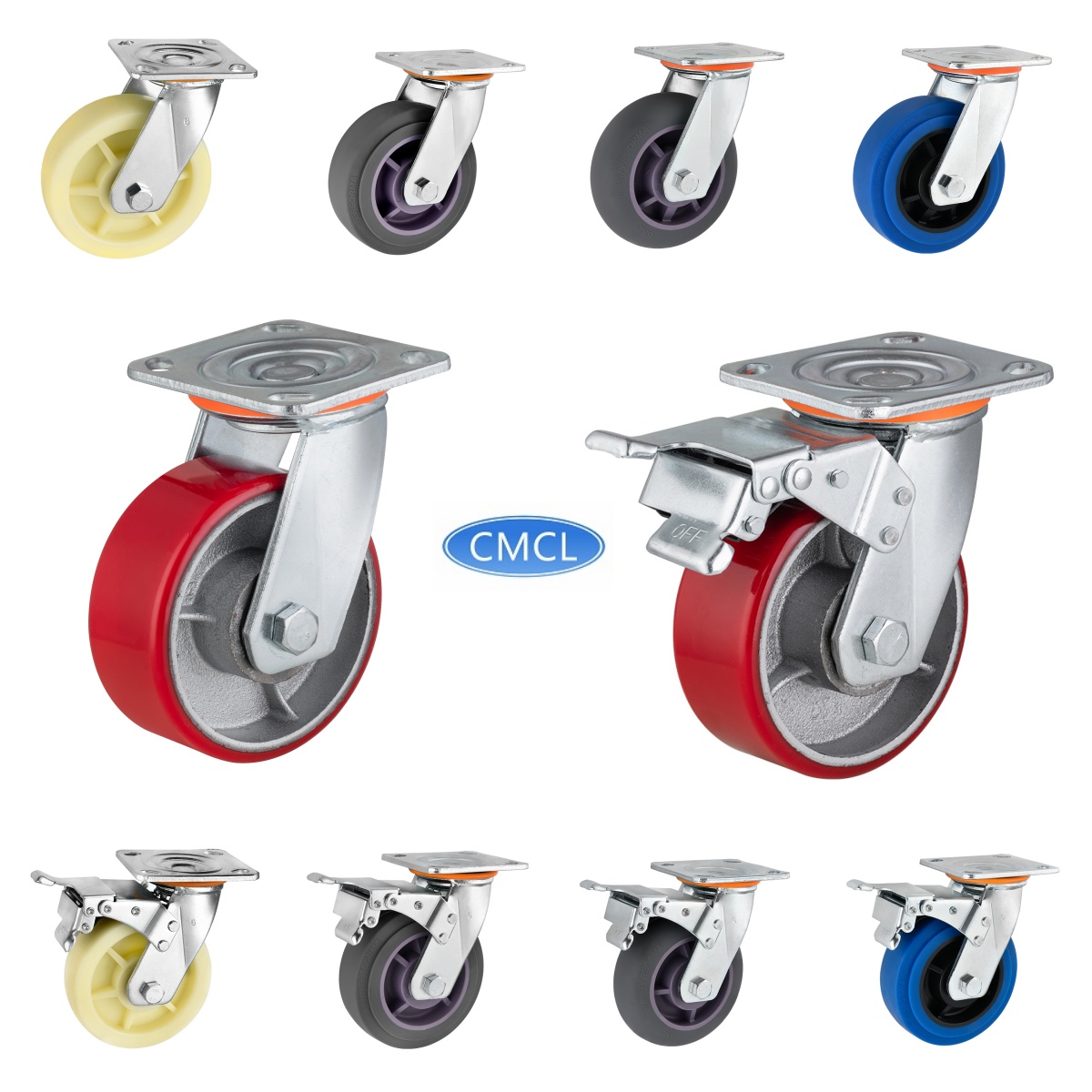
Walk through any modern Chinese caster foundry and the first thing that hits you is the controlled chaos of molten steel meeting precision molds. The heavy-duty casters that roll out of these workshops aren't stamped from thin sheet metal or assembled from flimsy stamped brackets. Instead, the process starts with high-carbon steel or ductile iron poured into sand molds at temperatures that would melt lesser alloys. Foundry workers monitor the pour with the same intensity a chef watches a sauce reduce—too fast and the metal crystallizes with weak spots; too slow and the mold walls collapse. It's this relentless attention to thermal rhythm that gives the finished wheel its dense, load-bearing core, one that won't crack when a five-ton forklift pivots on a warehouse floor.
Once the castings cool and shake off their sand crust, the real machining begins. Chinese factories that specialize in heavy-duty casters run CNC lathes around the clock, turning bearing seats to tolerances measured in microns. But here's the part most catalogs won't tell you: the best shops don't just machine to spec, they machine to abuse. A caster that will spend its life rolling over floor debris and dock plates gets a hub face ground flat, then micro-peened to resist spalling. The swivel raceways—often a double row of tapered roller bearings—are pressed in with a hydraulic ram that applies force evenly across the cup, preventing the subtle warping that causes premature wobble. It's the difference between a caster that feels smooth on day one and one that still tracks straight after ten years of hitting expansion joints.
The final assembly line is where Chinese manufacturers have quietly rewritten the rulebook on longevity. Instead of welding the top plate to the yoke, many now use a forged one-piece yoke that eliminates stress risers at the weld seam. The kingpin is induction-hardened, then shot-peened to put the surface in compression—an old trick from axle manufacturing that makes the pin shrug off side impacts. Grease fittings aren't an afterthought; they're positioned so a single pump purges old lubricant from the load-bearing raceway without disassembly. And before any caster ships, it gets a torture test: loaded to 150% of its rated capacity, rolled over a steel obstacle course for eight hours, then inspected for heat, play, and deformation. The ones that survive get a serial number etched into the yoke—not for warranty tracking, but as a quiet boast. These aren't commodities; they're forged arguments that Chinese manufacturing can outlast the buildings it rolls through.
The Hidden Engineering Behind Silent, Smooth Rolling Under Extreme Loads
Most people never think about what keeps a 400-ton mining haul truck gliding over jagged rock without a shudder. The answer sits inside the wheel hubs, where roller bearings do the near-impossible: spin under crushing weight while staying quiet enough to hear a pin drop. The secret starts with micro-geometry. Rollers aren't perfect cylinders—they're crowned by a few microns, shaped so stress spreads evenly across their length instead of bunching at the edges. The raceways they roll on are honed to a surface roughness measured in nanometers, then coated with a diamond-like carbon film that shrugs off metal-to-metal contact. That's why you can stand next to a fully loaded conveyor drive and feel the vibration in your boots but hear almost nothing from the bearing itself.
Lubrication under extreme load is a different beast than what your car's wheel bearings see. Squeeze grease between two hardened steel surfaces at 3,000 megapascals—roughly the pressure at the bottom of the Mariana Trench—and the oil film thins to a few molecules. Engineers fight back with solid lubricant additives like molybdenum disulfide, which shear into microscopic platelets and slide past each other like a deck of cards. Seals matter just as much: a single grain of dust entering the raceway becomes a stress riser that can spall the steel. So modern designs use triple-lip labyrinth seals with a grease purge channel, actively pushing contaminants out while keeping the good stuff in. It's a quiet, invisible war fought every revolution.
The cage—the part that separates the rollers—might be the least appreciated piece of engineering in the whole assembly. Under extreme loads, a stamped steel cage would flex, scrape, and eventually crack. That's why high-capacity bearings use machined brass or injection-molded polyetheretherketone (PEEK) cages, each pocket precisely contoured to guide the roller without touching its load-bearing surface. The steel itself gets special treatment too: vacuum-degassed, through-hardened, then cryogenically treated at minus 190°C to transform any retained austenite into martensite. That final step locks the bearing's dimensions so tightly that after years of pounding, the rolling elements still measure within a micron of their original size. It's a hidden symphony of materials and tolerances, played at forty revolutions per second under a mountain of rock.
From Factory Floors to Port Terminals: Where These Casters Earn Their Keep
In automotive stamping plants, caster wheels carry die carts that weigh over 20,000 pounds across floors littered with metal shavings. The best setups use forged steel brackets with tapered roller bearings to survive the constant lateral loads when workers pivot the carts into tight spots near presses.
Port terminals present a different challenge. Maintenance crews roll mobile work platforms between stacked containers where salt spray and grit eat away at ordinary hardware. Casters here get hot-dip galvanized finishes and polyurethane treads that resist cutting from stray dock lines and container corner castings.
Refrigerated warehouses attached to port terminals use casters with low-temperature grease and nylon wheels that won't flat-spot when a pallet jack sits loaded over a long weekend. The floors stay dry but the cold makes standard rubber too hard to absorb shock, so softer compounds maintain traction and reduce operator fatigue.
Material Choices That Separate a Real Heavy-Duty Caster from a Pretender
Most caster failures trace back to a single overlooked decision: the wheel tread and core materials. A genuine heavy-duty unit pairs a ductile iron or forged steel core with a thick, high-durometer polyurethane tread, often bonded rather than mechanically fastened. This combination shrugs off floor debris, oil, and impact loads that would crack a cheaper phenolic or nylon wheel. Pretenders frequently use a plastic or sintered metal core wrapped in a thin layer of soft rubber, which delaminates after weeks of hard use.
The swivel race and fork tell an equally blunt story. Real heavy-duty casters rely on heat-treated steel races with hardened ball bearings that are greased and sealed to keep out contamination. The fork is usually a single-piece forging or a heavily gusseted steel plate, not a stamped bracket. If you see visible welds around the kingpin area or a thin, unpainted inner race, you are looking at a caster built for light carts, not industrial loads.
Finally, pay attention to the axle and bushing materials. In a legitimate heavy-duty caster, the axle is a precision-ground steel shaft running inside hardened, replaceable bushings or tapered roller bearings. This resists side-load deflection and keeps the wheel tracking straight under multi-ton pressure. Cheaper alternatives use zinc-plated bolts through unbushed plastic hubs, which wallow out quickly and cause the wheel to wobble, dramatically shortening both the caster's life and the floor's finish.
Customizing for the Impossible: Small Tweaks That Handle Massive Impact
Most teams assume that handling impossible workloads demands a full system overhaul—more servers, bigger budgets, or a ground-up rewrite. In practice, the difference between collapse and stability often hides in unglamorous micro-adjustments. A single regex that avoids catastrophic backtracking, a cache header that stops a stampede of duplicate requests, or a database index placed on the column everyone forgot can absorb ten times the load without anyone noticing the change. These tweaks feel almost too small to matter until the traffic spike hits, and suddenly the system breathes instead of buckling.
The trick is learning where to look. High-impact customization rarely lives in the obvious hot path; it hides in the seams—connection pool timeouts, serialization choices, error retry logic that quietly multiplies work. One team we worked with fixed a nightly batch job that kept timing out not by rewriting the pipeline, but by changing the order of two joins in a query. Runtime dropped from nine hours to eleven minutes. No new infrastructure, no heroic refactor, just a willingness to question an assumption that had gone unchallenged for years.
What separates teams that pull this off is a habit of treating every constraint as negotiable. When a task looks impossible, they don't ask for more resources first. They ask what invisible assumption is making the work heavier than it needs to be. Then they change one small thing and watch the impact ripple outward. That's the real customization: not rebuilding the machine, but knowing exactly which screw to turn when the whole thing threatens to shake apart.
FAQ
Depending on the series, individual casters are built to support anywhere from a few hundred kilograms up to several tonnes. The exact figure comes down to wheel diameter, bracket thickness, and the bearing arrangement, so factories often provide a load rating chart rather than a single number.
They combine thick steel brackets, forged or ductile iron cores, and precision bearings at a cost that is hard to match elsewhere. The consistency of these components means automated guided vehicles and heavy assembly carts keep rolling without frequent replacements.
Smooth movement is not just about the wheel surface. Double ball races in the swivel head, tapered roller bearings in the wheel hub, and carefully matched tread hardness all reduce starting resistance. Many makers also machine the mounting plate flat to prevent wobble under load.
You can get polyurethane treads bonded to cast iron or steel cores for floor protection and low rolling resistance, nylon for chemical exposure, and forged steel or cast iron for heat or rough concrete. The choice usually depends on whether floor marking, noise, or debris matters more.
Yes, most factories accept custom top plate dimensions, bolt hole patterns, stem types, and even overall height adjustments. As long as the load and swivel radius are within safe limits, the bracket can be redesigned around existing equipment instead of forcing the equipment to adapt.
A typical batch test includes load deformation checks, swivel race torque measurement, wheel hardness verification, and sometimes salt spray testing for corrosion resistance. More advanced suppliers also run dynamic rolling tests over obstacles to catch bearing failures early.
Start with the maximum total load including the cart or machine weight, divide by the number of casters, then apply a safety factor of 1.3 to 1.5 for uneven floors and shock loads. After that, match the wheel diameter to the floor gap and the tread material to the surface type.
Conclusion
When a loaded flatbed drops ten tons onto a single caster, the difference between a genuine heavy-duty unit and a pretender shows itself in milliseconds. Chinese factories specializing in these wheels don't just thicken the steel; they rethink the entire load path. Forged brackets, heat-treated raceways, and tapered roller bearings are matched to handle shock loads that would crack ordinary casters. The goal is not merely survival but silent, smooth rolling under pressure—no squealing, no flat-spotting, no sudden lock-up when a forklift changes direction.
Material choice separates real heavy-duty casters from look-alikes. Ductile iron cores, polyurethane treads with high rebound, and sealed swivel assemblies resist corrosion and impact. Factories routinely customize wheel diameter, tread hardness, and mounting plates for specific environments—from automotive assembly lines to salt-air port terminals. Small tweaks, like a wider offset or a reinforced kingpin, absorb massive side impacts and extend service life. These casters earn their keep in places where downtime costs more than the hardware itself.
Contact Us
Contact Person: Ruby
Email: [email protected]
Tel/WhatsApp: +86 13360379367
Website: https://www.cmcl-casters.com