
China Cryogenic Ball Valve Manufacturer Delivering Reliable Performance in Extreme Conditions
2026-11-02
LNG terminals, chemical plants, and cold storage facilities share a common demand: valves that won’t crack, leak, or seize when temperatures drop to cryogenic levels. That’s where ZMV comes in. As a leading Chinese manufacturer of cryogenic ball valves, ZMV delivers the reliable performance that extreme conditions demand—and this article will show you exactly how.
Materials That Hold Strong at Cryogenic Temperatures
Most structural metals turn brittle when temperatures crash toward absolute zero, but the exceptions are often chosen less by brute strength than by crystal structure. Face-centered cubic alloys—austenitic stainless steels like 304L and 316L, aluminum alloys such as 5083, and many nickel-based superalloys—keep enough slip systems active to deform instead of fracturing. That is why liquid-hydrogen and liquid-oxygen tanks, superconducting magnet supports, and cryostat vessels lean on these materials even though they are not the strongest at room temperature.
Not every low-temperature role is metallic. Glass-fiber-reinforced epoxies, often called G10 or FR4, provide structural support and electrical insulation inside superconducting coils, while polyimide and filled PTFE parts survive where lubrication fails. Carbon-fiber composites are trickier because microcracking can occur from thermal mismatch, but tailored layups and toughened resins now allow composite cryogenic tanks and launch vehicle structures that save weight without losing integrity.
At the extreme end, Invar and related iron-nickel alloys offer near-zero thermal expansion, a property that helps align optical instruments and superconducting cavities when temperatures swing. Titanium alloys like Ti-6Al-4V add another option: they retain useful fracture toughness down to 20 K and are routinely used in cryogenic valves and turboexpander wheels. The common thread is not a single miracle material but careful trade-offs among toughness, thermal contraction, and fabricability.
Precision Machining for Leak-Free Operation
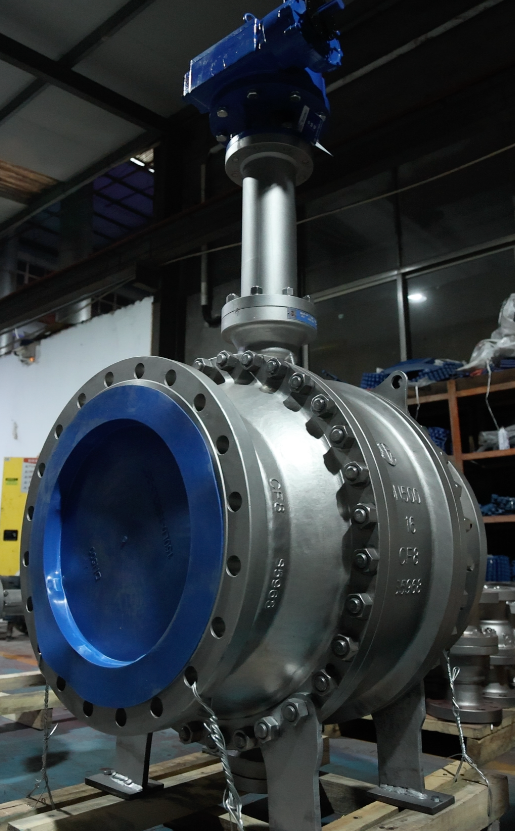
Leak-free performance starts well before assembly. Every mating surface, port, and seat is cut to tolerances tight enough that even low-viscosity fluids can't find a path out. Surface finish matters just as much as dimension—tool marks, chatter, or slight waviness create microscopic channels where pressure forces a leak.
The machines used here hold thermal drift to a fraction of a micron, and each critical bore gets checked against air gaging or CMM data before it moves on. Threads for fittings aren't just tapped; they're thread-milled and inspected for root radius and pitch diameter so seals seat evenly under torque.
Materials are chosen for rigidity and matched expansion rates, reducing the chance of gaps opening at temperature extremes. Edge breaks are programmed to remove burrs that could cut an O-ring or prevent a flange from sitting flat. The assembly doesn't rely on sealant to hide a poor fit—it seals because the parts already fit.
Surviving the Harshest Industrial Environments
Dust, vibration, temperature swings, chemical splash, and relentless moisture don't just wear equipment down—they quietly dismantle anything built to ordinary standards. In mines, foundries, offshore platforms, and chemical plants, failure usually starts at the least obvious point: a corroded terminal, a cracked seal, a bearing starved of lubricant by abrasive fines. Equipment that survives these settings is designed from the ground up with sealed enclosures, stainless or coated alloys, and thermal management that holds steady when ambient conditions swing from freezing to furnace-like heat within a single shift.
Materials matter more than marketing promises. Silicone gaskets and fluoropolymer jackets outperform standard rubber and PVC when exposed to oils, acids, or UV. Connectors with positive locking and gold-plated contacts resist the micro-fretting that vibration causes in screw terminals. In areas with explosive gases, intrinsically safe barriers and flameproof housings are not optional add-ons—they are the difference between a routine maintenance check and a catastrophic incident. Even cable entry points get special treatment: compression glands with multiple sealing rings stop dust and water ingress far better than simple grommets.
Long-term survival also depends on how easily the equipment can be inspected and serviced without shutting down an entire line. Modular designs with front-access fuses, diagnostic LEDs, and tool-free latches reduce the time technicians spend inside a hot, noisy cabinet. Coatings that shrug off salt spray and chemical mist prevent the slow creep of rust that eventually compromises structural integrity. When every hour of downtime costs more than the hardware itself, the smartest choice is rarely the cheapest upfront—it is the one that continues working while everything around it is trying to tear it apart.
Advanced Sealing Systems for Extreme Cold
Arctic environments push every component to its limit, and sealing systems are often the first to fail when temperatures dive below -50°C. Standard elastomers turn brittle, lubricants stiffen, and metal-to-metal interfaces lose their flexibility. A genuinely advanced sealing system for extreme cold doesn't just swap in a lower-temperature compound; it rethinks the entire sealing interface. For instance, spring-energized PTFE seals paired with stainless steel or polymer springs maintain a consistent contact force even as thermal contraction shifts housing dimensions. The key is designing for dimensional stability across a 100-degree temperature swing, not just surviving a single cold soak test.
Material choice goes beyond generic 'low-temp' ratings. Many seals rated for -40°C will harden unexpectedly at -55°C due to crystallization or loss of plasticizer. Advanced systems rely on perfluoroelastomers with low glass transition points, or on ultra-high-molecular-weight polyethylene lip seals that retain ductility where rubber cracks. Equally important is the mating surface: a mirror-polished, hard-coated shaft prevents micro-abrasion from ice crystals that form when ambient moisture freezes against the seal lip. Without that surface engineering, even the best polymer will leak after a few hundred cold-start cycles.
Field data from Alaskan pipeline valve retrofits and Canadian mining equipment shows that conventional O-rings fail within two to three weeks of sustained -45°C operation, while redesigned cartridge seals with dual-lip wiping stages and internal lubrication channels last an entire winter season without leakage. The winning systems combine three things: a low-temperature elastomer that remains elastic, a metallic energizer that compensates for thermal set, and a scraper lip that clears frost before it reaches the primary sealing edge. Ignore any one of those, and the 'advanced' label is just marketing.
Every Valve Tested Beyond Industry Standards
Most manufacturers treat industry standards as the finish line. We treat them as the starting block. Every valve we produce is pushed well past certified requirements—pressure spikes, thermal cycling, and vibration loads that would never appear on a spec sheet but absolutely happen in the field. If a design survives our internal gauntlet, it earns the right to carry our name.
The numbers tell the story. Helium leak tests at 1.8 times rated working pressure. Endurance runs of 200,000 open-close cycles while alternating between -40°F and 400°F. Random units pulled from production are deliberately run to destruction—not to check for pass/fail, but to map exactly where failure begins and then engineer that margin back into every component. That is what 'tested beyond industry standards' actually means around here.
For the plants and pipelines that depend on these valves, the result is less downtime, fewer surprises, and a lifespan measured in decades rather than maintenance windows. It's not about certificates on a wall; it's about knowing the valve in line 47 will hold when the system spikes at 3 a.m.
Custom Engineering for Unique Cryogenic Challenges
Every low-temperature system carries its own set of demands—whether it's a one-off research rig, a modified storage solution, or a component that has to survive thermal cycling without complaint. Our team starts from the actual problem, not a catalog page. We work through the constraints with you: geometry, materials, heat leak, access, and the strange failure modes that only show up at 4 Kelvin. That kind of close listening is what turns a tricky cryogenic requirement into a workable, repeatable build.
The value shows up in the details. A custom feedthrough that doesn't frost over, a support structure that cuts conductive loss by half, a modified dewar neck that lets you swap samples without warming the whole system. We prototype in small batches, test at the temperatures and pressures you actually run, and document what we learn so the next iteration isn't a guess. No two projects leave the shop the same way because no two cryogenic challenges are the same.
The payback is less rework, fewer lost runs, and components that fit your setup instead of forcing your setup to fit them. When standard parts stop working—or never started—custom engineering isn't a luxury. It's the shortest path to a system that holds temperature, holds vacuum, and holds up over time.
FAQ
The valves use an extended bonnet to keep the stem packing away from the cryogenic fluid, preventing ice formation and ensuring smooth operation down to -196°C. Body and trim materials undergo deep cryogenic treatment to maintain toughness and dimensional stability.
They are widely used in LNG terminals, air separation units, liquid oxygen and nitrogen storage and transport, and aerospace fuel loading systems where tight shutoff is critical at very low temperatures.
Seats made from PCTFE or flexible graphite work with a precision-lapped ball and spring-loaded seat rings. This combination compensates for thermal contraction and expansion, keeping leak rates extremely low even during sudden cool-down or warm-up cycles.
Yes, the standard design covers media temperatures from -196°C to -46°C. As long as the wetted materials are compatible with the specific fluid, the valve can switch between LNG and liquid nitrogen without hardware changes.
Common body materials include CF8M and CF3M stainless steel. The ball is usually 316 or 316L stainless, the stem is often 17-4PH, and the seats are PCTFE or metal-seated for higher endurance.
Yes, we manufacture non-standard bore sizes and provide flanged, butt-weld, socket-weld, and threaded ends. We can also produce valves directly from customer drawings or modify existing designs to match existing piping.
Every valve undergoes shell strength testing, bidirectional seat leakage testing, and low-temperature helium leak detection. A sample from each batch is also cycled at -196°C to confirm torque and sealing performance under actual cryogenic conditions.
We offer on-site installation guidance, maintenance training, and ready-to-ship spare parts kits. Emergency technical support is available with a 48-hour response window, and we can arrange field service visits if needed.
Conclusion
China's cryogenic ball valve manufacturers have moved beyond simply supplying components—they now engineer survival kits for the coldest, most punishing processes on earth. The first line of defense lies in materials that resist embrittlement at temperatures where standard carbon steel turns brittle, often using austenitic stainless steels or specialized alloys selected for low-temperature toughness. Precision machining then turns these raw materials into valve bodies and balls with tolerances tight enough to prevent leakage even after repeated thermal cycling. In parallel, advanced sealing systems incorporate lip seals, spring-energized PTFE, or metal-to-metal backup seals that remain flexible and effective when ordinary elastomers would shatter. This combination of material science and machining discipline ensures the valve does not just operate, but holds a bubble-tight shutoff in liquid nitrogen or LNG service.
Beyond assembly, these manufacturers subject every unit to testing that goes past standard API or ISO requirements: cryogenic cycling, helium mass spectrometer leak checks, and high-pressure gas tests at -196°C are common. The result is a valve that survives abrasive slurries, salt spray, thermal shock, and years of on/off cycling in LNG plants, air separation units, or offshore platforms. When a standard product cannot fit a particular process, Chinese factories respond with custom engineering—changes to stem extensions, body orientation, cavity relief, or specialized coatings—without the long lead times many international suppliers demand. That adaptability, paired with rigorous in-house validation, allows a single manufacturer to deliver reliable performance from a desert pipeline to an Arctic gas field, making extreme conditions just another day of operation.
Contact Us
Contact Person: Lucas Lin
Email: [email protected]
Tel/WhatsApp: +8613968913000 / +8613868610141
Website: https://www.zhengmaogroup.com