

China CNC Machining Service Solutions for Custom Precision Parts
2026-06-09
Precision engineering isn’t just about hitting tolerances—it’s about delivering parts that work flawlessly in the real world. Yet sourcing custom CNC machined components often means navigating a maze of inconsistent quality, hidden lead times, and communication gaps. That’s where ProtoMat steps in. We’ve built a smarter bridge between your designs and China’s top-tier manufacturing, combining rigorous quality control with agile project management. Ready to see how a seamless CNC service can transform your next prototype or production run? Let’s dive in.
Precision Machining for Complex Geometries
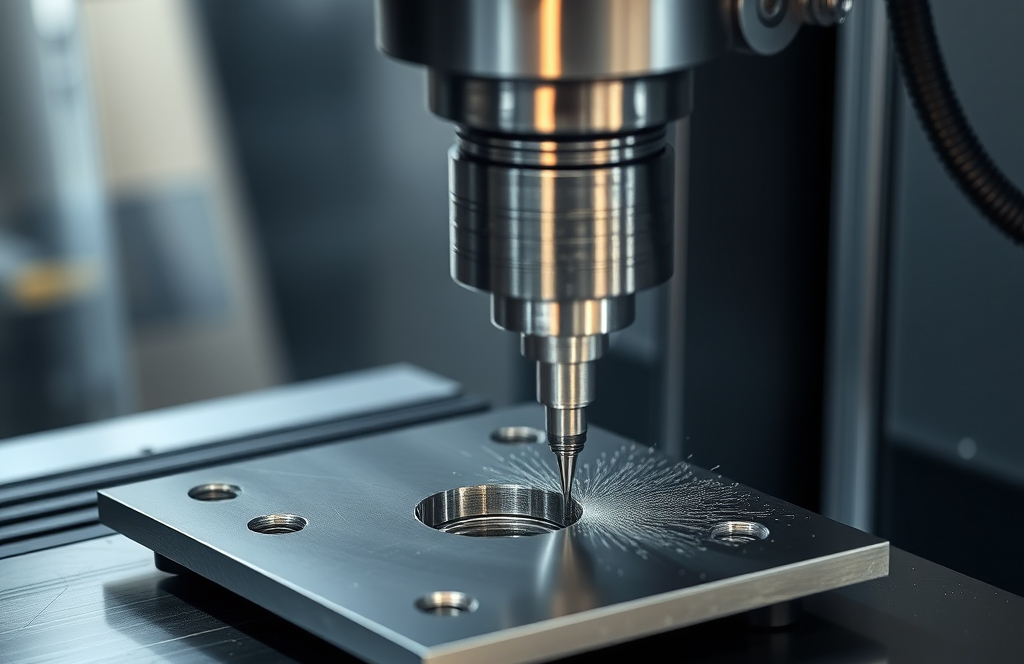
Creating intricate components with tight tolerances demands a level of expertise that goes beyond standard machining practices. When dealing with complex geometries, every curve, undercut, and thin wall must be approached with a tailored strategy. This involves selecting the right combination of multi-axis CNC equipment and custom tooling to access hard-to-reach features without sacrificing surface quality. By carefully planning tool paths and using advanced simulation software, manufacturers can predict and mitigate potential issues like chatter or deflection before the first cut is made. The goal is to achieve flawless parts that require minimal post-processing, even when shapes push the boundaries of what seems machinable.
Material choice plays a pivotal role in succeeding with complex shapes. Exotic alloys, hardened steels, or brittle ceramics each impose their own constraints on feed rates, cutting depths, and coolant strategies. A process that works beautifully on aluminum might cause a titanium part to warp or crack if not adapted. Skilled machinists adjust their approach based on thermal expansion coefficients, hardness variations, and chip evacuation challenges. This deep understanding of material behavior under cutting forces enables the production of components with internal lattices, blended radii, and contoured surfaces that are both accurate and structurally sound.
Precision in geometric complexity is not only about machinery—it’s about integrating measurement and verification into the workflow. In-process probing and laser scanning allow real-time adjustments, ensuring that even the most delicate profiles meet specifications without endless trial and error. This coupling of machining with metrology reduces scrap and shortens lead times, making it possible to deliver one-off prototypes or small batches with consistent quality. Ultimately, the mastery of complex geometries comes from a blend of experience, technological investment, and a methodical, problem-solving mindset that treats every feature as a unique challenge rather than a routine operation.
Material Versatility Across Industries
The adaptability of modern materials has blurred the boundaries between once-separate industries, enabling breakthroughs that redefine what’s possible. From lightweight composites originally devised for aerospace now stiffening bicycle frames and prosthetic limbs, to advanced polymers engineered for medical implants finding their way into flexible electronics, the cross-pollination is relentless. Designers no longer think in terms of a single sector’s toolkit; they pull from an ever-growing palette where a ceramic’s heat resistance, a metal’s conductivity, or an elastomer’s resilience can be recontextualized to solve entirely different challenges.
This fluidity is reshaping manufacturing floor strategies as well. A fabricator accustomed to automotive-grade steels might now incorporate aluminum alloys refined through marine engineering, unlocking weight savings without sacrificing structural integrity. Meanwhile, reclaimed ocean plastics are being transformed into durable outdoor furniture and modular building panels, blurring the line between sustainability and high-performance utility. The real magic happens when materials are combined—sandwich structures, hybrid weaves, and coatings—born in one niche yet scaling into another, proving that versatility isn’t just about a material’s inherent properties, but also our willingness to reimagine its purpose.
Quality Control Beyond Standard Tolerances
When a part meets the drawing specs, most shops stop checking. We don't. Real-world performance often demands tighter consistency than industry norms, especially for assemblies where minute variations can stack up and cause premature wear or failure down the line.
Our approach involves mapping out how each component interacts within the final product, then narrowing the acceptable range based on those relationships rather than some universal chart. This means a shaft that's technically in tolerance might still get rejected if it threatens the lifespan of a mating bearing under load.
It's not about chasing perfection for its own sake. The goal is to head off problems that standard QC would miss, ultimately saving time and cost by reducing end-user complaints and field returns. Sometimes a micron makes all the difference—not on paper, but in practice.
Rapid Prototyping Without Compromise
Turning a bold idea into a tangible product often means navigating a minefield of trade-offs. Speed usually comes at the expense of quality, and chasing perfection can slow momentum to a crawl. But the most effective teams have discovered that this binary choice is a false one. By leveraging modern tools and rethinking outdated workflows, it’s entirely possible to iterate at lightning speed while still delivering an experience that feels polished and intentional.
The secret lies in stacking lightweight, high-fidelity techniques that validate concepts early without locking in premature details. Instead of building a full-scale system, you might simulate complex interactions with clever cutouts and real data snippets. The prototype becomes a shared language—tangible enough to spark meaningful feedback, yet flexible enough to pivot in a single afternoon. This approach doesn’t just accelerate the timeline; it elevates the final result because every design decision is stress-tested against actual human reactions, not assumptions.
Crucially, this mindset redefines what “compromise” means. It’s not about lowering standards; it’s about knowing which details matter at each stage. A rough-edged animation might reveal a fatal usability flaw that a pixel-perfect mockup would hide. By embracing the unfinished as a strategic asset, teams build with confidence, refining their vision until it holds up under scrutiny—all without the waste of over-engineering a solution that was never going to work.
Streamlined Production for Scalable Demands
In today’s fast-moving markets, being able to ramp up production without stumbling is a real advantage. Streamlined production isn’t just about speed; it’s about building a system that flexes when orders surge and contracts when things slow down, all while keeping costs in check.
The secret lies in designing workflows that remove bottlenecks from the start. Instead of rigid assembly lines, we focus on modular setups where capacity can be added piece by piece. This approach means you’re never investing in machinery that sits idle or scrambling to hire last-minute help. It’s a way of working that treats growth as a natural rhythm rather than a crisis to manage.
The payoff goes beyond efficiency. When production lines adapt smoothly, you can take on larger projects without the usual headaches. Clients notice this reliability too, and it often becomes the reason they keep coming back. In the end, streamlined production turns unpredictable demand into a manageable part of daily operations.
Engineering Support From Concept to Completion
Bringing a design to life requires more than just a set of drawings. It demands a partner who understands the full lifecycle—from those early, messy brainstorming sessions where ideas are half-formed, to the final installation and beyond. Our approach weaves engineering expertise into every stage, ensuring that even the most ambitious concepts evolve into practical, reliable systems without losing their original intent.
We don't just hand off a plan and walk away. The real work happens in the spaces between milestones: refining tolerances after a prototype reveals an unexpected stress point, rethinking material choices when supply chains shift, or adjusting thermal management strategies as performance data comes in. This iterative, hands-on style means that problems surface early and get solved before they become expensive change orders down the line.
Flexibility sits at the core of our process. When regulations change mid-project or a client's needs pivot, the engineering thread that connects concept to completion stays intact. It's about listening closely, asking the right questions, and sometimes challenging initial assumptions to avoid dead ends. The result is a partnership that doesn't just deliver a product—it builds the kind of trust that makes the next project even smoother.
FAQ
We regularly work with aluminum, stainless steel, brass, titanium, and various engineering plastics like PEEK and Delrin. The choice really depends on what the part needs to do—strength, weight, corrosion resistance, or something else.
Standard tolerances sit around ±0.005 inches, but we can go even tighter—down to ±0.0005 inches if the design calls for it. Just keep in mind that ultra-tight specs might affect the cost and timeline a bit.
Every order goes through a first article inspection, and then we use CMM equipment to spot-check during production. We also provide a full dimensional report with the shipment so you can see exactly how your parts turned out.
We actually specialize in low to medium volumes, from a single prototype up to a few thousand pieces. So whether you're testing a design or ramping up for market, we've got you covered.
Our finishing options include anodizing (both decorative and hard coat), powder coating, bead blasting, and electropolishing. If you need a specific look or performance feature, we can match it.
We use reliable couriers like DHL and FedEx, so delivery to the US or Europe typically takes 3-5 business days. All shipping costs and duties are quoted upfront, so there are no surprises.
We’ve made parts for medical devices, aerospace components, automotive prototypes, and consumer electronics. Honestly, if you need a precisely made metal or plastic part, we can probably help.
Conclusion
Achieving intricate custom parts demands more than standard CNC capabilities—it requires a process tuned to complex geometries, where multi-axis machining and adaptive toolpaths turn challenging designs into repeatable reality. From surgical device components with micro-scale features to aerospace brackets with deep cavities, the focus stays on maintaining tight form and positional accuracy without sacrificing material integrity. A broad material palette further separates generic services from true solution providers: aluminum alloys, stainless steels, engineering plastics, titanium, and even exotic nickel-based superalloys are machined with equal confidence, each backed by validated parameter libraries that prevent distortion or work hardening. Such versatility means a single partner can handle diverse project requirements across medical, automotive, robotics, and energy sectors, reducing supply chain fragmentation.
Beyond standard dimensional checks, thorough quality control embeds inline probing, surface finish analysis, and CMM reports that verify compliance with GD&T callouts far tighter than baseline norms—catching deviations before they become downstream issues. Rapid prototyping doesn’t mean sacrificing surface quality or mechanical performance; quick-turn workflows use production-grade fixturing and optimized CAM strategies to deliver functional prototypes that genuinely mimic end-use parts. As orders scale, streamlined production leverages cellular manufacturing and tooling consolidation to meet volume spikes without accumulating excessive lead times. Perhaps most critically, engineering support bridges the gap from initial napkin sketches to fully realized assemblies: DFM feedback, material consultation, and post-processing guidance ensure manufacturability is baked in from the start, not retrofitted. This integrated approach transforms China CNC machining into a cohesive engine for precision parts, where every stage reinforces the next and the final output consistently matches the original intent.
Contact Us
Contact Person: Joe
Email: [email protected]
Tel/WhatsApp: +8613799507208
Website: https://www.3dprotomat.com/