

China Air Circuit Breaker Selection Guide for Reliable Power Distribution
2026-08-27
Selecting the right air circuit breaker in China isn’t just about specs—it’s about ensuring your power distribution never skips a beat. With Chang Song’s proven track record, this guide cuts through the noise to help you match breaker performance to real-world reliability demands, before a single fault finds its way into your switchgear.
Reading Breaking Capacity Beyond the Catalog Number
Most engineers simply match the catalog number to the job and stop there. But the real story of a breaker's interrupting capacity is written in the margins—voltage, frequency, X/R ratio, and even the ambient temperature at the fault point. A 65 kAIC rating at 480 V doesn't hold the same at 600 V, and a breaker that comfortably clears a low X/R fault may struggle when the reactance-to-resistance ratio climbs above the standard test value. Ignoring these conditions turns a confident selection into a gamble.
The fine print in UL and IEEE test standards reveals a hidden dependency: breakers are certified under tightly controlled laboratory faults, not the messy realities of a downstream arc flash. Field conditions—motor contribution, short conductor lengths, generator-fed systems—can push actual available fault current beyond the simple bolted-fault calculation. A breaker that passes the catalog test still relies on an instantaneous trip element, and if that element is bypassed or mis-coordinated, the contacts may attempt to interrupt a current much larger than the frame was ever designed to clear.
So how do you move beyond the catalog? Start by pulling the actual test report and checking the power factor used for the rating. Then recalculate your fault current with full motor contribution and the true system X/R. Add a margin for aging and contact wear, and verify that the breaker's interrupting medium—air, vacuum, SF6—still performs at your altitude and temperature extremes. Only then does the catalog number become a quiet guarantee instead of a hopeful guess.
Sizing Trip Units for Loads That Actually Start and Stop
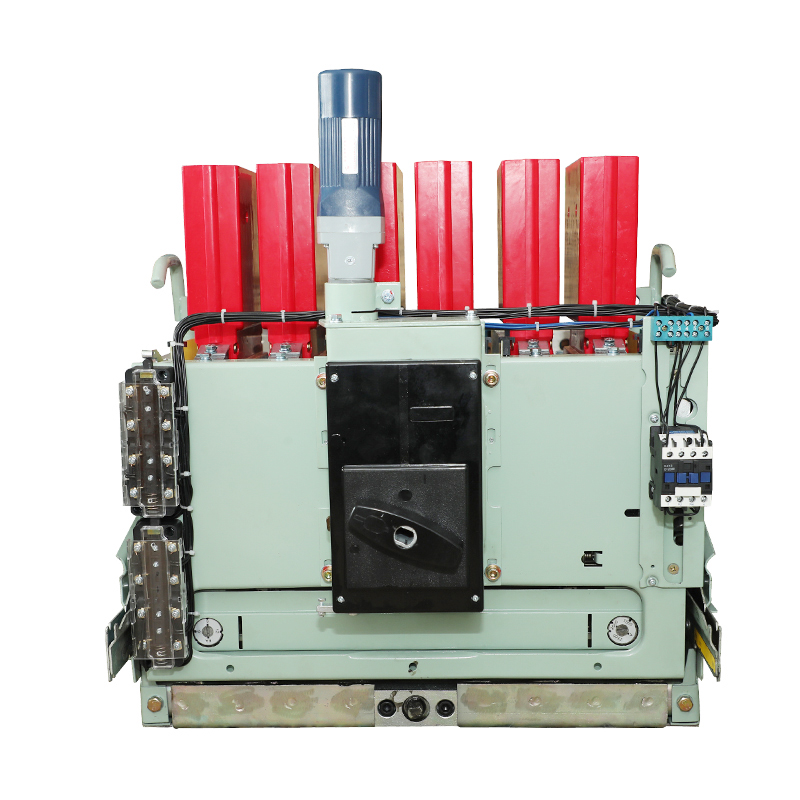
Field experience shows that motors, compressors, and conveyors rarely follow the clean starting curves printed in catalogs. A trip unit sized solely from nameplate full-load amps often sees the inrush as a fault and opens the breaker before the rotor has a chance to reach speed. The real task is matching the thermal memory and instantaneous pickup to the actual acceleration profile, including the seconds spent near locked-rotor current and the cyclical dips when a load stops and restarts under residual pressure or tension.
One overlooked detail is the role of the trip unit's long-time delay during frequent starts. If the load starts and stops more than a handful of times per hour, the thermal model accumulates heat that never fully dissipates. Choosing a setting just above the running current can still cause nuisance trips because the I²t calculation integrates the repeated inrush spikes. A better approach is to measure or simulate the duty cycle, then pick a trip class that gives enough cooling time between starts while keeping the instantaneous element above the true asymmetrical peak, not just the RMS value from a soft starter or VFD display.
Finally, pay attention to the mechanical reality behind the trip unit. A breaker's magnetic element reacts to the current's peak, while many digital settings are expressed in RMS multiples. For loads that start across the line, the first half-cycle offset can exceed 1.7 times the symmetrical RMS value. If the instantaneous pickup is set at 8x full-load amps RMS, a peak-sensing breaker may trip at only 5.6x RMS. Field adjustments of one or two dial positions often separate a reliable installation from one that shuts down every Monday morning.
When a 4-Pole ACB Creates More Problems Than It Solves
Specifying a 4-pole air circuit breaker often feels like the cautious choice—after all, isolating the neutral during maintenance sounds safer. But in practice, the fourth pole introduces a failure point that a 3-pole design never has. Neutral contacts tend to wear differently than phase contacts, especially under unbalanced loads or harmonic-rich environments. If the neutral pole opens before the phase poles during a switching operation, you end up with a floating neutral on the load side. That can send phase-to-neutral voltages well beyond equipment ratings, quietly cooking power supplies, PLCs, and other sensitive electronics before anyone notices the breaker has misbehaved.
The trouble doesn't stop at contact wear. In TN-S and TN-C-S installations, a 4-pole ACB can disrupt the intended ground reference path. Some protection schemes rely on a solid neutral-to-earth bond at the source; inserting a switched neutral pole can create a brief window where the downstream neutral is no longer referenced to earth the way the designer assumed. This leads to nuisance tripping of residual current devices or, worse, a failure to clear a fault when it matters. The extra pole also adds physical bulk, more complex linkages, and another set of arc chutes to maintain—cost and space penalties that rarely get challenged during initial design but become obvious once the panel is crowded and the maintenance team is stretched thin.
A more pragmatic approach is to use a 3-pole ACB with a bolted neutral link or a separate neutral disconnector that is mechanically interlocked to open last and close first. This keeps the isolation functionality where it is genuinely needed without embedding a fragile switching neutral inside the breaker itself. If local codes or operational procedures explicitly demand full neutral isolation, then a 4-pole unit makes sense—but it should come with neutral pole position monitoring and a strict maintenance schedule. Otherwise, you are trading a theoretical safety benefit for a very real source of nuisance trips, equipment damage, and extended downtime.
Humidity, Heat, and Altitude: Adjusting Ratings for Real Substations
Most switchgear and bus ratings assume a standard ambient around 40°C and an altitude below 1000 m. That assumption collapses fast in a substation tucked into a desert basin or a mountain plateau. Humidity rarely acts alone; it combines with heat to accelerate condensation inside sealed compartments and to degrade insulation surfaces. Rather than applying a single derating curve, field engineers often start by measuring the actual daily temperature swing and dew point inside the enclosure, because a rating change tied only to maximum air temperature misses the moisture that condenses when the metal cools overnight.
For altitude, the physics is more predictable but still easy to misapply. Air density drops roughly 3% for every 300 m above sea level, which weakens both convective cooling and dielectric strength. A breaker rack that passes type tests at sea level may need a 5–7% current derating at 1500 m and a steeper correction for control electronics and CTs. The exact factor depends on whether the equipment is sealed, forced-air cooled, or relies on natural convection, so reading the manufacturer’s altitude curve is only the first step.
Heat and humidity corrections are less standardized. In coastal or monsoon regions, the practical solution often means adding space heaters, anti-condensation controls, or even dehumidifiers inside relay cabinets rather than simply reducing continuous current. Some utilities track “hot spot” temperature rather than ambient and adjust maintenance intervals instead of nameplate ratings. That operational approach can be more honest for a real substation than a generic table, because it preserves capacity while preventing failures that thermal derating alone would not catch.
Time-Current Coordination That Doesn't Leave the Upstream Breaker Guessing
When a downstream fault current lands in the gap between two inverse-time curves, the upstream breaker ends up waiting through a time delay that was never meant for that magnitude. The result is often a race: will the downstream device clear first, or will the upstream element overreach and take out an entire feeder? Traditional time-current coordination relies on fixed margins, but those margins assume predictable fault levels and stable breaker timing. Real installations rarely provide that comfort.
A cleaner approach is to stop relying on curve separation alone. Zone-selective interlocking or a simple hardwired blocking signal lets the downstream breaker tell the upstream unit that it sees the fault and is clearing it. The upstream breaker then holds back only for the time needed to confirm the downstream device has operated, instead of guessing from an inverse-time curve where the actual current might sit. This preserves selectivity without sacrificing speed when the fault is truly on the bus side of the downstream breaker.
Field verification is where most coordination schemes either hold up or fall apart. Simulated fault injection at multiple points, including just below and above the pickup thresholds, shows whether the upstream breaker stays put during a downstream event and trips promptly when it must. If the logic is wired correctly and the settings match the actual short-circuit availability, there is no guessing left on any fault the system sees.
Field Checks Before You Flip the Switch on a New ACB
Before you even think about closing that new air circuit breaker, pull the front cover and inspect the arc chutes. Shipping vibration has a habit of loosening fiber barriers or leaving stray hardware behind. Give each interrupter a visual once-over, then rack the breaker from disconnect to test position a couple of times. If the mechanism hesitates or the racking handle binds, stop and find out why instead of forcing it.
Next, go through every control wire termination with a torque screwdriver. A loose shunt trip or spring-charging motor lead might not show up until the worst possible moment. Check the closing and trip coil resistances against the nameplate values; a few ohms off can mean a damaged coil from the factory. While you're in there, cycle the breaker manually and listen for grinding or rough spots in the operating mechanism.
Finally, don't skip secondary injection on the protective relays. Set the trip points, inject current into the CT circuits, and confirm the breaker actually opens when it should. Run insulation resistance tests phase-to-phase and phase-to-ground, and write down the readings. Those baseline numbers will save you hours of troubleshooting later. Only after all that, rack the breaker to the test position and do a slow, no-load close and trip to prove everything works before you energize the bus.
FAQ
Start with the expected short-circuit current at the installation point and compare it to the breaker's ultimate breaking capacity. If that rating is too low, the unit can fail under fault conditions even if the thermal current seems adequate.
Most domestically produced breakers follow GB/T 14048.2, which closely mirrors IEC 60947-2. The important step is confirming the type test certificate covers the actual voltage, current, and breaking ratings you plan to use rather than relying only on a series approval.
Not always. Four-pole construction is useful when neutral switching is required or when ground fault protection needs direct measurement of neutral current. For many three-phase industrial loads, a three-pole breaker with external current transformers is simpler and more economical.
The frame size sets the upper current limit and the physical dimensions. Leave some headroom for future load growth, but avoid extreme oversizing because the protection settings may become too coarse for smaller overloads.
Drawout construction pays off in critical feeders where downtime must be kept short. The breaker can be racked out, tested, or replaced without killing power to the entire switchboard, which matters in hospitals, data centers, and continuous process plants.
Adjustable long-time, short-time, and instantaneous settings are usually worth the cost. Ground-fault protection and zone-selective interlocking add real value when coordination or rapid fault isolation is important, while communication modules help with remote monitoring.
Above roughly 2000 meters or inside a hot switchgear room, the breaker's thermal capacity drops. Use the manufacturer's derating tables and consider forced ventilation or a higher frame rating so the unit still clears faults reliably.
Proper discrimination prevents a fault on a branch circuit from tripping the main ACB and blacking out the entire facility. Working through time-current curves and selectivity tables ensures only the nearest protective device operates, keeping the rest of the system live.
Conclusion
Selecting an air circuit breaker for Chinese power distribution goes wrong when catalog breaking capacity numbers are trusted without checking the actual fault level at the busbar. Prospective short-circuit current can exceed nameplate assumptions due to low-impedance transformers or paralleled sources, so the chosen breaker needs sufficient Icu and Ics margin. Trip unit sizing also requires attention for loads that actually start and stop, such as crushers or large pumps. Set thermal and instantaneous pickups to tolerate inrush without nuisance tripping, yet still clear genuine overloads. On solidly grounded low-voltage networks, a 4-pole ACB often creates more problems than it solves by switching the neutral and introducing transient overvoltages plus an extra contact failure point; a 3-pole breaker with a bolted neutral link is usually safer.
Humidity, heat, and altitude all reduce ACB performance. High temperature accelerates insulation aging, moisture lowers dielectric strength, and installations above 2000 meters require derating for current and breaking capacity because thinner air cools less effectively. Time-current coordination must be deliberate: set the upstream breaker with enough delay and pickup margin so only the downstream device clears a fault, preventing healthy feeders from losing power. Finally, before flipping the switch on a new ACB, field checks matter—tighten busbar connections to specified torque, measure insulation resistance, verify trip unit settings against the coordination study, and exercise the mechanism manually. These practical steps, rather than generic catalog selection, deliver reliable power distribution.
Contact Us
Contact Person: Tonglun Chen
Email: [email protected]
Tel/WhatsApp: 8618906642555
Website: https://www.cncsele.com