

Autonomous Handling Systems Experts Recommend for Smarter Warehousing
2026-08-19
Warehouse floors are changing fast. Autonomous handling systems aren't a distant upgrade anymore—they're the step experts keep pointing to when asked how to make warehousing smarter. But what actually makes these systems work in real operations, not just in presentations? That's where practical insight matters. HANGCHA has been watching this shift closely, and what stands out is how the right autonomous equipment removes bottlenecks without adding complexity. Before diving into the details, it's worth asking a simple question: is your current setup built for the next five years or just the next peak season?
Why Most Warehouse Automation Projects Stall After Six Months
The initial six months often look promising because the implementation team is still on-site, fixing edge cases and manually smoothing data flows. Once they leave, the system encounters the messy reality of daily operations: damaged barcodes, unexpected returns, seasonal SKU surges, and workaround habits that never got documented. This is when throughput starts slipping, and managers realize they've automated a rigid process while the warehouse itself remains dynamic.
Another quiet killer is the assumption that software can absorb operational variance without standardizing it first. Warehouses that skip the painful work of cleaning master data, redefining slotting logic, or retraining pickers before go-live end up with a system that executes bad instructions faster. Six months in, the accumulated exceptions—wrong units of measure, duplicate SKUs, phantom inventory—overwhelm the automation's logic, forcing frequent manual overrides.
Finally, most proposals underestimate the ongoing cost of orchestration. Robots and conveyors don't reduce complexity; they relocate it to integration points and human review queues. When promised headcount reductions don't materialize because people are now babysitting exceptions, finance gets nervous, project sponsors lose patience, and the initiative drifts into "keep it running" mode instead of scaling.
The Metrics That Actually Change After Autonomous Handling Goes Live
When autonomous handling goes live, the first visible change is rarely where leaders expect. Average handle time often rises initially because the remaining human cases are the messy ones that automation couldn't resolve. Meanwhile, total resolution time across all interactions falls sharply, since routine requests never enter a queue. That split between human handle time and system-wide time-to-resolution is the early signal that the handoff logic is working.
Another metric that moves quickly is recontact rate. If the autonomous layer solves the underlying issue in one pass, customers stop coming back with the same problem. Teams that track repeat contacts within 72 hours tend to see a drop before CSAT improves. When that number stays flat or climbs, it usually means the automation is closing tickets without actually fixing anything.
Backlog age is a quieter but more reliable indicator. Because autonomous handling absorbs the predictable volume, human agents spend less time triaging and more time on cases that require judgment. Oldest ticket age should compress within the first two weeks. If that doesn't happen, the system may be creating new bottlenecks upstream, not removing them.
How to Map a Brownfield Site Without Halting Operations
Mapping a live brownfield site calls for a different mindset than surveying a clean greenfield. Every square meter you walk has a history—old tanks, buried pipes, contaminated soil—and every machine still humming around you is a reminder that production can't simply pause for your convenience. The practical approach starts with scheduling survey work around shift patterns and high-traffic zones. Use non-intrusive methods first: ground-penetrating radar, electromagnetic surveys, and drone-based photogrammetry can capture most of what you need without ever opening a trench. This not only keeps operations running but also reduces the risk of disturbing hazardous materials that might be better left untouched.
When direct access is unavoidable, treat each intrusion as a carefully planned event. Coordinate with site engineers to identify safe windows, often during brief maintenance stops or low-activity periods. Mark out exclusion zones with temporary barriers, and have a clear procedure for covering or backfilling any test pits before the next shift starts. Real-time data collection helps here—using mobile GIS apps that sync to a shared map lets everyone see what has been surveyed and what remains off-limits. The goal is to build a living map that evolves with the site, not a static snapshot that becomes outdated the moment a new pipe is laid.
Finally, remember that brownfield mapping is as much about people as it is about technology. Operators who have worked on the site for years often know where the old lines run better than any drawing. Set aside time for informal interviews or walk-throughs with them, capturing their knowledge before it disappears. Combine that local insight with your sensor data, and you get a map that is both accurate and respectful of the site's ongoing life. In the end, mapping without halting operations is less about avoiding disruption and more about weaving your work into the site's existing rhythm.
What Warehouse Veterans Wish They Knew Before Adding Robots
The first thing most warehouse managers admit after a bot rollout is that they underestimated the silent knowledge sitting in their veterans' heads. A picker who has spent a decade navigating the narrowest aisle knows which slot holds the damaged pallet and when to skip a bin because the scanner lags. Robots don't absorb that context. The teams that fare best spend weeks mapping those unwritten rules before the first autonomous unit rolls in, often by pairing an old hand with an integration engineer and letting them argue over the exceptions.
Another hard-won lesson is that data quality matters more than robot speed. Warehouses have layers of stale SKU dimensions, mismatched barcodes, and inventory counts that have drifted from reality. Feeding that mess into a new system doesn't automate anything; it just accelerates the chaos. Veterans say they should have hired a full-time data wrangler for six months before signing a robotics contract. The real upgrade isn't the hardware but the discipline to clean location masters, consolidate duplicate slots, and standardize pick paths.
Finally, there's the human factor nobody puts in the ROI deck. The moment a robot appears, every picker starts wondering if their job is next. Smart leaders don't downplay that fear; they retrain openly and move people into exception handling or robot supervision roles. One distribution center held weekly town halls where workers could vote on which tasks the robots would take over next. It slowed the rollout but built enough trust that turnover actually dropped after go-live.
The Payback Math Nobody Shares in Vendor Demos
Most vendor demos glide past the real cost curve: the price of retraining your team, the weeks lost to data cleanup, and the quiet productivity dip while everyone relearns basic workflows. That upfront sticker number only tells you what you write on the first check, not what actually leaves your operating account over eighteen months.
Then there’s the shadow side of promised efficiency. A tool that trims two hours a week from one manual task might add forty-five minutes of new admin elsewhere, and that trade rarely shows up in the slide deck. The payback math that matters is the one you build from your own worst-case scenarios, not the vendor’s best-case demo path.
Worse, the assumptions behind their projected returns often assume your team adopts the platform flawlessly on day one. Real adoption is messy—quarterly turnover, legacy habits, managers who refuse to enforce new processes. By the time you factor in those frictions, that tidy twelve-month payback can stretch to three years or vanish entirely.
Where Autonomous Handling Fits When Every Aisle Is Different
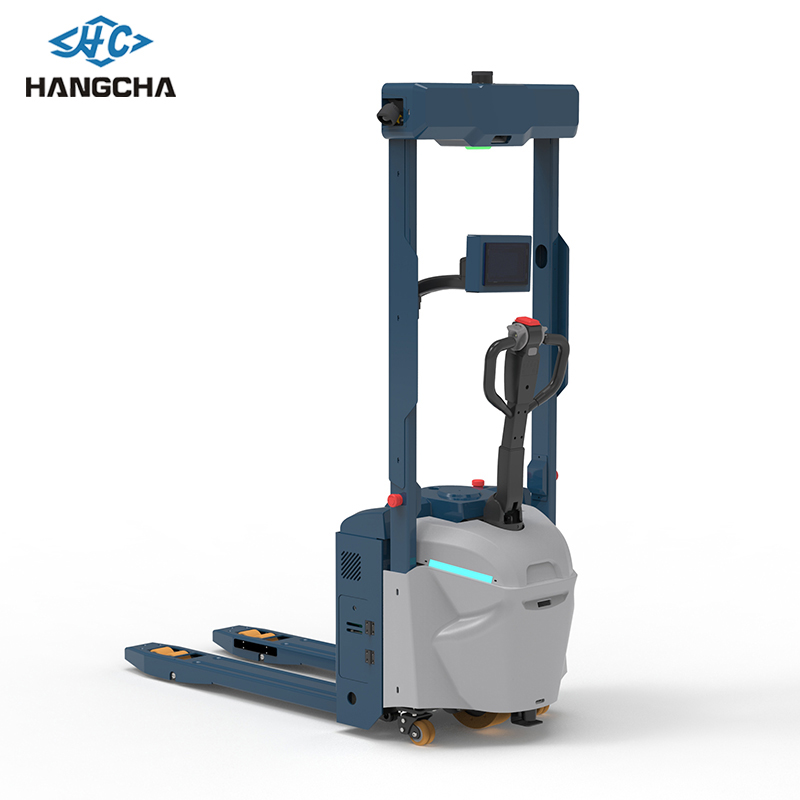
A fixed conveyor or rigid AGV route falls apart the moment aisle widths shift from twelve feet to six, or when pallet types change halfway down a rack. Autonomous handling earns its place precisely because it doesn't assume every aisle looks the same. A lift truck with onboard perception can switch from a wide bulk-storage lane to a narrow pick face without a new map, adjusting its speed, fork depth, and clearance on the fly. That adaptability turns an inconsistent layout from a source of downtime into just another set of waypoints.
In facilities where one aisle is packed with fast-moving cartons, the next holds oddly shaped returns, and a third has floor-stacked overflow, the value shows up in the details. The vehicle reads rack leg positions, pallet overhang, and even loose shrink wrap that would snag a less observant system. Instead of requiring each aisle to be standardized—an expensive retrofit—the autonomous handler treats the differences as data, slowing for a low beam, widening its turn where columns intrude, and picking the shortest safe path through a cluttered cross-aisle.
What makes this practical is not just the sensor suite but the decision-making layer that weighs dozens of micro-variations per second. A human operator might hesitate before entering a cramped section; the autonomous unit already chose a three-point turn two seconds earlier. That removes the need for dedicated wide-aisle zones or separate equipment for odd layouts. Every aisle, no matter how different, becomes a place where handling can happen reliably—without pausing to ask which rule set applies.
FAQ
It's not sudden for most of them. Labor availability has been tight for years, and order volumes keep climbing. Autonomous systems let a facility move more product per shift without adding headcount, which is especially valuable during seasonal peaks.
Most consultants suggest starting with autonomous mobile robots for horizontal transport, because they're easier to deploy than fixed conveyor or AGVs that need magnetic tape. Once those are running well, adding robotic picking arms or automated pallet movers tends to make more sense.
They generate continuous data on travel paths, dwell times, and bottlenecks. That lets managers adjust slotting, staffing, and even layout week by week instead of guessing. The smarter part comes from using that information to reduce wasted motion.
Wi-Fi coverage and floor condition. Autonomous vehicles rely on consistent connectivity, and even small cracks or debris can cause unnecessary stops. Also, getting the warehouse management system to talk to the robot fleet often takes longer than the physical installation.
Not anymore. Smaller operations can now lease robots or use robotics-as-a-service models, which lowers upfront costs. A site with 15,000 to 30,000 square feet can often justify one or two autonomous pallet movers if they run multiple shifts.
It varies widely, but many operations see labor cost reductions or throughput gains that cover the investment in two to three years. Facilities that run 24/7 or have high overtime expenses tend to reach payback faster, sometimes within 18 months.
No, they change the mix of work. People still handle exceptions, quality checks, loading and unloading in unstructured areas, and system supervision. What usually drops is the amount of time spent walking or pushing carts, which is often where injuries and fatigue come from.
First, map out current material flows and identify the highest-volume, most repetitive routes. Clean up floor surfaces and check network coverage in those areas. Then run a small pilot in one zone rather than trying to automate everything at once. That reveals real-world issues early.
Conclusion
Most warehouse automation projects lose momentum around the six-month mark because the initial mapping and integration phase underestimates how much legacy infrastructure fights back. Teams that succeed treat brownfield sites as living systems, not empty shells: they use phased sensor sweeps and small pilot zones so daily picking never stops. Veterans who have added robots to existing aisles often say the hardest part wasn't the hardware but retraining supervisors to trust exception-handling workflows. When every aisle has different rack depths, turning radii, and floor conditions, a single autonomous handling template fails. Instead, mapping should capture those quirks early and let the fleet learn per-zone behaviour.
Once autonomous handling goes live, the metrics that shift are not always the ones on the slide deck. Pick rates may rise modestly, but travel time per order, forklift near-misses, and overtime hours drop faster. The payback math vendors often skip includes the real cost of battery swapping, re-slotting slow movers, and the first major software update that changes fleet routing. Warehouses with narrow or irregular aisles see bigger gains from pallet-moving autonomy in receiving and staging zones than from full case-picking automation. The practical fit is less about perfect uniformity and more about identifying repetitive, injury-prone moves that humans currently perform under time pressure.
Contact Us
Contact Person: Liuxue
Email: [email protected]
Tel/WhatsApp: +86-19084200370
Website: https://www.hf-ec.com/