

API 672 Centrifugal Air Compressor Selection Made Easy: Your Ultimate Guide to Finding the Perfect Fit
2026-07-19
Selecting the right API 672 centrifugal air compressor can feel like navigating a maze of specifications and performance curves. But what if you had a clear, straightforward path to the perfect machine for your process? Whether you're tackling a new installation or optimizing an existing system, the choices you make today will ripple through your plant's efficiency and reliability for years. At Seize Air, we believe the selection process shouldn't be a gamble. This guide distills the essentials, cutting through the complexity to help you ask the right questions, weigh the critical factors, and land on a compressor that fits like it was custom-made. Ready to leave the guesswork behind? Let's dive in.
Decoding the API 672 Standard: What It Really Means for Your Operation
API 672 often feels like a dense technical document meant solely for engineers buried in compressor specs. But push past the jargon, and it's really a playbook for reliability. It lays out specific requirements for lube oil systems, vibration limits, and rotor dynamics—not to complicate procurement, but to ensure the equipment can handle years of start-stop cycles without catastrophic failure. When you see that stamp of compliance, it means the package has been designed with real-world abuse in mind, not just a clean datasheet scenario.
The standard also quietly shapes your maintenance budget and spare parts strategy. Because it mandates things like minimum nozzle sizes for seal gas and specific filtration levels, you end up with a system that isn't just efficient at Day One, but stays that way. Too many facilities ignore these details until they're dealing with unexplained trips or seal failures. A deeper read of API 672 usually reveals that many 'mystery' reliability issues are really just deviations from these prescriptive details—details that were written into the standard precisely to prevent them.
What often gets lost is how much this standard impacts the people side of your operation. When your compressor skid matches API 672, the instrumentation layout, tagging conventions, and even the arrangement of auxiliaries become intuitive for experienced operators and technicians. It reduces training friction and makes troubleshooting faster because the physical logic of the package aligns with a widely understood framework. In that sense, adopting API 672 isn't just an engineering decision—it's an investment in operational clarity that pays off during those 2 a.m. calls when quick diagnosis matters most.
The Overlooked Selection Factors That Make or Break Compressor Performance
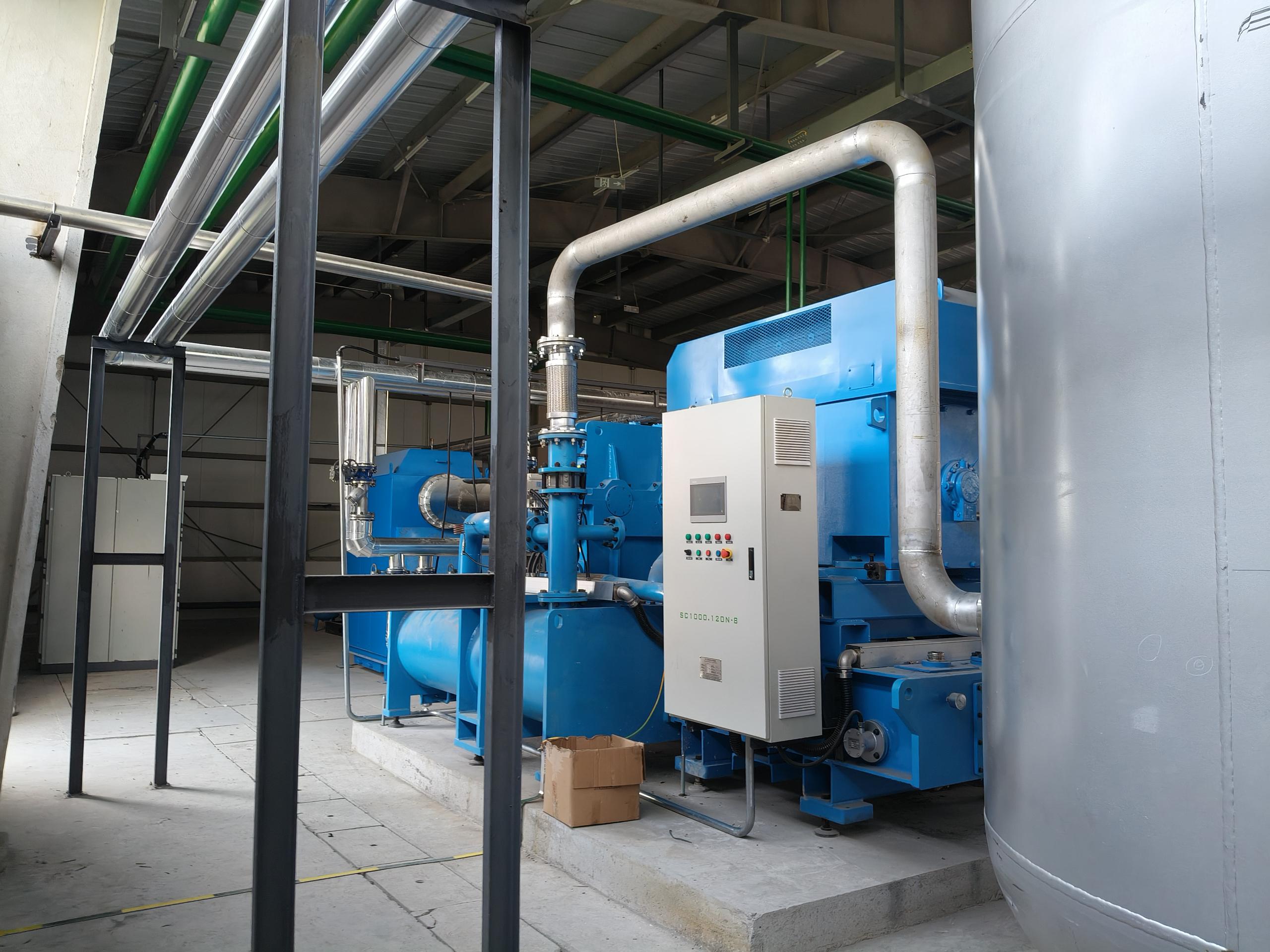
Most engineers fixate on pressure ratios and flow rates, but a compressor's real-world performance often hinges on details buried in the datasheet—like the slope of its turndown capability or how it handles varying inlet conditions. A machine that shines at full load might surge or waste energy at part load, yet few examine the unload curve with the same rigor. The overlooked culprits are often the control strategy and the margin between the operating point and the surge line, which can shift unpredictably with ambient temperature and suction pressure swings.
Cooling design is another quiet decider. Many compressors fail to deliver rated output because interstage and aftercoolers are undersized or poorly maintained, pushing discharge temperatures high enough to degrade oil and seals prematurely. Even when cooling seems adequate on paper, the actual approach temperatures under humid or fouled conditions can silently erode volumetric efficiency by 3–5 percent—a margin that goes unnoticed until energy bills climb or reliability falters.
Finally, pay attention to the auxiliaries: the lube oil system’s ability to maintain film strength during transients, the moisture separator’s efficiency at partial loads, and the acoustic enclosure’s impact on thermal recirculation. These elements rarely make the spec sheet headlines but are frequently what separates a unit that runs for years without a hiccup from one that becomes a maintenance headache. The difference lies in asking the right questions about transient response, not just steady-state data sheets.
Matching Your Process Demands Without Overengineering the Solution
It starts with a clear-eyed look at what your daily operations genuinely need—not what a feature list says you should have. We map your actual workflow, from approvals to reporting, and strip away anything that adds clicks without adding value. The result is a setup that feels intuitive because it mirrors how your team already works, just more efficiently. By avoiding the trap of building for every hypothetical edge case, we keep the system lean and the learning curve nearly flat.
You wouldn't use a sledgehammer to hang a picture, and your business tools shouldn't feel that way either. Instead of forcing your processes into a rigid pre-built framework, we configure the capabilities that match your pace and scale. This might mean automating only the most time-draining tasks first, or integrating with just the handful of apps that actually matter day-to-day. It's about giving you control without the clutter, so your team can adopt new tools without a revolt.
The magic happens when the solution grows with you naturally. We structure things so that adding a new team, a new approval step, or a new data source doesn't require an overhaul. It's built on a foundation that values simplicity today without boxing you in tomorrow. That way, you're never paying for something you don't use, and you're never stuck with something that can't keep up.
Navigating Driver Options and Why It’s Not Just About Horsepower
When you slide behind the wheel of a modern performance car, the first thing you notice isn't always the engine note—it's the sheer range of settings at your fingertips. From adjustable suspension dampers to customizable steering weight, throttle response, and even traction control thresholds, today's driver options shape the experience far more than a simple horsepower figure ever could. These systems let you dial in a personality that suits a lazy Sunday cruise just as well as a flat-out track session.
The magic really happens in how these options communicate the road. A well-tuned adaptive chassis can make a car feel lighter and more nimble than its curb weight suggests, while a smart all-wheel-drive system with torque vectoring can carve a corner with a precision that sheer power alone can't deliver. It's about the connection: the feedback through the wheel, the way the seat transmits the surface, the subtle adjustments that happen in milliseconds based on the drive mode you've chosen.
Of course, horsepower still matters, but it's become table stakes. What elevates a vehicle is how accessible that power is, how confidently it puts it down, and how the driver can manipulate the car's brain to match their mood. The next time you're comparing specs, look beyond the peak output—dive into the customizable driver settings, because that's where the real personality lives.
Installation Pitfalls That Quietly Shorten Equipment Lifespan
Most people assume that if a machine powers on after installation, the job is done. But the truth is, many subtle missteps during setup plant the seeds for future breakdowns. Simple things like ignoring manufacturer torque specs, skipping vibration checks on rotating parts, or even placing equipment on a slightly uneven surface can create stress concentrations that slowly eat away at critical components. These aren’t dramatic, immediate failures—they’re silent killers that cut months or years off a machine’s expected service life, often until it’s too late to trace back to the original install.
Another common oversight is treating environmental factors as afterthoughts. Equipment installed near heat sources, in areas with poor airflow, or exposed to dust and moisture without proper sealing will degrade at an accelerated pace. For example, electronics tucked into a corner without adequate ventilation may run hot day after day, gradually degrading capacitors and solder joints. Similarly, hydraulic systems that aren’t flushed properly after installation can circulate leftover metal shavings or assembly debris, causing internal scoring that leads to premature seal and pump failure.
Finally, one of the most underestimated pitfalls is putting blind faith in “factory settings” without adapting to the actual operating context. Default parameters for control systems, drive belts, or pressure relief valves rarely match the nuances of a specific facility. When teams skip the fine-tuning step because the equipment runs, they miss the chance to optimize for real loads, duty cycles, and ambient conditions. Over time, this misalignment adds unnecessary strain, amplifying wear and turning a machine that should last a decade into one that’s on borrowed time after just a few years.
A Practical Approach to Total Cost of Ownership Without the Guesswork
When evaluating any major investment, the sticker price rarely tells the whole story. A practical approach to total cost of ownership strips away the guesswork by mapping out every expense from acquisition to disposal. This means going beyond the obvious line items like purchase price and maintenance contracts, and factoring in softer costs like training time, productivity dips during transition, and even the effort required to manage vendor relationships. By building a comprehensive picture, you quickly see where hidden fees accumulate and which options truly deliver value over the long haul.
The key is to ground your analysis in real-world scenarios rather than abstract estimates. Instead of assuming a fixed lifespan or generic usage patterns, look at how the asset will actually be used in your specific environment. Talk to teams who will interact with it daily, and pull historical data from similar past purchases. This hands-on investigation reveals risks that spreadsheets alone miss—like compatibility issues that force workarounds or a support model that looks cheap on paper but costs hours in downtime. When you attach concrete numbers to these realities, the total cost becomes a tool for smarter trade-offs, not just a financial compliance exercise.
Finally, treat the total cost of ownership as a living document that evolves with your operations. A one-time calculation is little more than educated guesswork. Build in checkpoints to compare projected costs against actuals, and adjust your assumptions over time. This ongoing calibration not only sharpens future evaluations but also uncovers opportunities to renegotiate contracts, tweak processes, or shift usage patterns well before budgets get derailed. With a consistent, evidence-based method, you replace uncertainty with clarity—and that’s where confident decisions begin.
FAQ
API 672 is a standard from the American Petroleum Institute that covers packaged, integrally geared centrifugal air compressors. These units are often used in industrial applications where clean, oil-free air at constant pressure is critical—think refineries, chemical plants, or power generation facilities. The standard ensures the compressor package meets rigorous design, material, and testing criteria for reliability in demanding environments.
The main draw is durability and low total cost of ownership in tough settings. API 672 compressors are built to handle continuous operation with minimal unexpected downtime. They are engineered with more conservative design margins, specialized materials, and extensive factory testing—so if your site is remote, hazardous, or simply can't afford unplanned outages, the extra rigor pays off.
It comes down to your required pressure ratio. For moderate discharge pressures, a two‑stage compressor usually suffices; for higher pressures, you might need three or four stages. The key is balancing efficiency and initial cost—fewer stages save on upfront investment, while more stages can improve specific power consumption and reduce intercooler temperature stress. I recommend using manufacturer selection tools that plot your flow and pressure requirements right on the integrally geared compressor map.
Intercoolers are huge for efficiency. Removing heat between stages reduces the work the next stage has to do—so pay close attention to cooling water temperature and flow. If your cooling medium is warm or restricted, you may need larger coolers or a different stage configuration to keep discharge temps in check. A good supplier will offer several cooler designs and show you the impact on overall package power.
Most API 672 packages come with an integrally geared design—multiple pinions driving impellers at optimized speeds. That's the go‑to for most applications because it matches impeller aerodynamics perfectly. Direct drive can be simpler, but it often limits you to a single speed, sacrificing efficiency across the operating range. If your process has varying demand, the geared setup lets you fine‑tune each stage for part‑load performance.
Never base a selection solely on standard ISO conditions. Elevation, inlet air temperature, and even humidity alter mass flow and power draw significantly. Work with your supplier to correct the performance curves for your site's maximum ambient, lowest barometric pressure, and any inlet system losses. That way the compressor delivers the actual flow you need on the hottest day, not just on a datasheet.
The standard spells out several inspection and test plans. At a minimum, you should see a mechanical run test of the complete string test on air, plus checks for vibration, bearing temperatures, and intercooler performance. For critical services, many buyers request a full‑load, full‑pressure test in the factory. Don't skip reviewing the supplier’s standard scope versus API 672; some test witnessed by you or a third party can catch issues before shipment.
Conclusion
Selecting the right centrifugal air compressor under the API 672 standard goes beyond just matching flow and pressure ratings—it requires a deep understanding of how the standard's requirements for design, materials, and testing translate into real-world reliability. Many operators miss subtle but critical factors like ambient condition variations, part-load behavior, and transient surge scenarios that can silently erode performance. The key is to align your process demands with a compressor that meets them precisely without piling on unnecessary margins that lead to overengineering and wasted capital. This means closely examining your actual air usage patterns, future expansion needs, and the trade-offs between customization and modular package solutions. True optimization comes from treating the specification not as a checklist but as a framework for integrating the machine seamlessly into your plant's unique operational DNA.
Driver selection is another dimension where focusing solely on horsepower can be misleading; factors like starting torque, speed range, and electrical supply stability often dictate long-term drivability and efficiency. Similarly, installation details—from foundation rigidity to piping strain and lube system cleanliness—are frequently underestimated, yet they quietly shorten equipment lifespan through vibration and contamination. A practical total cost of ownership analysis strips away guesswork by factoring in energy consumption, maintenance intervals, spare parts accessibility, and the impact of unscheduled downtime. Ultimately, the perfect fit emerges when you balance all these elements, ensuring the compressor not only meets the standard but also integrates economically and reliably into your operation for decades.
Contact Us
Contact Person: Mia
Email: [email protected]
Tel/WhatsApp: +86 19821985894
Website: https://www.seize-air.com